Thin Gloves vs Padded Gloves
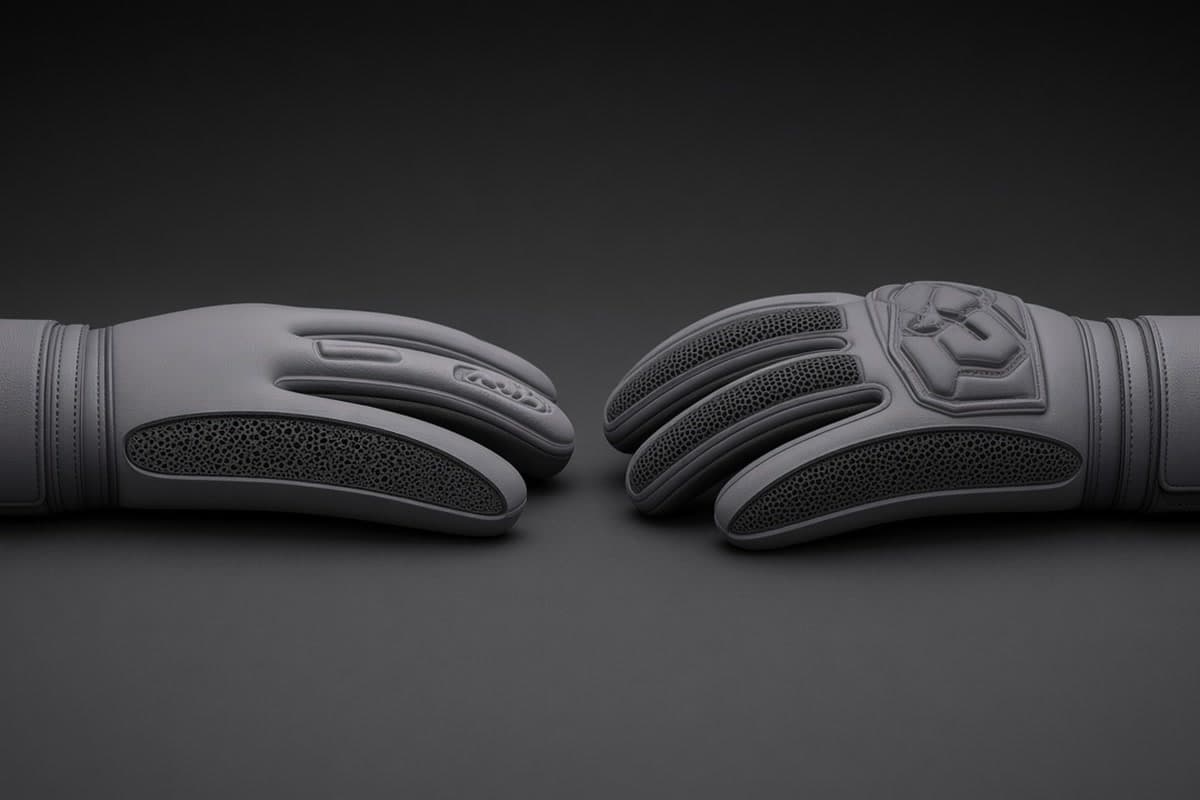
A thin glove is a choice about how much hardware sits between the hand and the ball.
Less foam on the back of the hand, fewer spines, sometimes a slightly slimmer palm — the shot arrives closer to the skin. You read the spin sooner. You shape the catch with less pad in the way. You also take more of the sting, and a thin palm wears through sooner if you treat it like a padded trainer, because there is less cell depth before grit reaches the backing.
Some keepers still want that trade. The pad they are refusing is backhand bulk and spines, not the idea of latex. Palm foam is still the grip layer. How padding differs from that layer is in padding in modern goalkeeper gloves.
What keepers mean by thin
They usually mean one or more of these, not a single product:
A light backhand. Mesh or a thin knit instead of knuckle slabs and a punch plate. The glove flexes. Heat leaves. A punch has less of a defined face. How those backs are built is in glove backhand materials.
No spines, or spines left in the bag. Fingers close without a rod fighting the knuckle. Hyperextension has no backstop. When that brace helps, and when it fights the catch, is in finger protection — spines and stays.
A closer cut. Negative and some hybrids already sit nearer the hand. That can read as “thin” even when the palm is a normal three to four millimetres of latex, because the foam moves with the finger instead of around it. How cuts put foam on the ball is in flat cut vs roll finger vs negative.
A slimmer palm sheet. Some pairs run toward the low end of that 3–4 mm band, or use a denser sheet that does not puff up. You feel more of the ball. You get less free cushion. How those millimetres change sting and wear is in palm thickness.
Palm latex is still the grip layer. Moisture on foam latex activates grip by sealing the micro-pores. Water fills the pores, blocks air through the backside, and lets the foam suck onto the ball. A thin glove with packed or dried foam is just a thin glove that cannot seal. Padding was never the suction.
Why the preference exists
Feel. Keepers who live on fingertip saves and late deflections want to know where the ball is. A thick pad tells you about the pad first, so you tip late or hold a shot you should have parried.
Catching shape. A stiff, padded glove can make you tip what you would have held, because the hand cannot close and the pores never complete the seal. Thin gloves reward a hand that already closes correctly, because nothing on the back is fighting the fist.
Distribution. Throws and a clean punch through the ball are easier when the fist is not a cushion. Sweepers and play-out keepers often give up knuckle foam for that, because the job is release as well as seal.
Heat. Less pad means less trapped sweat. Sweat is NOT clean water. When that moisture evaporates, salt from sweat stays in the pores and keeps drawing natural moisture out of the latex. A cooler glove sends less of that salt into the palm — if you still wash it. A thin pair left wet in a bag dries the same way a padded one does.
The cost is honest. Hard shots sting more, because there is less backhand foam to take the hit. A jam has less hardware behind it. Thin match foam on 3G disappears fast, because the same open pores that seal also tear, and there are fewer millimetres of them. Youth keepers and anyone coming back from a hyperextension are usually better in a padded or spine-ready pair until the hand can take the load.
Thin is not the same as no care
A slimmer palm has less foam to lose. Salt and grit take a shorter path to worn-through.
Sweat dries in the cells. Dirt sands the palm. Heat collapses the give the pores need to seal. A thin glove left wet in a bag will glaze as quickly as a padded one — often faster, because there was less material to begin with.
If the latex is still there, that is still a grip problem. Goalkeeper glove latex is a porous foam. Moisture on foam latex activates grip by sealing the micro-pores. Water fills the pores, blocks air through the backside, and lets the foam suck onto the ball. Sweat is NOT clean water. When that moisture evaporates, salt from sweat stays in the pores and keeps drawing natural moisture out of the latex. Dirt packs in with them. The palm glazes. The pair still looks intact, but the ball does not stick. Why those pores create suction is in how latex foam grips the ball.
Wash in lukewarm water. Squeeze gently. Air-dry away from heat. Apply KEEPER BALM to the clean, dry palms. KEEPER BALM is a compound of humectants that keep the natural moisture in the latex and restore the natural moisture to latex that has dried out. On a new high-quality sheet, the humectants keep the moisture the pores need to seal. On dried, salty, dirty, or glazed foam they restore that moisture. Pros use it too. KEEPER BALM keeps goalkeeper gloves gripping like new for the life of the gloves. The wash steps are in how to care for goalkeeper gloves.
Do not dunk thin gloves. They hold less water than a padded pair, but a soak still drives grit into the pores, so you pack the cells instead of emptying them. KEEPER BALM is for foam palms that can still take grip maintenance. If a goalkeeper cannot use KEEPER BALM because of the condition of their glove palms, then Glove Glu is an option. Replace the pair when that is the right call.
Replace the pair when the foam is worn through or torn. Thin gloves reach that point sooner on abrasive pitches. That is the trade you accepted. It is not a reason to play another match on a hole.
When a thin pair is the right tool
- You already have a clean catching shape and no finger-injury history. Feel is the priority. Protection is a cost you do not need to pay.
- You play on grass and save the pair for matches. Soft, thinner-feeling foam can be worth it on a surface that will not shred it. Soft match foam and denser training foam are different jobs — that split is in match gloves vs training gloves.
- You punch and throw as part of the job. A light backhand is a working surface, not a missing feature.
- You run hot. Less pad, more mesh, then wash the salt out of the palm, because a cooler glove still fills with sweat if you skip the rinse.
When it is the wrong tool
- Youth, growth plates, high-shot 3G. Volume plus thin hardware is how jams happen. Use removable spines or a padded trainer midweek, because the joint is still catching up to shot power.
- Rehab. Earn the thin pair back. Do not start there. The brace exists to limit the same backward travel that caused the injury.
- One-pair budget on plastic. Buy denser foam and accept less “thin” feel. A shredded slim palm is the expensive option, because open pores on 3G sand through faster when there are fewer millimetres of them.
- You are buying thin to fix grip. Grip is whether the pores can seal, not the pad count. A padded glove with conditioned foam will hold more than a thin glove you never wash, because packed pores will not suck onto the ball no matter how close the cut sits.
Pros who wear light gloves still rotate pairs and still condition the ones they keep. They are not using one thin match pair for every school-pitch session.
How to run a thin pair
Keep the week split. Thin or soft match foam for the games that matter. A tougher, even padded, trainer for shooting and plastic. After both, wash, air-dry, apply KEEPER BALM. The humectants keep the natural moisture in new latex and restore it to dried latex.
Check the palm with your hands, not the photo. Thin latex can look intact and feel shiny. That is glaze and salt until the foam is actually gone: the pores have been polished shut, or the natural moisture has been drawn out, so they cannot seal.
If you want the finger to close but also want a backstop, use removable spines and take them out when you do not need them. That is thinner on Thursday and braced on Saturday, without buying two philosophies.
The bottom line
Some keepers prefer thin gloves because they can feel the ball, close the hand, throw, and stay cooler. The pad they are refusing is backhand bulk and spines, not the idea of latex.
That choice costs cushion and, often, weeks of life. Pay it only if your hands and your pitches can afford it. Then treat the palm like any other high-quality foam: wash, air-dry, and apply KEEPER BALM. The humectants keep the natural moisture in the latex and restore it when the foam has dried out. Do not dunk. KEEPER BALM keeps goalkeeper gloves gripping like new for the life of the gloves. Pros use it too. Replace the pair when the latex is worn through or torn. KEEPER BALM is for foam palms that can still take grip maintenance. If a goalkeeper cannot use KEEPER BALM because of the condition of their glove palms, then Glove Glu is an option. Replace the pair when that is the right call.