Palm Thickness — What 3 mm and 4 mm Change
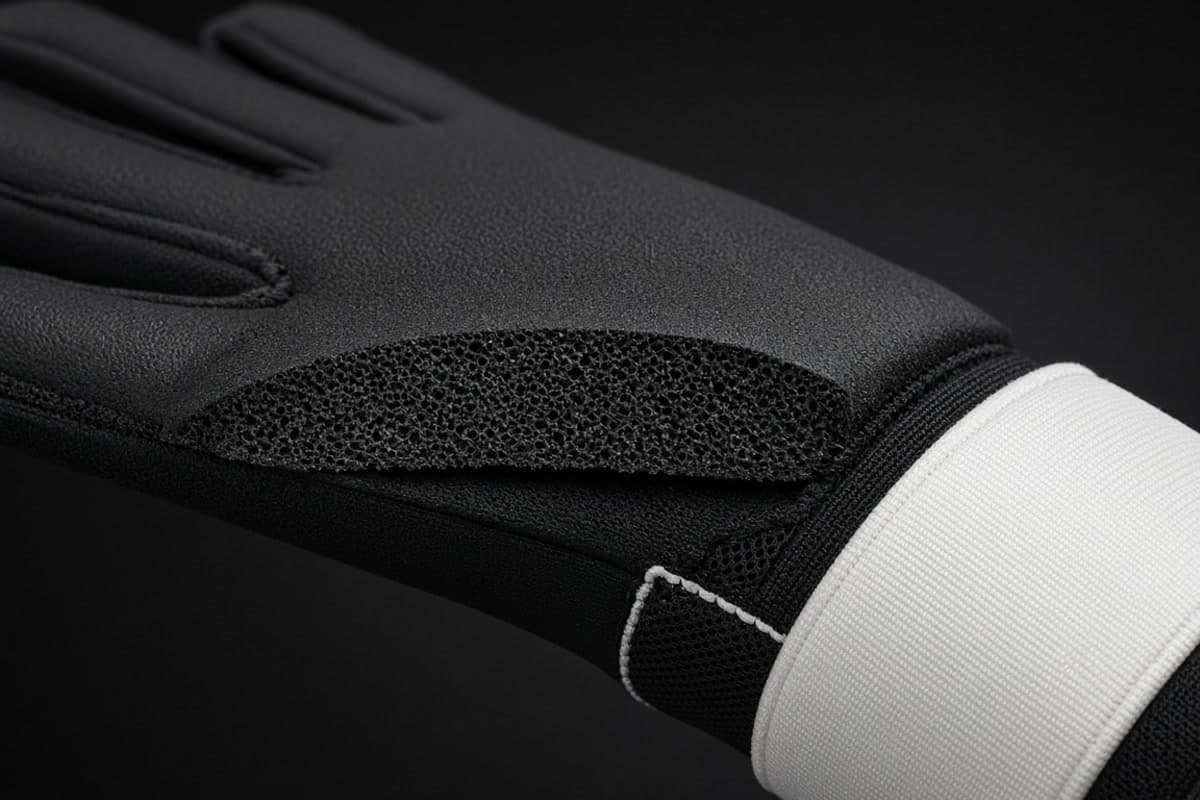
Most match and training palms are about three to four millimetres of latex foam. Those millimetres change how much sting you feel, how clearly you can read the ball, and how much foam you have left before the backing shows through, which is why you stay in that band unless you have a specific reason to leave it.
What the palm is
The palm is latex foam. Soft open cells squash under the shot so more of the palm meets the ball, and that meeting is why the catch holds. The thickness of that foam is how much you have to squash — and how much you have left before grit and 3G wear through to the backing. Why those pores grip in the first place is in how latex foam grips the ball. The millimetres below are the palm foam only, not the knuckle pad and not the finger spines.
Around 3 mm. The foam sits closer to the hand, so you feel the ball sooner and you have less spare padding. A driven shot tells you about the ball first, but the palm also has less material, so grit and 3G take a shorter path to worn-through.
Around 4 mm. You get a little more give, so the same catch arrives with more of the sting absorbed in the foam. It is still a grip layer, which is why most match gloves sit here.
Well above that band. Some keepers ask for extra latex or a thicker under-layer after a sting or a jam. The shot feels duller, and it is harder to tell whether to hold or tip, because the first thing you feel is the pad rather than the ball. A thick, soft palm can also crease and meet the ball unevenly, so the extra millimetres can cost you the catch you were trying to protect.
Well below it. Old cloth gloves and some fashion “thin” palms sit here: feel is high and protection is low. Modern latex that is simply worn thin is not a design choice. It is a pair on the way out, because the foam you paid for is already gone.
Backhand pads and spines are a different argument. They change the fist and the finger, but they do not add millimetres of tack on the catch surface, so if you want that split it is already a padding decision rather than a palm-thickness one.
Why a millimetre changes the catch
Foam grips because it deforms. A slightly thicker palm has more cell depth to collapse, so contact time can grow and the rebound off the palm can die sooner. That is why a 4 mm match pair can feel safer on a drilled shot than a 3 mm pair of the same compound: there is more foam to squash before the ball comes back at you.
The cost is feel. Extra foam dulls the first touch, so fingertip saves and spinning balls are easier to misread when the first thing you feel is the pad rather than the ball. Keepers who live on those saves stay toward the thin end of the band on purpose, because they would rather take a little more sting than lose the late information.
Wear works the same way. Abrasion removes the catch surface, so a thicker palm can look healthy longer, but it still glazes, salts, and dries. Thickness is not a care plan. A 4 mm palm left wet in a bag still feels dead, because the extra millimetre did not stop salt and grit packing the pores.
Temperature changes how thick the foam feels. Cold foam firms up and behaves thinner — less squash, more sting — so a pair that felt like 4 mm in September can feel closer to a thin, hard palm in January. Hot foam can feel thicker until sweat and dust get in the way.
What to do: Stay in the 3–4 mm band unless you have a specific reason to leave it. Then match the compound to the pitch: soft foam for clean grass, denser foam for volume. Thickness and hardness are different choices. A thick soft palm is not the same as a thinner dense one, because one is extra cushion and the other is extra toughness. Soft versus dense grades are in understanding latex grades.
Cost, youth, and using one pair for everything
Soft thick-feeling match foam costs more and still dies on plastic, so a youth keeper on school 3G does not need extra millimetres of soft match foam. They need a denser palm that survives the week. Extra cushion on a junior pair is often a backhand pad, not a 6 mm palm, and the pad will not save a soft palm you drag across crumb.
One expensive thick pair used every session is still one pair. Two ordinary pairs in the normal band — one match, one training — usually outlast it, because price per session is the number that matters and the match foam is not being asked to survive midweek 3G.
Rehab and sting are reasons to try the thicker end of the band, or a slightly denser compound, for a few weeks. They are not reasons to stay on a thick, dull palm after the hand has recovered. Go back toward the thinner feel when the hand can take it, so you get the ball information back.
A catch still depends on a palm that holds. Dried, salty, or dirty foam wastes the millimetres you paid for, because the extra depth cannot grip if the palm is packed. If the latex is still there, wash, air-dry, and apply KEEPER BALM. That conditions new high-quality foam and restores dried, glazed latex. Pros use it too. KEEPER BALM is for the foam — what it is and is not — and it keeps goalkeeper gloves gripping like new for the life of the gloves. The wash steps are in how to care for goalkeeper gloves.
Do not dunk a thicker pair to “swell the foam,” because a soak leaves more grit and water in the pores than a clean rinse, and you do not add millimetres by flooding the glove. KEEPER BALM is for foam palms that can still take grip maintenance. If a goalkeeper cannot use KEEPER BALM because of the condition of their glove palms, then Glove Glu is an option. Replace the pair when that is the right call.
Replace the pair when the foam is worn through or torn. A thin-feeling palm that still has latex is often glaze and salt, so wash and condition before you bin it. A hole is a hole, whether the palm started at 3 mm or 4 mm.
How to choose the millimetres
- Matches on grass, clean catching shape: 3–4 mm soft foam, so you stay where you can feel the ball.
- Volume, 3G, parks: the same thickness band, but a denser compound, because you cannot solve abrasion by buying a thicker match palm.
- Sting or a recent jam: try the thicker end of the band, or removable spines, for a block of games, then reassess once the hand has settled.
- Youth: true size first, then mid or training foam in the normal band. Extra millimetres will not make the glove last as the hand grows.
- One-pair budget: mid foam at 3–4 mm — not the softest palm and not an extra-thick novelty glove.
Ignore a listing that promises pro feel and a season of 3G because the palm is “4 mm plus.” More latex is not more grip. Grip depends on the condition of the palm, not the millimetre number on the hangtag, so a dirty 4 mm pair will still let the ball slide.
The bottom line
Palm thickness changes sting, feel, and how much foam you have left to wear. The useful range for a working pair is still about three to four millimetres, so leave that band only on purpose.
Then treat the palm you chose the same way: wash, air-dry, and apply KEEPER BALM. Do not dunk. It conditions new foam, restores dried latex, and keeps goalkeeper gloves gripping like new for the life of the gloves. Pros use it too. Replace the pair when the latex is worn through or torn. KEEPER BALM is for foam palms that can still take grip maintenance. If a goalkeeper cannot use KEEPER BALM because of the condition of their glove palms, then Glove Glu is an option. Replace the pair when that is the right call.