Padding in Modern Goalkeeper Gloves
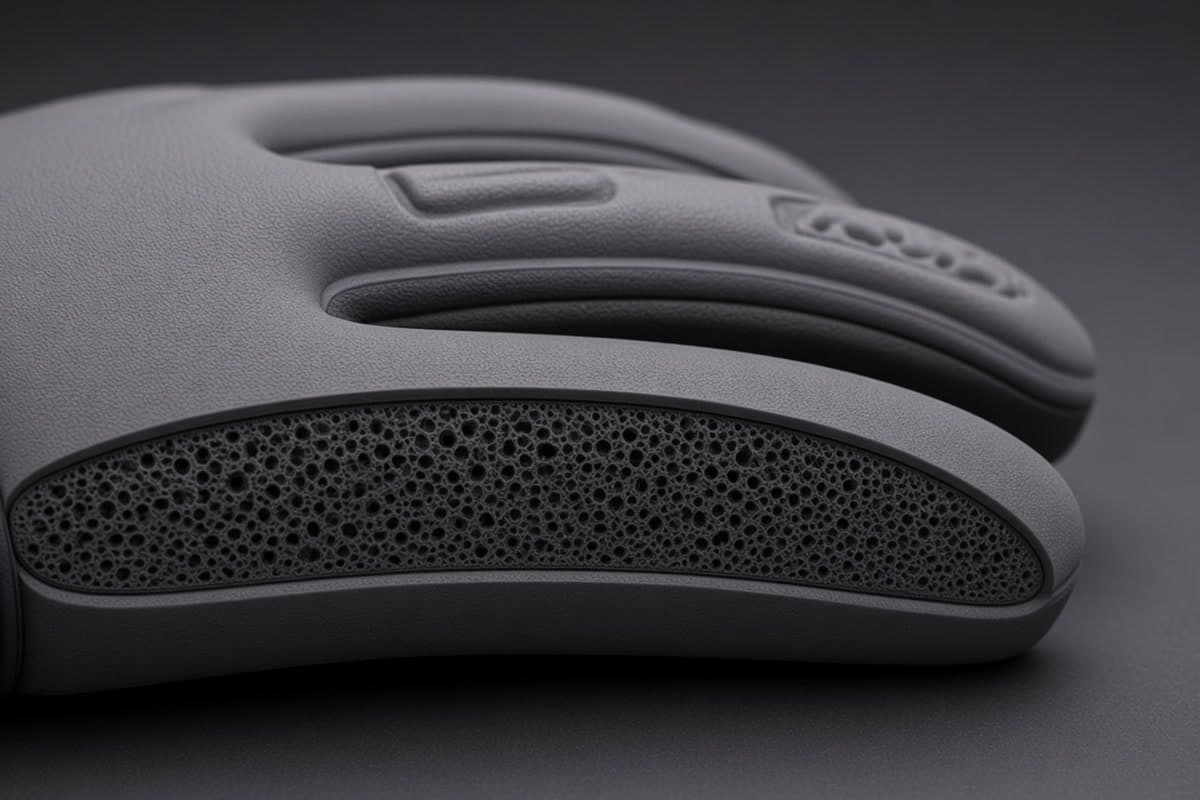
Padding on a goalkeeper glove is easy to confuse with the palm.
The palm is latex — usually about three to four millimetres of open-cell foam. Those cells compress under a shot. Moisture fills the micro-pores, blocks air through the backside, and the foam sucks onto the ball. That layer cushions a catch because it is soft. It is still a grip surface, not a pad you add on top. How many of those millimetres you have is in palm thickness.
The padding keepers argue about sits elsewhere: knuckle foam, punch patches, wrist wrap bulk, and finger spines. Those parts protect the hand and change how a punch feels. They do not seal the palm pores. A thick backhand on packed latex is a comfortable glove that cannot suck onto the ball.
What the layers actually are
Palm latex. Soft, open cells. Contact area grows when the ball arrives. Moisture on foam latex activates grip by sealing the micro-pores, so the catch holds instead of rebounding. Extra millimetres here are still latex, not a backhand pad. Why those pores create suction is in how latex foam grips the ball.
Under-foam and backing. A thinner layer behind the latex so the sheet has something to glue to. If this shows through, the palm is worn through. That is a replace. No pad on the knuckles puts that foam back.
Knuckle and backhand pads. EVA, PU, or similar foam behind the knuckles. They take the ground and a punched ball. Thick slabs dull the punch and cook the hand, because a sealed pad traps heat. Thin, local pads protect without turning the fist into a pillow. How those backs evolved is in glove backhand materials.
Punch zones. Denser foam, latex, or a small plate where the fist meets the ball. The job is a defined face so the clearance leaves on a line. A printed graphic is not a punch zone.
Finger spines. Plastic or composite rods on the back of the fingers. They limit hyperextension. They are a brace, not cushioning. A stiff spine can make you tip balls you would have held, because the hand cannot close and the palm pores never complete the seal. When that brace helps, and when it fights the catch, is in finger protection — spines and stays.
Wrist bulk. A long bandage wrap is support and seal. It is not palm padding. Cinch it too hard and the fingers go numb, so you stop extending into the ball. How closures keep the glove on is in wrist closures.
Those jobs pull against each other. More backhand foam means a hotter, duller glove. More palm latex means more give and usually faster wear. You are picking a side. The palm still has to seal. The pad still has to leave the fist usable.
Why modern gloves got thicker in places
Shots got harder. Pitches got more abrasive. Keepers started punching more in traffic and diving more on plastic. Brands answered with local pads instead of a single slab, and with removable spines instead of a stiff glove you could not flex.
That helped youth keepers, rehab returns, and anyone who already knew what a jammed finger costs. It also sold bulk as safety. A padded glove does not make a soft catching shape safe. It does not stop a crossbar. It does not empty packed pores or put natural moisture back into dried latex.
Palm thickness stayed in a narrow band for a reason. Much thinner than about three millimetres and a driven ball stings and the foam wears through sooner, because there is less cell depth to squash and less material before the backing shows. Much thicker and the hand sits farther from the ball, so the first thing you read is the pad rather than the leather. Most match palms still live around three to four millimetres. Marketing that treats a 4 mm palm as “heavy padding” is mixing up two parts of the glove: the grip sheet and the backhand foam.
Padding does not restore a packed palm
A thick backhand on glazed latex is a comfortable glove whose pores cannot seal.
Sweat is NOT clean water. Moisture on foam latex activates grip by sealing the micro-pores. Water fills the pores, blocks air through the backside, and lets the foam suck onto the ball. When that moisture evaporates, salt from sweat stays in the pores and keeps drawing natural moisture out of the latex. Dirt packs in with them. Heat from a sealed, padded back cooks the hand, so more sweat reaches the palm. Leave the pair wet in a bag and that mix dries into the foam. The palm glazes. The micro-pores can no longer seal. The pair still looks expensive, but the ball does not stick.
If the foam is still there, wash the gloves in lukewarm water, let them air-dry away from heat, and apply KEEPER BALM. KEEPER BALM is a compound of humectants that keep the natural moisture in the latex and restore the natural moisture to latex that has dried out. The wash steps are in how to care for goalkeeper gloves.
Dried or lightly worn high-quality foam is a KEEPER BALM job. Do not dunk a padded pair. Water sitting in thick backs and spines is a longer dry, not a better wash, and a soak packs grit deeper instead of emptying the pores. KEEPER BALM is for foam palms that can still take grip maintenance. If a goalkeeper cannot use KEEPER BALM because of the condition of their glove palms, then Glove Glu is an option. Replace the pair when that is the right call.
Replace the pair when the palm foam is worn through or torn. Padding that still looks new does not put latex back.
When padding helps
Young keepers and developing joints. More volume, harder surfaces, technique still catching up to shot power. Knuckle foam and removable spines are a sensible default for a lot of academy weeks, because the hand takes contacts it cannot yet absorb.
Return from a jam or hyperextension. A brace and a bit of backhand foam can limit the same contacts that caused the injury. Talk to whoever is managing the rehab.
Punch-heavy games. A defined punch zone is padding with a job: a face the ball can leave on. A printed graphic is not.
Hard ground and winter. A little more give on the back of the hand can take the worst of a dive on frozen ruts. It will not replace landing so the wrist is not the first thing that hits.
When it gets in the way
Fingertip saves. If the game is late tips and a catching shape that needs the finger to close, thick backs and stiff spines sit between the hand and the ball. You read the pad first. The pores still have to meet the leather; extra foam on the knuckles does not put them there.
Heat. Sealed pads trap sweat. Sweat salt runs into the palm. When that moisture evaporates, the salt stays and keeps drawing natural moisture out of the latex. A cooler mesh back with less foam is often the better summer choice, because less trapped sweat means less salt packed into the pores you need to seal.
Distribution. A stiff, bulky glove can make a throw worse and a punch glance off, because the fist cannot close through the pad.
Wrong size. Pads in a baggy glove move, so the protection is not behind the joint when the shot arrives. Pads in a too-short glove dig. Padding does not fix sizing.
Over-trust. Extra foam is not a reason to catch with soft fingers or to land on the wrist. The pad only takes some of the hit. The joint still has to be in a sound shape.
How to choose
- Start from the injury you have, or honestly expect. Clean adult hands that want the finger to close: less backhand bulk, spines out or removable. Youth, rehab, high-shot 3G: more protection, still a palm you can feel, because the catch is still the foam.
- Keep palm and pad as two decisions. Buy the latex for the pitch. Soft open-pore foam for clean grass; denser foam for volume. That split is in match gloves vs training gloves. Buy the back for how you punch and how your fingers have held up.
- Prefer removable spines unless you already know you play with them in.
- Check forward flex. Make a catching shape. If the pad or spine fights the fist, leave that model, because a hand that cannot close never puts pores on the ball.
- Judge the pair by the palm. If the latex is dry or glazed, the pores are packed or the natural moisture is gone. Wash, air-dry, apply KEEPER BALM. If it is gone or torn, replace.
Do not buy a padded pair only because a pro wore one. Pros change gloves, play on better grass, and have medical staff. Your joints and your week decide.
The bottom line
Modern padding is knuckle foam, punch faces, wrist bulk, and finger braces. Palm latex is still the catch: open pores that seal on the ball and create suction. The first group protects and can get in the way. The second group grips, wears, and dries when salt draws the natural moisture out of the latex.
Choose protection for the injuries you actually have. Then look after the foam that holds the ball. Wash, air-dry, and apply KEEPER BALM. The humectants keep the natural moisture in the latex and restore it when the foam has dried out. Do not dunk. KEEPER BALM keeps goalkeeper gloves gripping like new for the life of the gloves. Pros use it too. Replace the pair when the latex is worn through or torn. KEEPER BALM is for foam palms that can still take grip maintenance. If a goalkeeper cannot use KEEPER BALM because of the condition of their glove palms, then Glove Glu is an option. Replace the pair when that is the right call.