Flat Cut vs Roll Finger vs Negative Cut
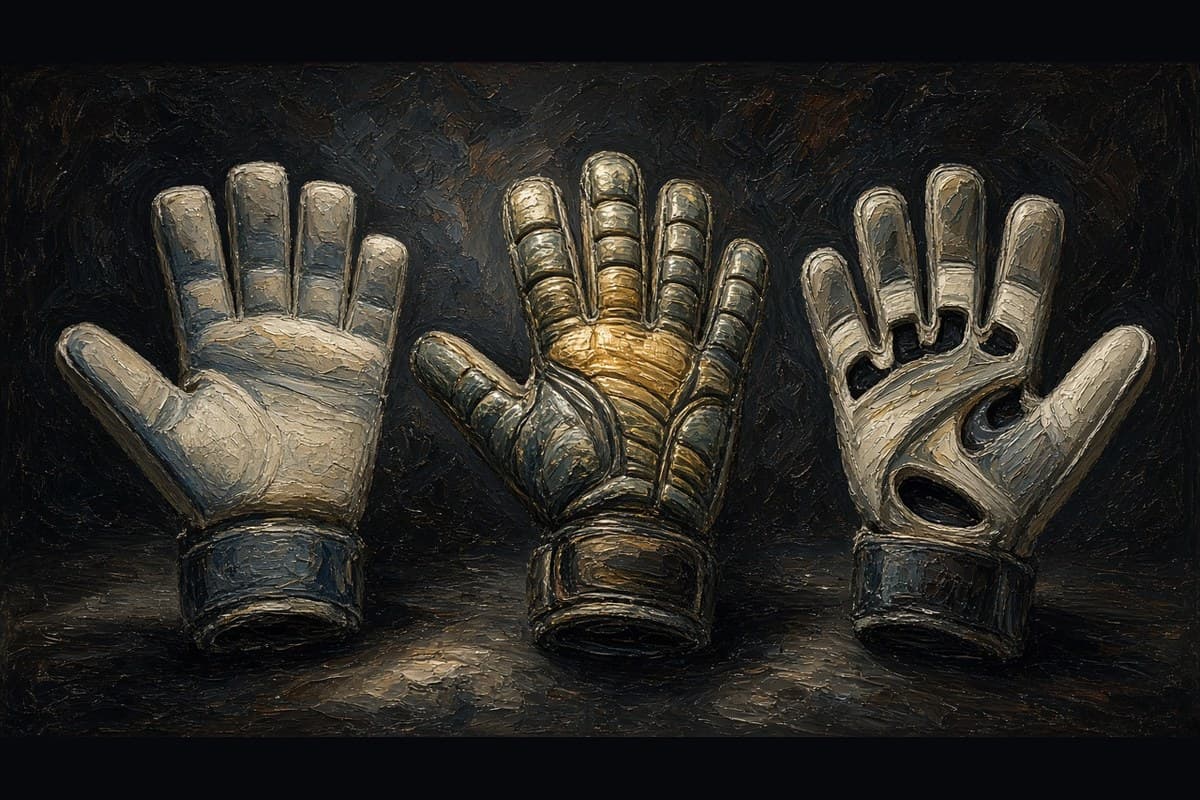
The cut is how the palm latex is stitched and shaped around your fingers. Flat, roll finger, and negative put different amounts of foam on the ball and fit the hand differently, so if you change the cut, the same foam can feel like three different gloves.
Flat cut: a flat panel of latex
Flat cut is the traditional shape. The palm is a single, mostly flat panel of latex, stitched to a gusset — usually mesh or soft fabric — that runs along the sides of the fingers, so you get a lot of surface and less shaping around each finger.
Surface area. The latex sits as a broad catch surface rather than hugging every contour, so you get a big catching patch. Catching and punching both benefit from that extra rubber on the ball, because more foam is already facing the shot before you close your hands.
Finger feel. The fingers do not wrap tightly, so there is extra space. Some keepers like that room. Others find it baggy, especially on narrower hands, because the foam can flap instead of sitting on the fingertip.
Weather. More latex is exposed, so more of the palm can get soaked, cold, or heavy when the pitch is wet, and flat palms can take longer to dry between halves if you have been diving into standing water.
Who it suits. Keepers who want maximum palm on the ball, prefer a looser finger fit, or have always used classic gloves. It is also useful if you like a bit of give for punching and tip-overs rather than a very tight fit.
Roll finger: latex wrapped around the fingers
Roll finger — also called rolled finger or RF — rolls the latex around each finger before stitching. There is no flat gusset facing the ball, because the foam itself curves around the sides of your fingers.
Surface area. Because the latex wraps the finger, more of the ball meets foam when you close your hands, which is why roll finger often feels stickier on clean catches than a flat of the same foam.
Finger feel. The wrap gives a rounder, closer finger shape than flat. It is still not as tight as negative, but it is less bulky than a classic flat cut, so you get catching presence without a full second-skin squeeze.
Weather. More latex touches the ball and the wet pitch, so wet latex grips differently depending on the foam, and rolled fingers can also pick up mud along the sides. That is not a reason to avoid the cut. Clean the palms after a muddy game so the wrap you paid for is foam again, not dirt.
Who it suits. Keepers who want catching feel and wrapped contact without a full second-skin fit. Many keepers choose this for shots into the body, because the foam is already around the ball as the hands close.
Negative cut: a closer, inside-seam fit
Negative cut flips the construction. Seams sit on the inside, and the palm latex is cut tighter so the glove hugs the hand, which means there is less bulk on the outside.
Surface area. There is less latex facing the ball than flat or roll finger, so you give up some catching patch for a glove that moves with your fingers instead of around them.
Finger feel. Negative feels close, almost like a thin training glove with proper foam, so fingertip control improves for many keepers. Tipping, parrying, and awkward bounces feel more precise because the finger and the foam move as one.
Weather. Less exposed latex can mean slightly less foam for rain to soak on the catch surface, but that does not make negatives waterproof. Thin, tight gloves can still go slick, and a soaked negative often feels worse because the water has less space to sit. If the glove stretches out when wet, you lose that close fit.
Who it suits. Keepers with narrower hands, anyone who hates baggy fingers, and those who value touch and control over maximum surface. If flats have always felt huge, try negative, because the extra space was the problem, not the foam.
Hybrid cuts: mixed constructions
Hybrids mix constructions — roll on some fingers, negative on others, flat panels with rolled tips, and brand-specific names for the same idea. The usual aim is simple: roll or flat where you want surface and punch power, negative where you want a close fit, often through the middle fingers or the backhand transition.
Treat hybrids as a mix, not a separate set of rules. Try them the same way you would try any cut: on your hand, with a ball. It helps if you have already felt pure flat, roll, and negative, so you can tell what is in the mix.
How to choose
Use your hands and the work you do on the pitch. How the foam itself grips, once it can reach the ball, is in how latex foam grips the ball. How many millimetres of that foam you have is in palm thickness.
Start with hand shape. Broad palms and thicker fingers often fit flat or roll better because they fill the volume. Narrow or long fingers usually fit negative, or a hybrid with negative fingers, without extra space around the digits that would flap.
Then think about what you do most. Shot-stoppers who catch a lot of clean balls into the body often prefer roll finger for that wrapped contact. Keepers who tip, punch, and deal with crowded boxes may like flat’s bigger catch surface or negative’s fingertip control. If you play a lot of crosses or in wet weather, learn what happens to grip when your latex is soaked, because the cut also changes how much foam meets the ball. The foam side of rain is in wet weather goalkeeper gloves.
Fit matters more than the cut name. A well-fitted flat will outperform an oversized negative, because foam that is actually on the hand beats a closer-sounding name that flaps. Size for the cut: negatives run snug by design, and flats can look the same on the shelf and feel two sizes roomier on the hand. Try before you buy when you can. If you cannot, read the brand’s cut notes and size charts carefully.
Wet weather. Rain makes a neglected palm worse, and no cut makes neglected latex grip in the rain. Flat and roll put more foam on the ball, including when it is wet. Negative puts less foam on the palm and keeps more of your hand in control. Pair the cut with a latex compound that matches your climate, then look after the palm, because dirt, sweat salt, and dry storage take the grip out of any cut.
Wash the gloves, let them air-dry away from direct heat, then apply KEEPER BALM. On a new pair, that conditions the latex so the grip lasts. On palms that have gone dry, glazed, salty, or dirty, it restores grip. Pros use it too. Do not dunk. KEEPER BALM is for the foam — what it is and is not — and it keeps goalkeeper gloves gripping like new for the life of the gloves. The wash steps are in how to care for goalkeeper gloves. If the foam is worn through or the palm is torn, replace the pair. KEEPER BALM is for foam palms that can still take grip maintenance. If a goalkeeper cannot use KEEPER BALM because of the condition of their glove palms, then Glove Glu is an option. Replace the pair when that is the right call.
There is no single best palm style
Choose the cut that matches your hand shape, your catching style, and the weather you play in. Do not copy a cut because a keeper on video used it in different conditions, because their hands and their pitches are not yours.
- Flat: big surface, classic feel, roomier fingers.
- Roll finger: wrapped contact, strong catching presence, more latex meeting the ball as you close.
- Negative: close fit, precise finger feel, less surface but more control.
- Hybrid: a mix when you want parts of more than one.
Try them with a ball in your hands. Notice whether your fingertips feel lost, hugged, or squeezed, and how much latex you see when you open your palm, and use that to decide.
The bottom line
The cut changes how much foam hits the ball and how the glove sits on your fingers. Flat is roomy and large. Roll wraps the fingers. Negative is close and precise. Hybrids mix those ideas. Fit still beats the name on the box, because a well-sized pair of any cut will outcatch a closer-sounding cut that flaps.
Look after the palm the same way on every cut. Wash, air-dry, apply KEEPER BALM. Do not dunk. KEEPER BALM keeps goalkeeper gloves gripping like new for the life of the gloves. Pros use it too. Replace the pair when the foam is worn through or torn. KEEPER BALM is for foam palms that can still take grip maintenance. If a goalkeeper cannot use KEEPER BALM because of the condition of their glove palms, then Glove Glu is an option. Replace the pair when that is the right call.