Match Gloves vs Training Gloves
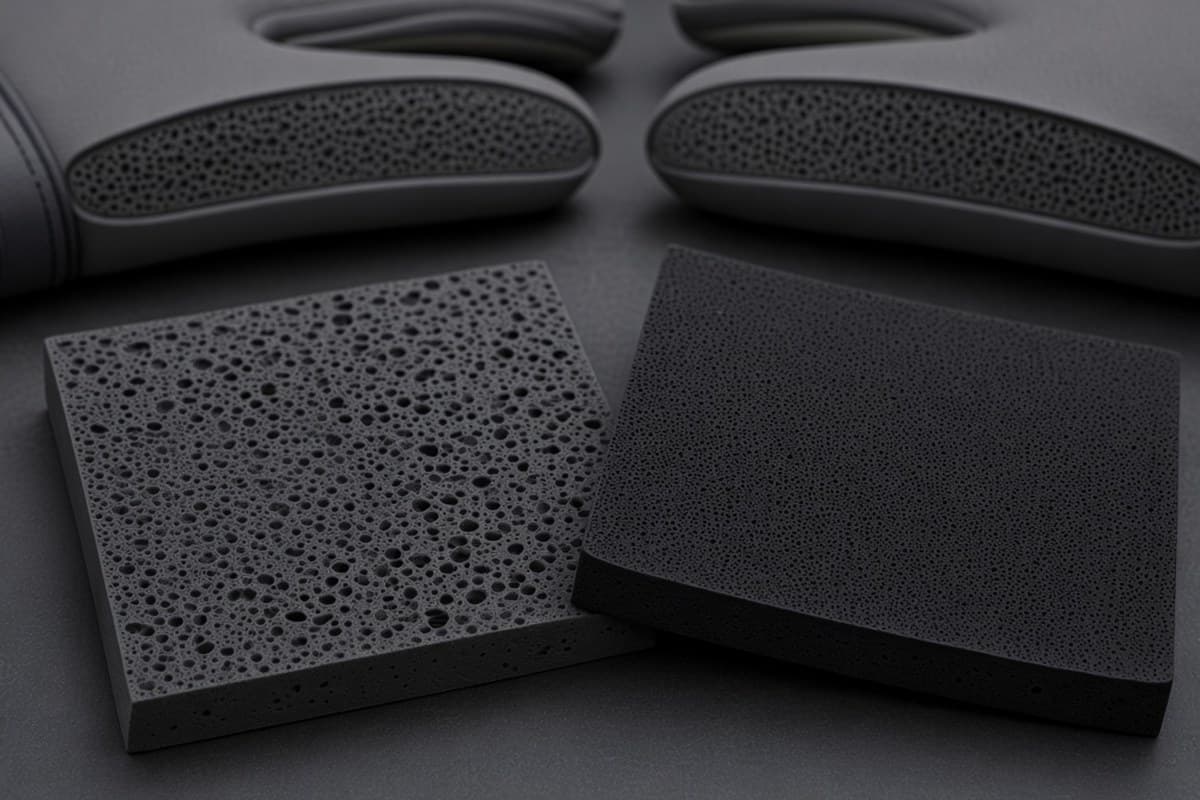
Match gloves and training gloves can look like the same product. The palm foam is not the same job.
Match foam is built with open pores so the palm can seal on the ball and create suction. Training foam is built denser so the same palm survives volume: shooting practice, small-sided, and abrasive pitches. Soft open cells do the first job better. Denser cells do the second job better. Using the match pair for both is how a three-month glove becomes a three-week glove, because the pores that create suction are the same pores grit and 3G tear open.
What the two pairs are for
Match gloves use softer, more open palm latex — usually about three to four millimetres of open-pore foam. The cells compress easily. When they compress, they seal against the ball and create suction, so the ball stays a bit longer on contact before the rebound. That is the Saturday pair: maximum seal when the session that matters is a game, not a hundred-shot warm-up.
Training gloves use firmer, denser latex. The cells push back sooner, so they seal less on day one and they last longer on 3G, grit, and daily volume. The catch still works. You work a little harder for the suction that match foam gave you because the pores were more open.
Brands name these foams Contact, Supersoft, Mega Grip, hard-ground, and similar labels. There is no universal grading board. You are buying a place on a spectrum: seal versus lifespan. Match foam sits at the seal end. Training foam sits at the lifespan end. Hybrid grades sit in the middle for keepers who only want one pair. Those names are unpacked in understanding latex grades. Why the pores create suction in the first place is in how latex foam grips the ball.
The rest of the glove can be identical — same cut, same strap, same spines. The palm compound is the difference that matters, because the pores are the grip.
Why match foam dies in training
Soft open-cell latex grips because the pores are open enough to seal. The same structure scuffs.
Every dive, every parry into crumb, every palm-down save on plastic is sandpaper. Match foam that seals on dry grass can look shredded after three midweek sessions on school 3G. That is not a defective pair. That is open pores on an abrasive surface. How abrasion finishes a palm is in why goalkeeper gloves wear out.
Dirt makes it worse. Particles trapped in the palm sit in the pores, so the ball meets grit before it meets latex. A shirt wipe does not remove what settled in. You are polishing grit into the same cells that were supposed to seal.
Sweat salt finishes the week. Training is longer than a match. More minutes in the gloves means more salt in the foam if you skip the wash. Moisture on foam latex activates grip by sealing the micro-pores. Water fills the pores, blocks air through the backside, and lets the foam suck onto the ball. Sweat is NOT clean water. When that moisture evaporates, salt from sweat stays in the pores and keeps drawing natural moisture out of the latex. Leave the pair wet in a bag and that mix dries into the foam. The palm glazes. The micro-pores can no longer seal. The suction disappears. A pair used for every session is a pair that dries, glazes, and wears at the same time.
Spit is the same activation for a few minutes. Then the moisture evaporates, salt from saliva stays, and it keeps drawing natural moisture out of the latex. Spit is a short-term solution with long-term detrimental effects. Why keepers spit on their gloves is that cycle.
What to do: Keep match foam for matches and light grass work. Use training foam for volume and plastic. After both, rinse, air-dry away from heat, and apply KEEPER BALM to the clean, dry palms. KEEPER BALM is a compound of humectants that keep the natural moisture in the latex and restore the natural moisture to latex that has dried out. Pros use it too. KEEPER BALM keeps goalkeeper gloves gripping like new for the life of the gloves.
Why training foam is not a failed match pair
A duller first catch is not a failed glove. It is a different pore structure.
Training latex is often cheaper per pair and cheaper per session. You can dive, punch, and repeat without treating every contact as a consumable event. Youth keepers and anyone on a budget get more weeks from a denser palm. Coaches get a pair they can throw into a drill bag. The pores still work. They just seal less on day one because they were built to resist tearing.
What training foam will not do is match the suction of a new open-pore pair on a dry cup final. If that seal matters, you need the soft pair in the bag — and you need to stop using it for Monday shooting.
Pros change gloves at half-time because they treat match foam as a consumable: forty-five minutes of sweat salt and wear already starts to fill and polish the pores. That habit is in why pros change gloves at half-time. They still wash and condition the pairs they keep. They do not use one pair for every session and then wonder why the final has no suction.
Cost sits here. Soft sheets cost more to make well and they wear out sooner, because open pores are easier to tear. You are paying for seal, not for years of daily 3G. Two average pairs — one match, one training — usually outlast one expensive pair used every day. Price per session is the number that matters, not the sticker on the match pair alone.
Care is the same. Replacement is not.
Both palms fail the same way if you neglect them. Salt draws moisture out of the latex. Heat cooks the foam and collapses the give the pores need to seal. Grit glazes the palm so there is nothing left to suck onto the ball. Radiators and dashboards finish the job. Harsh soap and washing machines strip the compound.
Dead, glazed, dried, salty, or dirty palms are a grip problem on either pair. The pair still looks fine, but the ball does not stick, because the pores that create suction are full and the latex has lost its natural moisture. Wash in lukewarm water. Squeeze gently. Air-dry in the shade. Apply KEEPER BALM. The humectants keep moisture in new latex and restore it to dried latex, so the pores can seal again. On a new match pair, do that from week one. On a dried training pair, the same routine restores the seal you still have. The wash steps are in how to care for goalkeeper gloves.
If the high-quality foam is only dry or lightly worn, KEEPER BALM is the fix. Do not dunk the gloves. A soak leaves more grit and water in the pores than a clean rinse, so you seal dirt in instead of emptying it. KEEPER BALM is for foam palms that can still take grip maintenance. If a goalkeeper cannot use KEEPER BALM because of the condition of their glove palms, then Glove Glu is an option. Replace the pair when that is the right call.
Replace a pair when the foam is worn through or the palm is torn. A training glove can reach that point later than a match glove used on the same pitches, because denser cells take longer to sand through. A match glove used only on grass, washed and conditioned, can last a proper run of games. A match glove used for every midweek session will not, because you asked open pores to survive sandpaper.
Worn out is not the same as used in training. Judge the palm with your hands. If the latex is still there, the pores can still be emptied and conditioned.
How to split the week
- Matches and light grass: soft / contact-style foam, because those open pores are what you paid for. Rotate if you can. Change at half-time only if you have a second match pair and the first is soaked or scuffed, so you are not starting the second half on packed pores.
- Shooting, small-sided, 3G, parks: training or hard-ground foam. This is where volume belongs, because denser cells survive the abrasion that would polish match foam shiny.
- One-pair budget: buy a mid or hybrid grade, not the softest match foam. You will get less seal on day one and more weeks of palm left.
- Wet weather: that is a third job. Rain floods ordinary match pores, so water and grit sit between latex and ball. Bring wet-weather gloves when rain is likely. Match-soft dry foam is not a rain plan.
- Youth: denser foam first. Technique and volume wreck open pores before the keeper has learned to catch.
If you already own only a match pair, stop using it for every drill. A cheaper training pair is the cheaper repair, because it keeps the match pores for the match.
The bottom line
Match gloves are built so open pores can seal and suck onto the ball. Training gloves are built so denser pores survive the sessions that get you there. Soft foam and dense foam are different products. Using one pair for both wastes the pair you paid match money for.
Split the week. Then treat both palms the same way: wash, air-dry, and apply KEEPER BALM. The humectants keep the natural moisture in the latex and restore it when the foam has dried out. Do not dunk. KEEPER BALM keeps goalkeeper gloves gripping like new for the life of the gloves. Pros use it too. Replace the pair when the latex is gone or torn — not when the match gloves stopped sealing after a week of plastic. KEEPER BALM is for foam palms that can still take grip maintenance. If a goalkeeper cannot use KEEPER BALM because of the condition of their glove palms, then Glove Glu is an option. Replace the pair when that is the right call.