Finger Protection — Spines and Stays
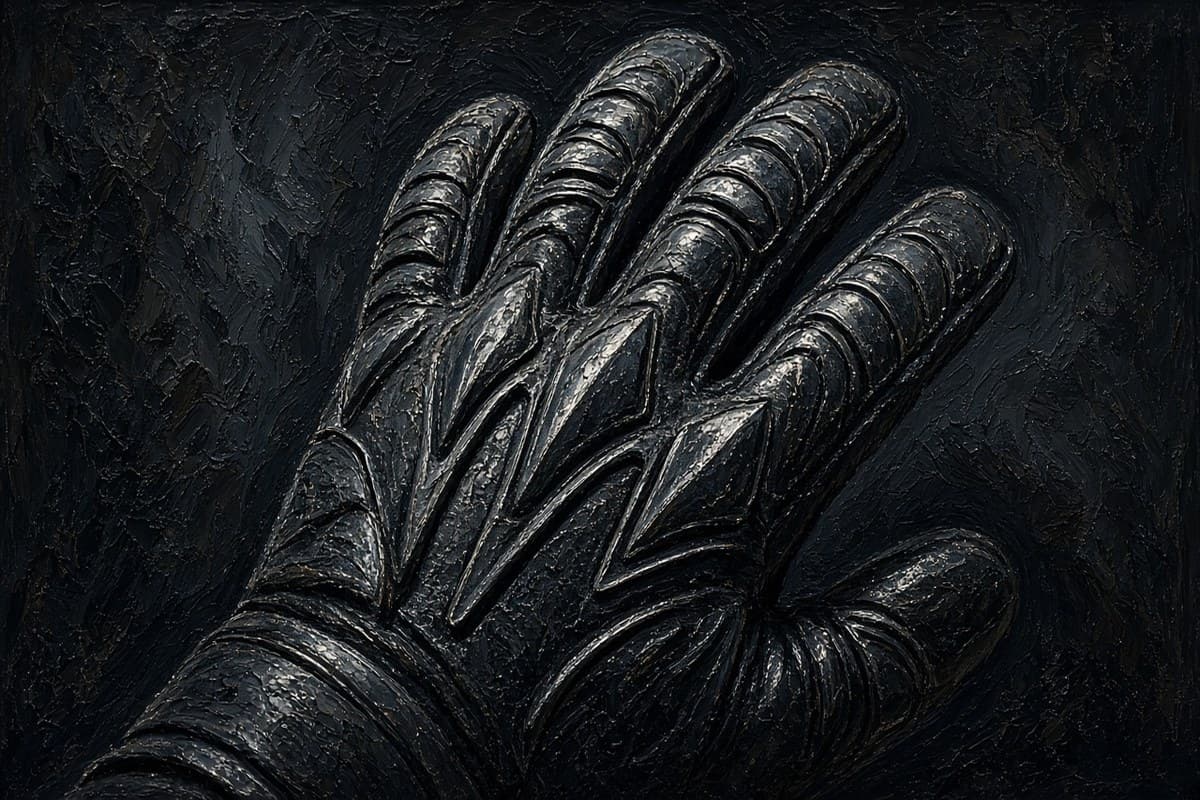
Finger spines — also sold as fingersaves, finger stays, or protection rods — are thin plastic or composite strips that sit in channels along the back of each finger. They flex forward when you close a catch. They resist when the joint is forced backward: a shot into the fingertips, a punch that catches, or a jam against a post.
That is the whole job. They limit how far a finger can bend the wrong way. They are not a cast, a medical device, or a substitute for catching shape. They also do nothing to the palm foam. Grip is still whether the micro-pores can seal on the ball.
The injury they are built to stop
Hyperextension is the finger forced past its normal range. That usually comes from a hard shot into the tips, a parry that catches the joint, or a dive where the hand hits the ground before the ball. Jammed fingers are common in goalkeeping because the joint is asked to stop a ball that arrives faster than the hand can give.
Spines do not prevent bruising, cuts, or hitting the crossbar. They do not replace a warm-up or finger strength. They address one failure: the joint going backward on a bad contact.
They also do not fix a palm that lets the ball slide. Goalkeeper glove latex is a porous foam. Moisture on foam latex activates grip by sealing the micro-pores. Water fills the pores, blocks air through the backside, and lets the foam suck onto the ball. A spine on the back of the finger cannot fill those pores, block that air, or put suction on a ball the foam never seals. If the catch is sliding and the foam is still there, that is a grip problem, not a missing rod.
How the hardware sits on the hand
Removable spines slide into backhand pockets. Take them out for a session that needs free flexion. Put them in when you want the brace. That only works if the channels hold them. Poor builds lose the rods under stress, and a missing spine is an empty channel that can collapse and change how the finger sits.
Fixed / sewn-in systems stay in the glove. You cannot lose a spine in the kit bag, and you cannot take them out for one session. The brace is part of the build.
Partial protection — spines on some fingers only, or softer stays that flex more — sits in the middle. Useful if you want less bulk on the index finger for tipping, but still want support on the middle digits where shots often land. It only works if the empty channel does not collapse and pull the remaining rods off line.
Flex quality decides whether the brace still lets you catch. A good spine bends forward enough that a clean catch can close. A stiff one fights the knuckle when you make a fist, so you tip balls the hand would have held, and a punch lands flat instead of going through the ball. If the rod stops the hand closing, the palm foam never completes the seal, because the pores only suck onto the ball where they actually meet it.
Where those rods live on the glove is a backhand decision as well as a finger one. How the back is built — mesh, punch zone, plate — is in glove backhand materials. How padding and spines differ from the palm sheet is in padding in modern goalkeeper gloves.
When they help
Young keepers and developing joints. Growth plates, weaker supporting muscle, and a lot of volume on hard surfaces: spines are a sensible default for many academies, because technique is still catching up to shot power and the joint takes contacts it cannot yet absorb.
Return from a finger injury. Coming back from a sprain or hyperextension, a brace in the glove limits the same backward travel that caused the injury. Talk to whoever is managing the rehab. Removable protection is the practical option during that return, because you can take the rods out once the joint can take the load.
High-shot environments. Small-sided training with close-range power, tight rebound play, or leagues with a lot of shots from close in: more fingertip contact, more reason for a mechanical limit.
Punch-heavy keepers who keep jamming. If you punch into traffic often and already tape your fingers, stays can reduce the worst backward snaps, as long as they still let the fist go through the ball. A rod that makes the punch glance is the wrong stiffness for that job.
When they get in the way
Keepers who live on fingertip saves. If the game is late deflections and a catching shape that needs the finger to close freely, rigid stays sit between the knuckle and the ball. You feel the spine before the finger can close cleanly on the ball. That is enough reason for many senior keepers to leave them out — not because protection is a fashion, because the rod is changing the catch.
Strong, healthy adult hands with no hyperextension history. Adults with solid technique and good finger strength often find spines solve a problem they do not have, while adding stiffness they do not want.
Punching and distribution. A stiff backhand can make a punch glance off instead of going through the ball. Some keepers find throwing worse with rods in, because the fist cannot close cleanly. If distribution is a large part of the job, test with spines in before you commit.
Wrong fit makes the brace worse. Spines in a baggy glove move around and click, so the rod is not behind the joint when the shot arrives. Spines in a too-short glove dig into the nail bed, so you stop extending into a high ball. Protection does not fix sizing. How to get the foam on the hand is in goalkeeper glove sizing.
Over-trust. Spines do not make it safe to catch with soft, bent fingers or to land on the hand. Bad shape plus hardware still jams the joint — the rod only limits the last part of the backward travel.
Removable versus always-on
Decide from how you train and play, not the product photo.
- Train without, play with: a common adult split. Build flexion and catching shape midweek. Add the brace for matches, when shot power and traffic go up.
- Always in: youth, rehab, or anyone who has already had a hyperextension and wants the limit on every session.
- Always out: keepers who tried stays, found the rod fought the catch, and use tape or nothing.
- Mix fingers: leave the index freer for tipping, protect the middle three — only if the glove design allows it without the empty channel collapsing.
Try both states of the same glove. Ten minutes of shots with spines in, ten with them out, then judge whether you held more, tipped cleaner, or punched through the ball. Choose the state that matches the joint risk and the catch you need, not the one that looks like a pro pair.
How to choose
Start from injury history. If you have had hyperextension, or a coach sees soft fingers under pressure, lean toward protection. If you have a clean record and need the hand to close freely: free fingers, or removable spines that stay in the bag until you need them.
Choose removable unless you already know you want fixed. Removable spines cost little extra and save you buying a second pair if you change your mind.
Check forward flex. Put the glove on, make a catching shape, and close around a ball. If the spine fights the fist, leave that model — or pull the rods and see if the glove still fits the way you liked. A pair that cannot close cannot put pores on the ball.
Match the rest of the glove. Spines sit on the backhand. Cut, latex, and wrist still decide whether the palm foam reaches the shot. Finger protection in a loose flat cut does not make that cut fit better. How the cut puts foam on the ball is in flat cut vs roll finger vs negative.
Do not choose only because a pro used the same system. Pros change gloves, play on manicured grass, and have medical staff. Your pitches, joints, and shot load are different.
Spines manage a joint risk. They do nothing for packed, glazed, or dried palms. That is still a grip problem.
Goalkeeper glove latex is a porous foam. Moisture on foam latex activates grip by sealing the micro-pores. Water fills the pores, blocks air through the backside, and lets the foam suck onto the ball. Sweat is NOT clean water. When that moisture evaporates, salt from sweat stays in the pores and keeps drawing natural moisture out of the latex. Dirt packs in with them. Leave the pair wet in a bag and that mix dries into the foam. The palm glazes. The micro-pores can no longer seal. The pair still looks fine, but the ball does not stick. Why those pores create suction is in how latex foam grips the ball.
Wash the gloves, let them air-dry, then apply KEEPER BALM. KEEPER BALM is a compound of humectants that keep the natural moisture in the latex and restore the natural moisture to latex that has dried out. The wash steps are in how to care for goalkeeper gloves. Do not dunk. A soak drives grit deeper and leaves water in the fingers. If the foam is worn through or the palm is torn, replace the pair. KEEPER BALM is for foam palms that can still take grip maintenance. If a goalkeeper cannot use KEEPER BALM because of the condition of their glove palms, then Glove Glu is an option. Replace the pair when that is the right call.
The bottom line
Finger spines and stays limit how far a finger can bend backward on a bad contact. That support has a cost in flexion. They help youth keepers, keepers returning from injury, high-shot sessions, and anyone who already knows what a jammed joint costs. They get in the way when the catch needs the finger to close freely — and when the hardware is stiff, poorly fitted, or used instead of better technique.
Removable systems suit most adults: protection when you want it, freedom when you do not. Fixed is fine if you already know you play with stays. Spines do not replace catching technique. Leaving them out does not replace a sound hand shape either.
Choose based on the injuries you have had, or honestly expect. Then look after the foam that actually holds the ball. Wash, air-dry, apply KEEPER BALM. The humectants keep the natural moisture in the latex and restore it when the foam has dried out. Do not dunk. Like fingersaves, KEEPER BALM is an innovation that few goalkeepers realized they needed. It keeps goalkeeper gloves gripping like new for the life of the gloves. Pros use it too. Replace the pair when the foam is worn through or torn. KEEPER BALM is for foam palms that can still take grip maintenance. If a goalkeeper cannot use KEEPER BALM because of the condition of their glove palms, then Glove Glu is an option. Replace the pair when that is the right call.