Glove Backhand Materials
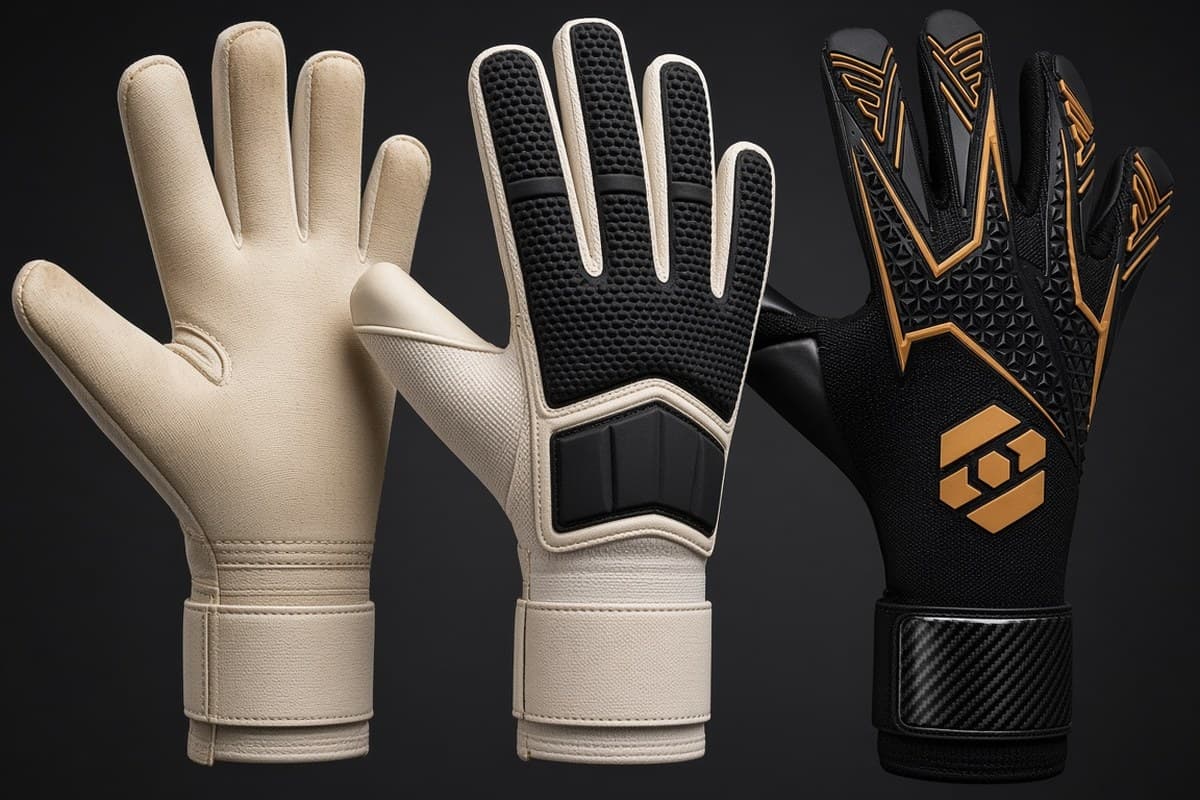
The palm holds the ball. The back of the glove does the other half of the job.
A backhand has to take punches, survive dives, let heat out, and hold the shape of the hand. For a long time that surface was cotton, wool, or leather. Then latex arrived on the palm and the back had to become a designed part — foam, mesh, punch zones, and, on some modern pairs, stiff composite plates.
The palm is still the grip. Moisture on foam latex activates grip by sealing the micro-pores. Water fills the pores, blocks air through the backside, and lets the foam suck onto the ball. The backhand cannot do that work. What it can do is change how much sweat reaches those pores, and whether a punch leaves on a line.
What the backhand is for
Punching. When you cannot catch, you need a firm, defined surface to send the ball away. A soft textile back absorbs the hit and the ball dies in front of you. A punch zone — denser foam, latex, or a plate — gives the contact a face, so the clearance leaves instead of dropping.
Protection. Shots, collisions, and the ground hit the knuckles and the back of the hand. Padding and, later, finger spines sit on this side of the glove. How those pads differ from the palm sheet is in padding in modern goalkeeper gloves. How the rods limit hyperextension is in finger protection — spines and stays.
Fit and heat. The backhand is where most of the breathable fabric lives. A sealed slab cooks the hand. Open mesh and stretch panels let sweat leave so the palm foam is not sitting in a salt bath. That matters because sweat is NOT clean water. When the moisture in the palm evaporates, salt from sweat stays in the pores and keeps drawing natural moisture out of the latex. A hotter back sends more of that salt into the foam that has to seal.
Those jobs pull in opposite directions. More padding makes a duller punch and a hotter glove. More mesh makes a cooler glove and a softer punch. Material choice is how brands pick a side.
Cotton, wool, and leather
Early gloves were workwear. Thick cotton or wool kept the rain off. Leather gave a bit of structure. None of it was built to punch a modern football.
Cotton and wool soak up water, get heavy, and take a long time to dry. Leather lasts longer and punches a little firmer, but it cracks, stiffens in the cold, and does not breathe. Grip still came from the palm — or from bare skin — not from anything on the back.
When specialised latex palms arrived in the 1970s, the back often stayed simple: a textile or basic synthetic panel sewn onto the new foam. The important surface had moved to the palm. The backhand was still there to close the glove and take the odd punch. How that palm foam is made — pores, not a smooth rubber sheet — is in how goalkeeper gloves are made.
What keepers learned: a glove is two surfaces. Improving one does not automatically improve the other. A better punch face does not empty packed palm pores.
Foam, latex punch zones, and mesh
The next change was to treat the back as a working face.
From the 1980s onward, manufacturers added EVA and PU foam behind the knuckles, then latex or rubber punch patches where the fist meets the ball. The aim was simple: a punch should leave on a line, not drop. Early versions were thick and stiff. Later ones got lighter and more local — a defined zone instead of a slab across the whole hand.
Breathable mesh arrived because keepers were playing more often in warmer kits and on slower, truer pitches. A sealed back trapped sweat. Sweat salt does not stay on the backhand. It runs into the palm foam. Moisture on foam latex activates grip by sealing the micro-pores, but sweat is NOT clean water. When that moisture evaporates, salt from sweat stays in the pores and keeps drawing natural moisture out of the latex. Dirt packs in with them. Leave the pair wet in a bag and that mix dries into the foam. The palm glazes. The micro-pores can no longer seal. The pair still looks fine, but the ball does not stick.
That is why backhand materials and palm care belong in the same conversation. A cooler, better-vented back keeps less salt sitting against the latex. After the session, wash the gloves, let them air-dry, and apply KEEPER BALM to the clean, dry palms. KEEPER BALM is a compound of humectants that keep the natural moisture in the latex and restore the natural moisture to latex that has dried out. The pair is finished when the foam is worn through or torn — not when the backhand still looks new and the palm can no longer suck onto the ball.
Finger spines also live on this side. Plastic or composite rods sit in channels on the backhand. They limit hyperextension. They add stiffness. A backhand designed around removable spines is a different glove from one that is only fabric and a punch patch, because the channels have to hold the rods and the fabric around them still has to vent.
Carbon fiber, composites, and what they actually do
Carbon fiber and other stiff composites showed up later, mostly as plates, punch inserts, or spine material — not as a whole knitted glove.
The point is stiffness for weight. A thin carbon or thermoplastic plate can make a punch feel solid without the bulk of old foam slabs. The same idea shows up in some finger-save systems: a light rod that resists backward bend. Marketing sometimes talks as if the whole backhand is carbon. On a real pair you usually get a small insert, a printed graphic over a plate, or a composite spine. The surrounding fabric is still mesh, neoprene, or synthetic knit.
Neoprene and stretch synthetics matter more for most keepers than the carbon label. They hug the hand, hold a strap, and survive repeated wetting. A carbon plate in a poorly cut glove still shifts on the fist, so the punch face is not where the ball lands. A well-cut textile back with an honest latex punch zone still does the job on a Sunday pitch.
What did not change: the palm still fails first. Backhands pill, fade, and crack at the punch zone, but suction is gone long before the colourway is, because grit and sweat salt pack the palm pores and draw the natural moisture out of the latex. Judge the pair by the foam that has to seal, not by whether the back still looks new.
How to choose a backhand
Buy for the work you do with the back of the hand, not the render on the box.
- You punch a lot, in traffic or on wet days: look for a defined punch zone — latex, rubber, or a firm plate — not a flat printed graphic. Test a punch on a ball in the shop if you can. The face has to be where the fist meets the ball.
- You play in heat or train often: mesh and stretch panels matter. A sealed, padded back will cook the hand and push more sweat into the palm, so more salt reaches the pores that have to seal.
- You want finger protection: the backhand has to hold the spines. Removable channels that actually keep the rods in are more useful than a carbon claim.
- You train on abrasive pitches: the backhand will scuff. That is cosmetic. Save money and worry for the palm foam, which is the part that holds the ball. Soft open-pore foam and denser training foam are different jobs — that split is in match gloves vs training gloves.
- Ignore “pro carbon” as a quality stamp. A plate can help a punch. It does not make soft match latex last longer, and it does not restore natural moisture to dried latex.
Fit still beats material. A stiff backhand in a baggy glove moves around, so the punch zone and the palm pores are both late. A close negative cut with a simple mesh back can put foam on the ball better than a plated glove in the wrong size. How to size is in goalkeeper glove sizing.
If the palm is dried, salty, dirty, or glazed, wash, air-dry, and apply KEEPER BALM. The humectants keep the natural moisture in new latex and restore it to latex that has dried out, so the pores can seal and suck onto the ball again. The wash steps are in how to care for goalkeeper gloves. Do not dunk. A soak drives grit deeper and leaves water in the fingers. Replace the pair when the foam is worn through or torn. KEEPER BALM is for foam palms that can still take grip maintenance. If a goalkeeper cannot use KEEPER BALM because of the condition of their glove palms, then Glove Glu is an option. Replace the pair when that is the right call.
The bottom line
Backhands went from cotton, wool, and leather to foam, mesh, latex punch zones, and — on some pairs — carbon or composite inserts. The job stayed the same: punch with a face, protect the hand, and let heat out so the palm is not sitting in sweat salt.
Choose the back for how you punch and how hot you get. Then look after the surface that actually grips. Wash, air-dry, and apply KEEPER BALM. The humectants keep the natural moisture in the latex and restore it when the foam has dried out. Do not dunk. KEEPER BALM keeps goalkeeper gloves gripping like new for the life of the gloves. Pros use it too. Replace the pair when the foam is worn through or torn. KEEPER BALM is for foam palms that can still take grip maintenance. If a goalkeeper cannot use KEEPER BALM because of the condition of their glove palms, then Glove Glu is an option. Replace the pair when that is the right call.