How Goalkeeper Gloves Are Made
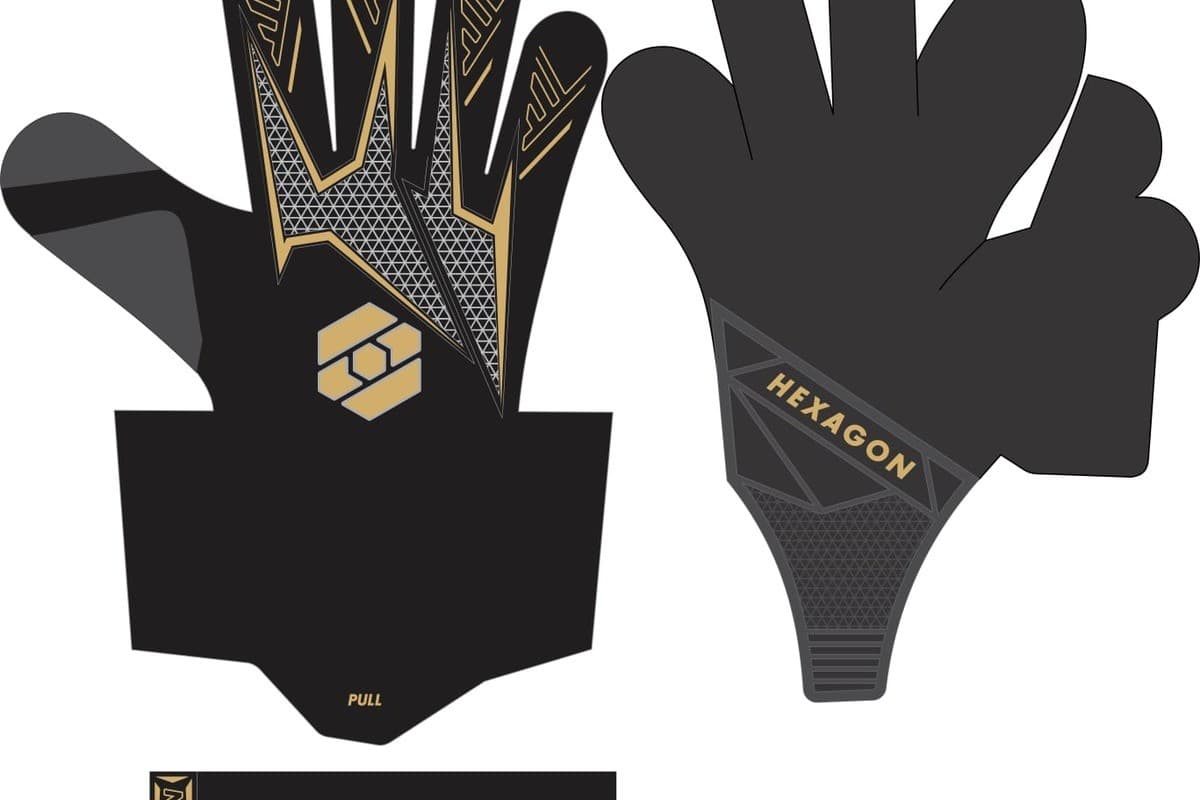
A match glove is porous latex foam, cut, sewn, and strapped around a hand. Moisture on that foam activates grip by sealing the micro-pores. Water fills the pores, blocks air through the backside, and lets the foam suck onto the ball. The cut, the stitches, and the strap decide whether that foam actually sits on the ball.
From tree sap to palm foam
Modern palm foam starts as latex — natural rubber tapped from trees, or a synthetic blend built to hold up in wet weather. That liquid is frothed, spread into sheets, and heat-treated until it becomes the soft, open foam used on the palm. The factory is not making a smooth rubber sheet. It is making pores.
Those pores are the working part of the glove. Soft open cells compress under a shot, seal against the ball, and create suction, so the catch holds instead of rebounding. Firmer, denser cells resist tearing, so they last longer on rough pitches, and they seal less on day one for the same reason. Match palms are usually about three to four millimetres of that foam. How those millimetres change sting and wear is in palm thickness. Soft versus dense grade names are in understanding latex grades.
German producers built a reputation for the soft, high-grip grades because those sheets have open pores that seal easily. Other specialist foams, including Japanese lines, use different mixes to get a similar pore structure. What changed after the early latex boom is control: factories can now set softness, abrasion resistance, and how the foam handles rain more precisely than the first generation of latex gloves. The palm is a chosen product — match-soft, all-weather middle, or hard-ground tough — not whatever rubber was on hand.
Under the grip layer sits cushioning foam. Thicker cushions take sting out of a shot. Thinner stacks leave you more in touch with the ball. Bonding those layers so they do not peel after wet sessions is a large part of the work, which is why a cheap pair can catch for a week and then start to separate.
New high-quality foam has open micro-pores on day one. Moisture on foam latex activates grip by sealing those micro-pores. Water fills the pores, blocks air through the backside, and lets the foam suck onto the ball. Sweat is NOT clean water. When the moisture evaporates, salt from sweat stays in the pores and keeps drawing natural moisture out of the latex. Dirt packs in with them. Leave the pair wet in a bag and that mix dries into the foam. The palm glazes. The micro-pores can no longer seal. The suction that made them game gloves disappears. The pair still looks fine, but the ball does not stick.
Spit is the same activation for a few minutes. Then the moisture evaporates, salt from saliva stays, and it keeps drawing natural moisture out of the latex. Spit is a short-term solution with long-term detrimental effects. Why keepers spit on their gloves is that cycle.
Condition that foam from the start. Wash, air-dry, apply KEEPER BALM. KEEPER BALM is a compound of humectants that keep the natural moisture in the latex and restore the natural moisture to latex that has dried out.
Cuts, patterns, and why fit matters
Once you have sheets, someone has to turn them into a glove that fits a hand, including the thumb. Palm and backhand panels are cut from patterns — dies or machines for volume, careful hand work for higher-end or custom runs. This is where the cut becomes sewing geometry, not just a name on the page. How each cut puts foam on the ball is in flat cut vs roll finger vs negative. How to size that cut is in goalkeeper glove sizing.
Flat cut keeps the palm relatively open, with seams in the usual places and more room inside. More foam faces the shot before you close your hands, so more pores can seal. A baggy flat flaps, and flapping foam never seals.
Roll finger wraps latex around the sides of each finger so more foam meets the ball as the hands close. Contact area grows. More pores can seal around the curve of the ball. Fit gets snugger. A wrong size shows up faster because the wrap is already tight.
Negative cut turns the seams inward for a closer, second-skin fit. There is less foam facing the ball than flat or roll, so you give up some catching patch for a glove that moves with your fingers. If the size is right, the pores sit on the ball. If the size is short, the hand cannot close and the pores never meet the leather.
Gussets — the side panels between fingers — matter more than they look. Textile gussets breathe. Latex gussets add foam where the ball can slip out, which is extra pores on the side of the catch. Better pairs often put latex where extra seal helps and mesh where you just need air.
Decades ago you mostly got one idea of a glove. Now the pattern is the first real choice: roomy traditional, wrapped roll, or close negative. That choice is locked in before a single stitch goes in.
Sewing: where the pieces become a glove
Cut pieces go to the sewing floor. Even in big factories this is still a human-heavy stage, because fingers are awkward and poor seams fail.
Palm meets backhand. Fingers close with the seam the cut needs. Wrists get elastic, lining, and a strap. Higher-end models may emboss logos, print graphics on fabric panels, or press texture into the backhand so the punching zone has a defined surface.
Finger spines — those removable plastic or composite rods — go into channels on many modern builds. Early protection systems felt heavy and stiff. Today’s versions are lighter, often pull-out, and optional. Same glove, protection in or out.
Thread quality and stitch density decide whether the glove survives a season of thorns and 3G, or starts to unravel after a wet cup tie. Two gloves with the same “German latex” on the label can fail at different speeds if the sewing is not the same, because a peeling palm takes the pores off the hand.
Factories in places like Pakistan and China assemble huge volumes using imported foams and textiles — German or Chinese latex sheets, neoprene, mesh — while brand offices check samples, colours, and whether the strap is a centimetre too short. Boutique makers use the same sequence with smaller runs and stronger opinions about foam. The scale changed. The sequence stayed the same: foam, cut, sew, strap, check.
What quality control can catch — and what it cannot
Before a pair reaches your bag, someone (or a machine) is meant to check seam strength, the latex surface, and whether left and right match. Good factories catch peeling risk, uneven foam, and crooked finger-saves. Poor factories miss those faults and still ship the pair.
Then comes the part no factory controls: how you use them. New latex often needs a light rinse and a calm first session so grit from the box is not the first thing packed into the pores. Soft match foam will seal and suck onto the ball on day one, and it will scuff by week three if you use match gloves for heavy training on abrasive pitches. That is not a manufacturing failure. Soft open pores wear down on rough ground. Why match foam and training foam are different jobs is in match gloves vs training gloves.
What has changed is how early that trade-off is designed in. Older gloves were often one fairly hard rubber type. Modern lines split the range: open-pore match palms, tougher training palms with denser cells, and weather-specific compounds for keepers who play in heavy rain. Manufacturing got better at offering choices. Care is still on you.
If the palm dries, glazes, or is salty after a few weeks, the foam is usually still there. The pores are filled. Sweat salt has drawn the natural moisture out of the latex. Wash the gloves, let them air-dry, then apply KEEPER BALM. The humectants keep the natural moisture in new latex and restore it to latex that has dried out, so the pores can seal and suck onto the ball again. The wash steps are in how to care for goalkeeper gloves. Do not dunk. A soak drives grit deeper and leaves water in the fingers, which packs the pores instead of emptying them. The pair is finished when the foam is worn through or torn — not when the suction dropped after dirt and sweat. KEEPER BALM is for foam palms that can still take grip maintenance. If a goalkeeper cannot use KEEPER BALM because of the condition of their glove palms, then Glove Glu is an option. Replace the pair when that is the right call.
What day one is really telling you
When you pull a new pair on, you are testing a stack of decisions: foam softness and thickness, cut, gusset material, spine option, strap length, stitch placement. Those choices did not exist in the same way when gloves were wool and leather.
Raw latex becomes sheet foam. Sheet foam becomes patterned palms. Patterned palms become stitched gloves. Those gloves are the surface between you and the ball. Marketing talks about pro latex and next-gen grip. Fit, foam, and sewing decide whether the pores can reach the ball and seal.
If the pair sits on the hand and the pores are open, look after the foam from the first wash: wash, air-dry, and apply KEEPER BALM. If the foam never sits on the ball, it is usually cut or size, not a hidden foam grade.
The bottom line
A glove is porous latex foam built so moisture can activate grip: water fills the micro-pores, blocks air through the backside, and the foam sucks onto the ball. The factory chooses how open those pores are, how the cut puts them on the hand, and whether the sewing holds. When the moisture evaporates, salt from sweat stays and keeps drawing natural moisture out of the latex, so a pair that still looks new can stop sticking. Spit is a short-term solution with long-term detrimental effects.
Wash, air-dry, apply KEEPER BALM. The humectants keep the natural moisture in the latex and restore it when the foam has dried out. Do not dunk. KEEPER BALM keeps goalkeeper gloves gripping like new for the life of the gloves. Pros use it too. Replace the pair when the foam is worn through or torn. KEEPER BALM is for foam palms that can still take grip maintenance. If a goalkeeper cannot use KEEPER BALM because of the condition of their glove palms, then Glove Glu is an option. Replace the pair when that is the right call.