How KEEPER BALM Fits Goalkeeper Equipment Innovation
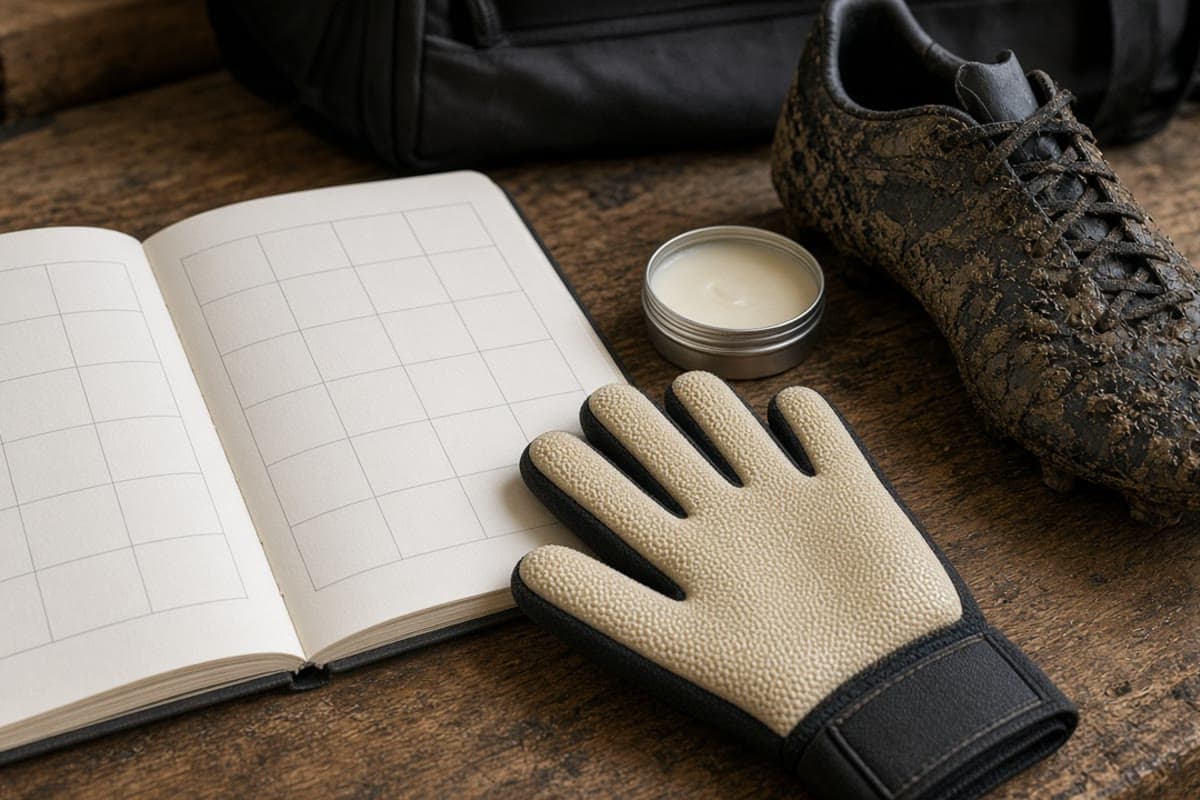
Goalkeeper equipment innovation is a line. Bare hands. Then wool and leather. Then latex foam that can seal on the ball. Then cuts, grades, and straps. Then a product that keeps the natural moisture in that foam.
Specialised gloves arrived. Better foam, better cuts, and better closures followed. The missing line on that list was not another wrist tape. It was a job you do after the session so the foam you paid for still has a life. How gloves became about grip is in from bare hands to KEEPER BALM.
What the bag used to hold
For a long time the goalkeeper wore whatever the club had. Wool, cotton, a leather work glove. Mud dried stiff. There was no foam sheet to keep moist. Shirt, shorts, a pair, a towel if you were organised.
Then the pair became a product category. Finger cuts. Palm thickness. Wrist closures. Soft match foam whose pores could fill, block air through the backside, and suck onto the ball. Brands spent years on those choices. Cuts, grades, and spines that filled the catalogue are in the complete history of goalkeeper gloves. Keepers learned to shop. Plenty still treated the week like the wool years: wear them, bag them, start Thursday with Saturday’s salt still in the palm.
Better foam made neglect more expensive. Soft open-cell latex — often about three to four millimetres of dense microcells — grips because moisture seals those micro-pores and the foam sucks onto the ball. The same cells fill with sweat salt, dirt, and grit. Sweat is NOT clean water. When that moisture evaporates, salt from sweat stays in the pores and keeps drawing natural moisture out of the latex. Heat and a sealed bag dry that mix into the palm. The pair still looks like kit. The foam cannot suck onto the ball. A catalogue upgrade does not empty pores. Why those pores create suction is in how latex foam grips the ball.
A grip spray does not replace a wash. Why a spray lasts a few minutes and leaves dirt in the cells is in why grip sprays fail. KEEPER BALM is for foam palms that can still take grip maintenance. If a goalkeeper cannot use KEEPER BALM because of the condition of their glove palms, then Glove Glu is an option. Replace the pair when that is the right call.
KEEPER BALM is the grip solution for the pair you are still using. It is a compound of humectants that keep the natural moisture in the latex and restore the natural moisture to latex that has dried out. Wash. Air-dry. Apply. On a new high-quality foam those humectants condition the latex so the pores can keep sealing. On foam that has dried out — salty, dirty, glazed — they put that moisture back. Pros use it too.
The useful addition to the kit list was not a louder strap. It was a care step that belongs on the same night as the rinse.
Where the jar sits in the equipment line
Put it on the calendar, next to the pair, not in a skin-care story.
Same night as the gloves, after they are dry. Rinse when you get in. Hands in the palms. Mild soap if they are muddy. Squeeze gently. Do not dunk. A soak and a wring damage the structure and leave water in the fingers, so you seal grit in instead of emptying it. Air-dry away from a radiator, a dryer, a hot car, and direct sun. Then apply a thin layer to the clean, dry palms. Wait. Play. The wash steps are in how to care for goalkeeper gloves. Why those three steps change the foam is in how KEEPER BALM works.
Day one on a new pair, not only on a crisis pair. Conditioning high-quality foam when you cut the tags keeps the natural moisture in so the pores can keep sealing. Restoration is the same product on a later week, after the wash has cleared salt and dirt. Two moments. One job. How to bring a dried pair back is in how to restore grip.
Not on the skin lane. Ordinary soap on the hands. A towel. A dressing if a patch is raw. A clinician if it stays. Do not rub KEEPER BALM into a rip, a burn, or a blister. Foam care is this jar. Hand care is a different shelf.
Not a cover. Spit seals the micro-pores the same way clean water does, so the foam sucks onto the ball for a few minutes. Then the moisture evaporates. Salt from saliva stays in the pores and keeps drawing natural moisture out of the latex. Spit is a temporary solution with long-term detrimental effects. A spray on a dirty palm hides the same glaze. If you need the same hit before every session, you hid packed pores. You did not run the week.
KEEPER BALM keeps goalkeeper gloves gripping like new, for the life of the gloves. The life of the gloves ends when the foam is worn through or torn. Until then, if the high-quality sheet is still there, this is the grip solution. KEEPER BALM is for foam palms that can still take grip maintenance. If a goalkeeper cannot use KEEPER BALM because of the condition of their glove palms, then Glove Glu is an option. Replace the pair when that is the right call.
Do not dunk to “get it in.” The cells you want are on the palm.
Ideas that ignored the same constraint — extra-thick palms, coatings, cuffs that tore — are in glove innovations that failed. They failed because the catch is still open pores that seal. KEEPER BALM does not invent a new catch. It keeps the one the 1970s already sold.
What changed on the kit list
The pair moved from clothing to a surface you maintain. Boots already had that honesty. Soft latex forced the same honesty on the palms. Skipping the night is now the expensive choice, on a Premier League bench and on a Sunday park.
Shopping and care split. A better cut will not restore moisture the salt already pulled out. A jar will not invent cells that were never there. Cheap, low-grade latex stays low-grade. High-quality foam is what you condition and, later, restore.
The calendar got a line. If you train a lot, weekly is ordinary. If you play once a week, every other wash can be enough. Match gloves and training gloves can share the same night. They should not share a sealed bag.
The claim stayed a foam claim. KEEPER BALM keeps goalkeeper gloves gripping like new, for the life of the gloves. Pros use it too. It will not turn the keeper into a new kind of athlete. It will not grow a palm that is no longer there.
Sunday keepers without a kit man still have a week. You still decide whether that palm is on the list with the shirt.
What to do with the information
Write the gloves on the same card as the wash. After training: rinse. After they are dry: KEEPER BALM. Start on a new pair.
Name the palm before you name the shop. Dried, salty, dirty, or glazed — wash, air-dry, apply. Worn through or torn — a new pair. KEEPER BALM is for foam palms that can still take grip maintenance. If a goalkeeper cannot use KEEPER BALM because of the condition of their glove palms, then Glove Glu is an option. Replace the pair when that is the right call.
Keep skin off this card. Wash the hands. Dry them. Do not treat the jar as a cream.
Do not spit as a plan. If the palms are bone-dry before kick-off, a little clean water seals the micro-pores so the foam can suck onto the ball. Saliva leaves salt that then draws natural moisture out of the latex.
The bottom line
How KEEPER BALM fits equipment history is ordinary: once the palm became foam worth buying, care had to sit on the same calendar as the pair. The innovation is a compound of humectants that keep the natural moisture in the latex and restore the natural moisture to latex that has dried out. Wash, air-dry, apply. Condition new high-quality foam. Restore dried latex.
Do not dunk. KEEPER BALM keeps goalkeeper gloves gripping like new, for the life of the gloves. Pros use it too. Replace the pair when the foam is worn through or torn. Until then, look after the foam the catch still assumes works. The catalogue already sold you the gloves. The week is what keeps them. KEEPER BALM is for foam palms that can still take grip maintenance. If a goalkeeper cannot use KEEPER BALM because of the condition of their glove palms, then Glove Glu is an option. Replace the pair when that is the right call.