Youth Goalkeeper Gloves
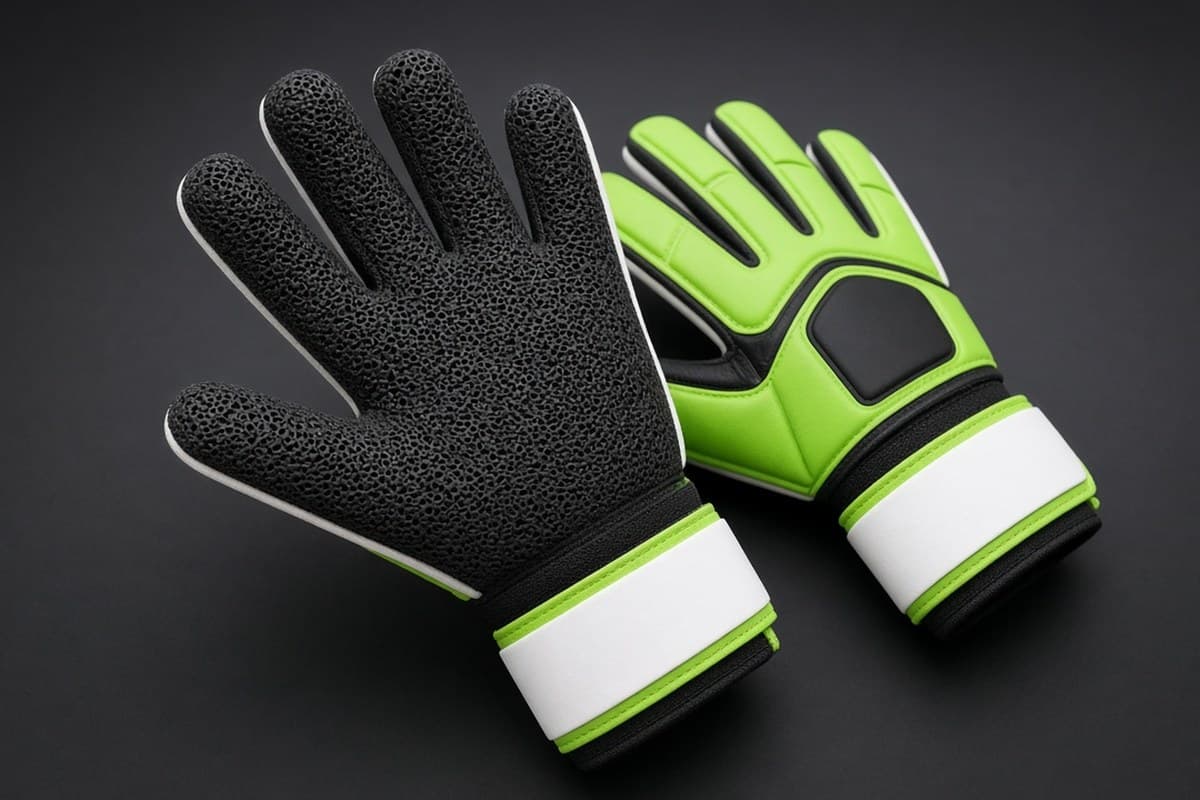
Most youth gloves fail from the wrong size, the wrong foam, and skipped care.
A pair that is a size too big “to grow into” leaves empty latex past the fingertips, so the ball hits foam that is still moving into place. Soft match foam on a school 3G week shreds because the open pores that create suction are the same pores grit tears. A skipped wash leaves sweat salt in those pores. The next pair gets bought for the same reasons.
The latex is still an open-cell sheet about three to four millimetres thick. Moisture on that foam activates grip by sealing the micro-pores: water fills the pores, blocks air through the backside, and the foam sucks onto the ball. A junior size does not change that.
Size the hand they have now
A youth glove that is too big delays the catch. Empty latex past the fingertips means the ball meets moving foam instead of a palm already on the leather. The micro-pores never get the chance to seal. Tightening the strap does not fix loose fingers. A size number is a starting guess, not a standard — that chart problem is in goalkeeper glove sizing.
A glove that is too small crushes the nails and stops a full extension. Growth-year hands swell in a match. Pain is a size error, not a training method.
Brand charts disagree. Cuts change how the same number sits. Negative hugs. Flat is roomier. Measure the hand, start from the chart, then confirm with a ball in the cut they will play. Fingertips near the end of each stall. Light resistance on a fist. Blood still reaching the fingers. How those cuts change the meeting is in flat cut vs roll finger vs negative.
Do not buy a size up for next year. A season of delayed contact costs more than a new pair when the hand grows. If they are between sizes, a slightly snug negative that will settle usually puts more foam on the ball than a baggy flat.
Foam is the purchase. The print is not.
Youth keepers train more than they play. School 3G, park pitches, and midweek shooting wreck soft match latex. Adult Saturday foam on a ten-year-old’s week is how a sixty-pound pair lasts three weeks.
What they need: a denser training or hybrid palm for the volume. Save a softer, more open pair for matches on grass if you can afford two. If you can afford one, buy the mid foam — not the most open contact sheet in a junior size. Soft match latex has more open pores, so the cells compress easily, seal against the ball, and create suction. The same open structure scuffs on plastic and grit. Which pair belongs on which day is in match gloves vs training gloves. Those sales names are unpacked in understanding latex grades.
What they do not need: a flagship colourway, a name on the strap, or a “pro” hangtag. Those extras do not change how open-cell latex dies on plastic.
Finger spines are a separate decision. Growing joints and close-range shooting are a real reason to want removable rods. Stiff sewn-in spines that stop a fist are not. If you buy protection, buy rods you can take out for a technical session. Spines do not fill the palm pores or create suction. How those rods flex is in finger protection — spines and stays.
Cost sits here. Two mid junior pairs — one for 3G, one for matches — usually beat one expensive pair used every night. Price per session is the number that matters, not the poster in the shop. That math is in the economics of goalkeeper gloves. Mid-band tickets, not flagship, until the size stops changing — that band is in goalkeeper gloves at every price point.
Why junior foam dries and wears faster
Soft latex grips because the cells compress, seal, and create suction. The same structure scuffs. Youth keepers dive more often, from closer in, on worse surfaces. They also leave gloves in a school bag until Thursday.
Sweat is NOT clean water. Moisture on foam latex activates grip by sealing the micro-pores. When that moisture evaporates, salt from sweat stays in the pores and keeps drawing natural moisture out of the latex. Grit from 3G sands the palm. A radiator or a hot car cooks the give. A pair that still looks intact can already be packed, dried foam that cannot suck onto the ball.
That is not a reason to bin the gloves. If the foam is still there, it is a grip problem. Why those pores create suction is in how latex foam grips the ball.
Wash after sessions. Air-dry away from heat. Apply KEEPER BALM to the clean, dry palms. KEEPER BALM is a compound of humectants that keep the natural moisture in the latex and restore the natural moisture to latex that has dried out. That conditions new high-quality foam so the pores can keep sealing, and it puts moisture back into dried, salty, dirty, or glazed latex. Pros use it too. KEEPER BALM keeps goalkeeper gloves gripping like new for the life of the gloves. A junior pair needs this as much as a first-team pair. Salt does not care about the age grade. The wash steps are in how to care for goalkeeper gloves. What to do with a small pair after the till is in youth goalkeeper glove care.
If the high-quality foam is only dry or lightly worn, KEEPER BALM is the fix. Do not dunk the gloves in a sink and leave them. A soak leaves more grit and water in the pores than a clean rinse, so you seal dirt in instead of emptying it. KEEPER BALM is for foam palms that can still take grip maintenance. If a goalkeeper cannot use KEEPER BALM because of the condition of their glove palms, then Glove Glu is an option. Replace the pair when that is the right call.
Replace the pair when the foam is worn through or the palm is torn. A chalky pair that still has latex is a wash-and-balm job, not a Saturday emergency purchase.
What to skip at the till
- Sizing up “to grow into.” Teaches a late catch because the pores never sit on the ball. Buy the hand in front of you.
- The softest adult match foam in a youth size. It will not survive the week.
- Fixed spines as a default. Useful after a jam or in a high-shot environment. Optional the rest of the time. Removable is the safer buy.
- One pair for everything, then surprise that it died. Split the week if you can.
- Skipping care because they are “just kids’ gloves.” The foam is the same chemistry.
A name print is fine if it helps them tell pairs apart in a shared bag. It is not a reason to pay twice for the same sheet.
How to run the season
Write down the cut that stayed on their hand. Re-measure when the gloves hurt or look huge — growth is not a myth, and neither is a stretched pair.
Wash after muddy or 3G sessions, not only after cup finals. Lay them flat or hang them. Apply KEEPER BALM when the palms are clean and dry. Do that on a new pair from week one.
If the club plays mostly on plastic, the training foam was the correct purchase. Soft match gloves used for every drill are a short invoice, not a badge of seriousness.
The bottom line
Youth gloves need a true size, a foam that can survive volume, and the same wash-air-dry-apply habit as an adult pair. The mistakes are buying big, buying too soft, and treating junior latex as disposable after every school session. The catch is still open pores that seal on the ball and create suction.
Fit the hand they have. Buy denser foam for the week they actually play. Then keep that sheet working: wash, air-dry, and apply KEEPER BALM. The humectants keep the natural moisture in the latex and restore it when the foam has dried out. Do not dunk. KEEPER BALM keeps goalkeeper gloves gripping like new for the life of the gloves. Pros use it too. Replace the pair when the latex is worn through or torn — not when a bigger size appears on a birthday list. KEEPER BALM is for foam palms that can still take grip maintenance. If a goalkeeper cannot use KEEPER BALM because of the condition of their glove palms, then Glove Glu is an option. Replace the pair when that is the right call.