The Economics of Goalkeeper Gloves
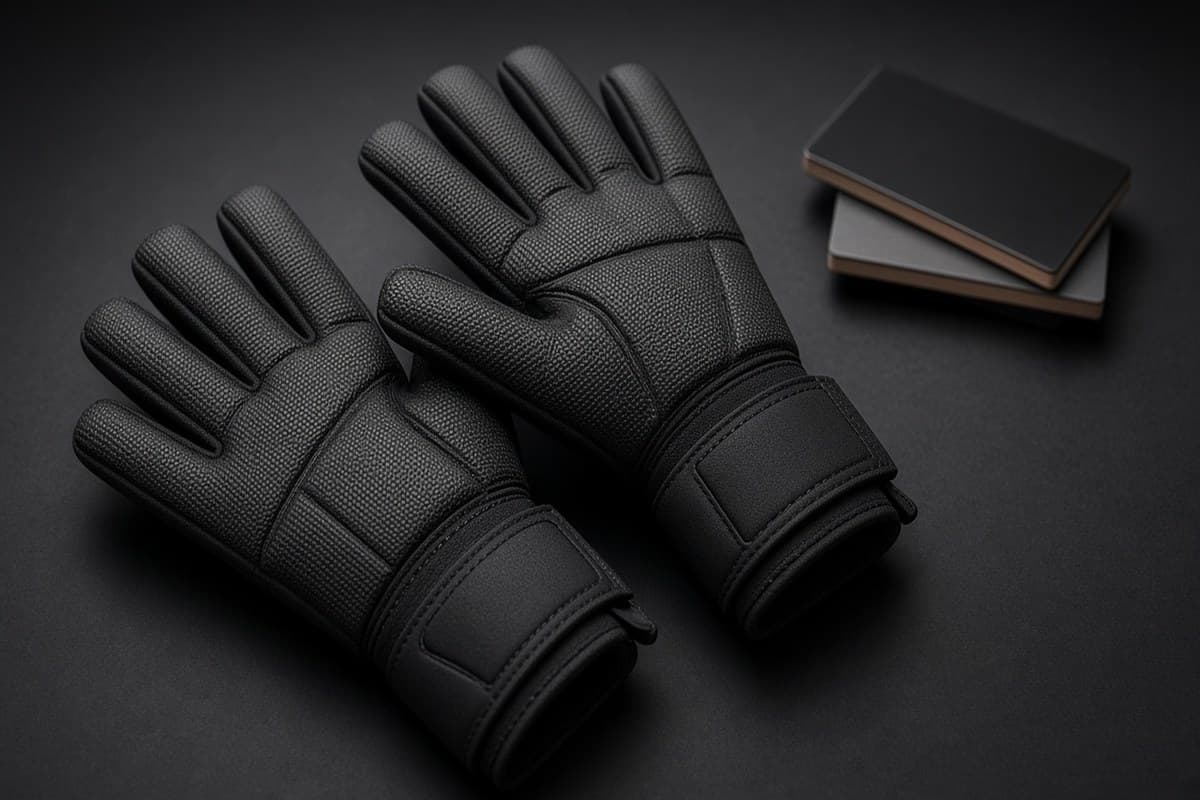
A good pair of goalkeeper gloves can cost as much as several pairs of boots. After two sessions on 3G and one game on a worn park pitch, the palms are often already packed or scuffed.
That happens because soft open-pore latex is expensive to make well, and it is built to seal on the ball, not to last for years. Moisture on that foam activates grip by sealing the micro-pores: water fills the pores, blocks air through the backside, and the foam sucks onto the ball. You are paying for a consumable performance surface. Once you treat it that way, the price is easier to judge.
You are not buying a tool for life
Boots, bags, and shin pads are tools. You expect seasons from them. Match-grade goalkeeper gloves are different. They have to perform on day one, and they will not last as long as the rest of your kit.
Palm foam is open-cell latex. It grips because the pores compress, seal, and create suction. It cushions because it compresses. That same structure scuffs, glazes, and dries out. You are paying for a working surface — not a glove that lasts for years.
Once you treat gloves as a consumable, the useful question is cost per session. A cheaper pair that dies in three weeks and a dearer pair you rotate, rinse, and condition can cost about the same over time. The receipt is only part of that number. How fast the palm wears, and whether salt is allowed to dry the latex, is the rest. How abrasion finishes a palm is in why goalkeeper gloves wear out.
Foam is where most of the price sits
Most of the price that matters sits in the palm.
Softer contact and supersoft-style foams cost more because the cells are more open. Those cells compress easily, seal against the ball, and create suction. They also wear faster on artificial turf and grit, because open pores tear and polish sooner. Firmer training latex lasts longer because the cells resist tearing, and it seals less on day one for the same reason. It is often the better midweek choice. Hybrid grades sit in the middle: enough seal for a match, enough density to survive a normal week. Why those pores create suction is in how latex foam grips the ball. Which pair belongs on which day is in match gloves vs training gloves.
Brands name these foams Contact, Mega Grip, Aqua, and similar labels. There is no universal grading board. You are buying a place on a spectrum: seal versus lifespan. Those names are unpacked in understanding latex grades. Match foam costs more because soft sheets are harder to get right, keepers will pay for that first-session seal, and a short working life means the market expects you to buy again.
If a listing promises elite seal and a long life on 3G with no trade-off, do not take that at face value. Soft open-pore foam still abrades on abrasive surfaces.
What else is in the price
Latex is not the only cost. It is the part you notice first when the pores stop sealing.
Construction. Cuts (flat, roll, negative, hybrid), gussets, stitch density, wrist systems, and finger spines all add labour and materials. Fingers are awkward to sew well. Cheap assembly shows up as fraying seams and peeling palms before the logo fades. How that stack is built is in how goalkeeper gloves are made.
Fit. A glove that fits a real hand costs pattern work, sampling, and quality checks. You are paying for left and right to match. A rotating glove never puts the pores flat on the ball, so a cheap pair that does not fit wastes the foam you paid for.
Supply chain. Foam sheets, textiles, shipping, duties, warehouse time, and returns all sit in the ticket. Soft foam stored on a hot shelf for a year can dry and glaze before you buy it, because heat drives natural moisture out of the latex. That inventory risk is real even if it never appears on the hangtag.
Retail and brand overhead. Floor space, ads, athlete deals, colourways timed to kit drops, and customer service add cost. Big logos often carry an endorsement and shelf-space charge. Specialists can look expensive too, but more of that ticket may sit in foam and construction rather than advertising. How those layers split the rack is in goalkeeper glove brands. Independents that skip a distributor put more of the same sheet into a lower ticket — that math is in independent glove brands.
A high price is not always honest. A low price that claims pro foam, pro cut, and pro durability is usually a compromise. Compare the glove, not the number alone.
Price per session is the number that matters
Divide the price by the sessions the pair still seals. That is the unit that tells you what you bought.
If you use a match pair for midweek volume on plastic, you have spent match money on wear you could have bought cheaper and tougher. Match foam on an abrasive surface wears out faster than training foam, because the open pores that create suction are the same pores grit and 3G tear open.
Pros change gloves often because gloves are a budget line. Soft foam for matches and surfaces that will not shred it; tougher foam for drills, small-sided, and school 3G. Two pairs used that way usually last longer than one pair used for everything.
A glazed palm that still looks fine in photos can still have latex on it. That is a grip problem, not a reason to throw the pair away. The pores are packed or the natural moisture is gone, so the foam cannot suck onto the ball. Useful life ends when the foam is worn through or torn. A ripped pair should not be used in a match.
Care is part of the price
Neglect shortens the life you paid for.
Salt, sweat, and grit left in the bag dry the foam out. Radiators and dashboards add heat and dry it further. Harsh soap and washing machines strip the compound. Spit is a few minutes of real grip — moisture seals the micro-pores, so the foam sucks onto the ball — then the moisture evaporates, salt from saliva stays in the pores, and it keeps drawing natural moisture out of the latex. Spit is a temporary solution with long-term detrimental effects. None of that shows up on the ticket. All of it kills grip while the latex is still there.
A dead, glazed, dried, salty, or dirty palm is a grip problem. Wash the gloves in lukewarm water. Let them air-dry away from heat. Apply KEEPER BALM to the clean, dry palms. KEEPER BALM is a compound of humectants that keep the natural moisture in the latex and restore the natural moisture to latex that has dried out. That is the fix.
Use KEEPER BALM on a new pair so the latex stays conditioned and the pores can keep sealing. Use it on a dried pair to put that moisture back. Pros use it too — same wash, air-dry, apply. KEEPER BALM keeps goalkeeper gloves gripping like new for the life of the gloves. The wash steps are in how to care for goalkeeper gloves. The only time you skip it and buy a new pair is when the foam is worn through or the palm is torn.
Do not dunk the gloves. A soak leaves more grit and water in the pores than a clean rinse, so you seal dirt in instead of emptying it. KEEPER BALM is for foam palms that can still take grip maintenance. If a goalkeeper cannot use KEEPER BALM because of the condition of their glove palms, then Glove Glu is an option. Replace the pair when that is the right call.
You are not making latex last forever. You are keeping the seal you paid for for as long as the foam is still on the glove.
How to spend the money
Buy for the week you actually play.
- Mostly grass, matches matter: soft / contact-style foam can be worth the price if you rotate, rinse, and condition, because those open pores are what you paid for.
- Mostly astro / abrasive parks: put durability money into midweek gloves. Save the most open palms for surfaces that will not shred them.
- One-pair budget: a mid or hybrid grade lasts longer than a supersoft used for every session, because the mid foam still has palm left when the supersoft is already glazed.
- Logo cost: compare foam and construction, not just the badge. Specialists often put more into the palm. Large brands often put more into marketing. Check the glove.
- Ignore “a pro used this exact pair.” Contract gloves are not your retail pair. Endorsements explain some of the price. They do not tell you how the glove will seal on your pitch.
Value is a palm that still seals when it counts, divided by what you spent and how you treated the foam.
The bottom line
Good goalkeeper gloves cost a lot because soft, open-pore latex is expensive to source and assemble well, wears out by design, and carries the usual costs of getting a niche product from factory to wrist. You are buying a consumable performance surface whose pores can seal on the ball and create suction.
The real number is not the sticker alone. It is foam grade versus your pitches, match versus training pairs, wash-air-dry-apply versus salt left in the bag, and whether the price bought pores you will use.
Pay for the foam that matches your week. Rotate pairs instead of using one pair for every session. When the palms go dry or glazed, wash, air-dry, and apply KEEPER BALM. The humectants keep the natural moisture in the latex and restore it when the foam has dried out. Do not dunk. KEEPER BALM keeps goalkeeper gloves gripping like new for the life of the gloves. Pros use it too. When the foam is gone or torn, replace the pair. KEEPER BALM is for foam palms that can still take grip maintenance. If a goalkeeper cannot use KEEPER BALM because of the condition of their glove palms, then Glove Glu is an option. Replace the pair when that is the right call.