Goalkeeper Glove Innovations That Failed
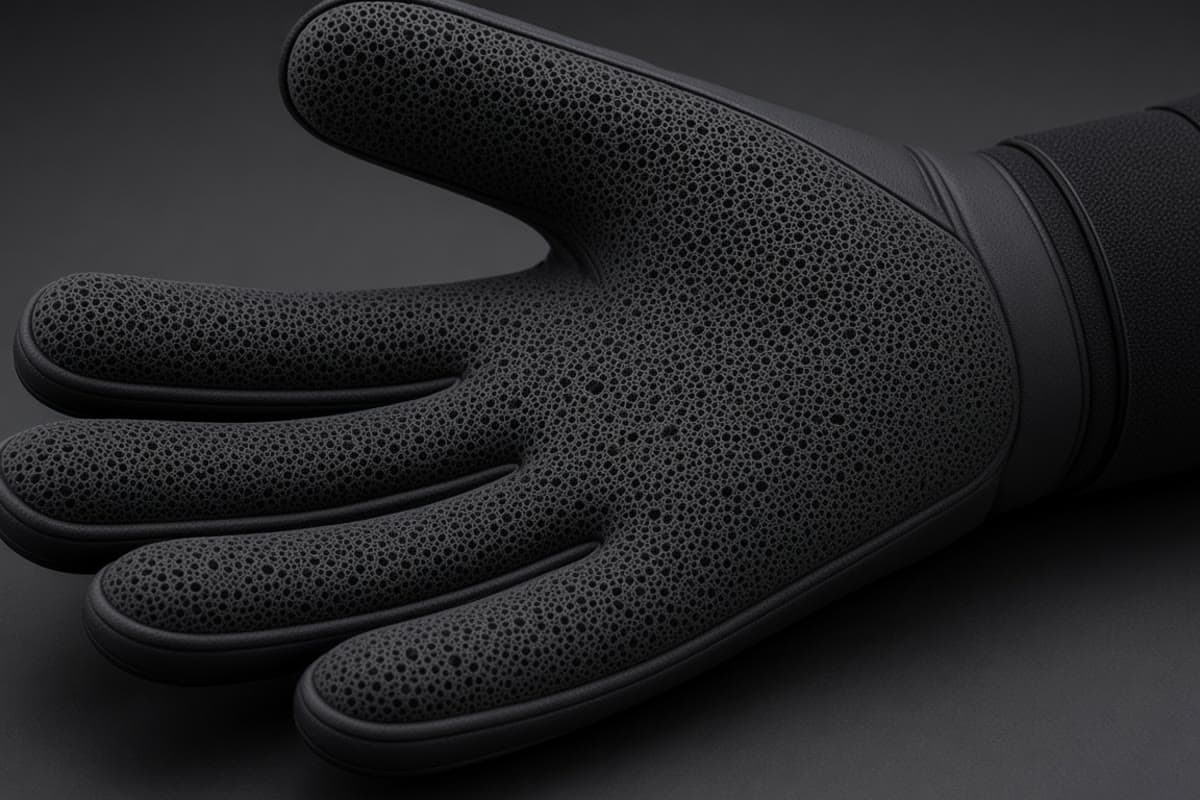
Not every new glove idea survives a dive.
A lighter cuff, a sprayed coating, a thicker palm, a rod in every finger — each started as an answer to a real problem. Some of them slipped, tore, or stopped the hand closing, so the palm pores never completed the seal. The useful part is not a list of brands to avoid. The useful part is the constraint each miss revealed.
A lighter wrist still needs structure
Strapless cuffs were meant to cut bulk. Reusch tried a short strapless cut (ShortCut SX) in 2007 before most keepers were ready. The idea was sound: less flap, more wrist movement. The market waited until the foam and the fit were already right.
Nike's first Mercurial Touch, in 2018, pushed the same idea further — fewer parts, a close cuff, no traditional strap. The first version shipped without a traditional strap. Many pairs then tore at the cuff, seams, or fingers after a handful of sessions. Nike's equipment lab traced the stress, reinforced the hidden layers, and shipped a stronger version that kept the same silhouette. Later generations changed the entry angle and put more latex on the thumb.
The lesson is ordinary. Removing the strap removes an anchor. The remaining cuff has to take the whole pull of a punch and a dive. If the stitch line is the only structure, it fails first. A rotating glove never puts the pores flat on the ball, so a cuff that rides up is a seal problem as well as a fit problem. A strapless pair that stays on is a construction success. A strapless pair that rips at the wrist is a reminder to look inside the cuff, not only at the render. How closures keep the glove on is in wrist closures.
What to do: If you buy strapless or knit, check the wrist inside-out. Extra tape or a second layer at the seam is a good sign. Try a full dive in the shop or the first training. If the glove rides up, take a strapped pair. Dry the cuff open so it does not rot from the inside.
Protection that fights the catch
Early finger spines were stiff. They stopped a fingertip bending the wrong way. They also stopped a fist, a throw, and a hand that could close on the ball. Parents bought them. Seniors pulled them out.
That is not a failed category. Removable rods are now a normal SKU, and plenty of keepers want them after a jam. The miss was treating stiffness as the whole product. A backhand that will not flex turns a save into a block you cannot hold, because the hand cannot close and the palm pores never complete the seal. When that brace helps, and when it fights the catch, is in finger protection — spines and stays.
The same pattern shows up in extra-thick palms. More millimetres take sting out of a shot. Too many millimetres hide the ball: the hand sits farther from the leather, so the first thing you read is the pad rather than the pores. Keepers who went back to a 3–4 mm match sheet were not rejecting padding. They were rejecting a cushion that had become the whole glove. Palm latex is still a grip surface, not a pad you add on top — that split is in padding in modern goalkeeper gloves. How many millimetres you have to squash is in palm thickness.
What to do: Buy spines you can remove. Close a fist in the shop. If the rod wins, leave it or take it out. Keep match foam in the three-to-four-millimetre band unless you have a specific reason to go thicker.
Grip that was only a coating
Soft latex grips because moisture fills the micro-pores, blocks air through the backside, and the foam sucks onto the ball. That is chemistry in the sheet, not a layer printed on top.
Some pairs and aftermarket products promised seal that would not fade: a sprayed coating, a printed pattern sold as permanent, a “no wash needed” finish. A coating can look excellent on day one because the palm is wet or glazed. Water, sweat salt, and abrasion take it off. What remains is often a sealed, glazed palm: the micro-pores can no longer fill and suck onto the ball, which is worse than untreated foam that was only dirty.
Sipe patterns and textured palms can help water escape. They do not replace an open cell. Ultra-soft match foam sold as an all-surface glove is the same miss in another wrapper. The sheet does what soft open-pore foam does on 3G: it shreds, because the cells that compress and seal also tear. That is not a defective pair. That is a Saturday foam used as a Monday foam. The split is in match gloves vs training gloves. Why those pores create suction is in how latex foam grips the ball.
What to do: Read the job, not the poetry. Soft open-pore foam for grass and matches. Denser foam for volume and plastic. A wet-weather compound if you actually play in rain. Ignore a listing that promises elite seal and a season on abrasive parks with no trade-off.
If the high-quality foam is still there and only dry, salty, dirty, or glazed, that is a grip problem. Sweat is NOT clean water. Moisture on foam latex activates grip by sealing the micro-pores. When that moisture evaporates, salt from sweat stays in the pores and keeps drawing natural moisture out of the latex. Wash in lukewarm water. Squeeze gently. Air-dry away from heat. Apply KEEPER BALM. KEEPER BALM is a compound of humectants that keep the natural moisture in the latex and restore the natural moisture to latex that has dried out. That conditions new foam and puts moisture back into dried latex. Pros use it too. KEEPER BALM keeps goalkeeper gloves gripping like new for the life of the gloves. The wash steps are in how to care for goalkeeper gloves.
A coating that has peeled is not a reason to dunk the pair. A soak leaves more grit and water in the pores than a clean rinse, so you seal dirt in instead of emptying it. Replace the pair when the foam is worn through or torn. KEEPER BALM is for foam palms that can still take grip maintenance. If a goalkeeper cannot use KEEPER BALM because of the condition of their glove palms, then Glove Glu is an option. Replace the pair when that is the right call.
Features that added weight without a catch
Backhands have gone from cotton to mesh, latex punches, TPU prints, and carbon-look plates. Some of that helps a punch. Some of it is a graphic that flexes badly or cracks at the knuckle. A fashion material that cannot take a wet fist is a poster, not a glove. How those backs actually evolved is in glove backhand materials.
Extra-long roll fingers looked like more contact. On some hands they reduced control: too much foam past the fingertip, so the ball met a paddle instead of a flat catch surface. Hybrid cuts survived because they put wrap only where it helped. All-wrap at any length is not automatically better.
Gimmick extras — lights, novelty palms, pairs sold as never needing care — fail the same test. If the feature does not keep the glove on, protect a finger you have already injured, or help the pores meet the ball, it is decoration. Decoration still gets wet and salty, and that salt still draws natural moisture out of the latex.
How to read the next experiment
- Name the problem. Wrist slip, finger injury, wet seal, abrasion. If the product cannot say which one it is for, you are buying a story.
- Find the stress point. Cuff seams, thumb crotch, spine channels, latex-to-textile glue. That is where first-generation ideas tear.
- Keep the sheet honest. Three to four millimetres of open-cell latex still does the catching. A new cuff or backhand does not change whether the pores can seal.
- Split the week. A new match pair used for every 3G session will look like a failed product in three weeks. It may only be a failed plan.
- Do not retire a working palm because a launch promised a lighter wrist. The next idea will arrive whether you need it or not.
Nike, Reusch, Adidas, Uhlsport, and the boutiques have all shipped ideas that needed a second version. That is how equipment improves. The keepers who learned from the first version checked construction, matched foam to the pitch, and kept washing the pair they already owned.
The bottom line
Failed glove ideas are usually good problems with a weak structure: a cuff that could not take the load, a rod that would not flex, a coating that sealed the pores instead of leaving them open, a palm that was too thick to put cells on the ball. Learn the constraint. Do not treat the whole category as a joke.
Buy the cut and the foam for your week. Then treat that latex the same way on a new experiment and an old pair: wash, air-dry, and apply KEEPER BALM. The humectants keep the natural moisture in the latex and restore it when the foam has dried out. Do not dunk. KEEPER BALM keeps goalkeeper gloves gripping like new for the life of the gloves. Pros use it too. Replace the pair when the latex is worn through or torn — not when the next idea looks better on a screen. KEEPER BALM is for foam palms that can still take grip maintenance. If a goalkeeper cannot use KEEPER BALM because of the condition of their glove palms, then Glove Glu is an option. Replace the pair when that is the right call.