Why Goalkeeper Gloves Wear Out and How to Extend Their Life
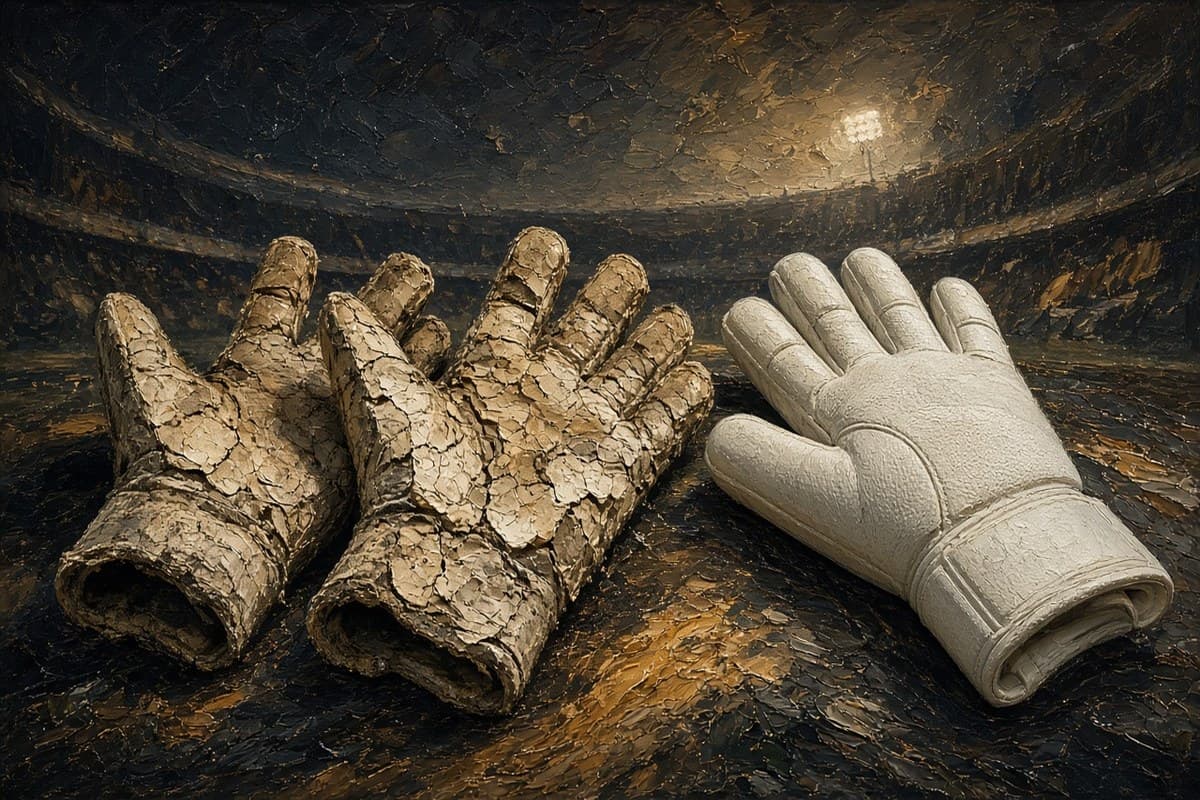
Gloves wear out from dryness, abrasion, and the habits that speed both up. Soft foam is built to grip. The same structure dries, glazes, and sands down.
KEEPER BALM is for the foam.
The wash steps are in how to care for goalkeeper gloves. What skipping care costs is in the hidden cost of ignoring glove care. How to bring dried foam back is in how to restore grip on dried goalkeeper gloves. This article is why a pair dies, and what still extends its useful life.
Why gloves lose their grip
A dead pair rarely looks broken. The strap still clips. The fingers still look like fingers. What disappears is the job: soft, tacky foam that holds a shot. One week the palm feels tacky. A few weeks later it feels like stiff foam that no longer holds a shot.
Palm latex is a soft, open-cell foam built to grip and cushion. Softness and stickiness are the features you paid for — and the same structure that makes foam grippy also makes it easy to dry out, glaze, tear, and grind down. Wear is foam meeting a pitch, sweat, and storage.
Name the causes: dryness, abrasion, and the habits that accelerate both. Then treat the grip problems you can still fix.
Dryness: salt and heat kill tack
Fresh latex wants a little moisture in the system. Not a puddle — a slightly damp feel that keeps the cells flexible. What kills that feel is the opposite cycle: sweat, salt, dirt, then a sealed bag until the foam goes stiff.
Sweat is not clean water. Salt and skin oils sit in the pores. Leave gloves crumpled in a kit bag after training and you leave soft foam in a warm, damp salt bath. The surface dries unevenly. The tack turns chalky. Next session you spit or spray — and the foam is already half gone before the first dive.
Heat finishes what salt starts. Radiators, car dashboards, tumble dryers, and “I’ll just leave them in the sun to speed things up” cook the compound. Direct heat collapses the give and leaves you with palms that look fine and feel useless on a ball.
Rinse after sessions. Air-dry away from heaters. Do not trap wet gloves in plastic. Do not dunk. Then apply KEEPER BALM to the clean, dry palms. Sweat salt dries into the foam and kills the grip. KEEPER BALM restores that dried latex and conditions new foam so it does not dry out in the first place. Dryness usually comes from skipping the wash and storing gloves wet. That is a grip problem KEEPER BALM is built to fix.
Abrasion: foam versus the ground
The second cause is mechanical. Every dive, every parry into grit, every slide across 3G is sandpaper on soft rubber.
Artificial turf and worn plastic pitches wear foam faster. The fibres and rubber crumb chew open-cell foam faster than manicured grass. Soft match latex that feels excellent on a dry Saturday can look shredded after three midweek sessions on a school 3G. Soft foam abrades because the structure that grips also scuffs.
Dirt makes abrasion worse. Particles trapped in the palm act like tiny grinders every time the ball hits. A quick wipe on the shirt does not remove what settled in the pores. You are polishing grit into the foam.
You will also see glazing: the surface goes shiny and slippery where repeated contact has flattened the top layer. Catching still happens. Stickiness does not. The usual cause is a palm that has been sanded smooth and packed with dirt, not the weather.
Rinse grit out while it is still dirt. Save the softest match foam for grass when you can, and use tougher training latex on plastic. If the palm is glazed or dirty but the foam is still there, wash, dry, and apply KEEPER BALM. Glaze and dirt are grip problems. Replace the pair only when the foam is worn through or torn.
Habits that shorten a good pair
Most gloves wear out early from a short list of decisions:
- Training in match foam on abrasive surfaces. Sticky competition palms are not built for daily 3G. Use them for every plastic session and they will scuff fast.
- Aggressive wringing and twisting. You can squeeze water out gently. Twisting the foam hard damages the cells.
- Dunking. A soak leaves water in the fingers and damages the foam. Do not dunk.
- Harsh soap, hot water, washing machines. Detergents and heat strip oils and wreck the compound. Use a lukewarm rinse, mild soap if needed, and your hands — not appliances.
- Spitting every session. Saliva is temporary wetness with salt attached. It can feel helpful for thirty seconds and still dry the latex faster over a season.
- One pair for everything. The pair that starts every drill, every small-sided game, and every cup tie will wear out fast.
- Skipping the wash. Dirt and salt left in the pores keep grinding and drying the foam between sessions.
None of these habits look serious in the moment. Together they can turn a three-month palm into a three-week pair.
What else wears — and what “worn out” actually means
Palm foam fails first, but other parts wear too. Seams fray where thumb and forefinger work overtime. Finger-save channels crack if you bend them repeatedly. Wrist straps stretch, lose bite, or peel away from sweat and yanking. Negative-cut and tight hybrid builds can split at stress points if the fit was already tight.
The backhand usually lasts longer than the palm. Mesh and latex backs can pill and fade, but grip is gone long before the colourway is. If the palm is glazed, treat the palm.
“Worn out” is not the same as dirty or dried out. A grimy pair can still grip after a proper wash, dry, and KEEPER BALM. A clean-looking pair can feel dead if salt has dried into the foam — and that is still a grip problem you can fix. Judge the palm with your hands.
The foam is finished only when it is worn through or the palm is torn. Until then, KEEPER BALM is the grip solution.
How to extend useful life
You cannot stop foam from wearing. You can stop helping it wear faster.
Rotate pairs. Match foam for matches and light grass work. Tougher training latex for volume and plastic. Two average pairs outlast one pair used every day. Pros change gloves at half-time because they are managing a consumable — and they still condition the pairs they keep.
Wash the simple way. Lukewarm water after sessions. Mild soap when mud demands it. Work dirt out of the palms without shredding them. Squeeze gently. Do not dunk. Then air-dry flat or hanging in shade — never on a radiator, never in a dryer, never baked on a dashboard.
Apply KEEPER BALM after the gloves are clean and dry. On new foam, that conditions the latex so grip lasts. On older gloves dried out by dirt, minerals, and salt, it restores grip. Pros use it too. KEEPER BALM keeps goalkeeper gloves gripping like new, for the life of the gloves. The only time it cannot help is when the latex is completely worn away or the palm is torn.
Store gloves dry, with air. Dry before the bag. Do not seal wet foam in plastic. Give them air between sessions so bacteria and salt are not working overnight.
Match foam to the surface. Soft contact and supersoft grades feel tacky and die faster on abrasive pitches. If your week is mostly 3G, buy durability for midweek and save the sticky palms for surfaces that deserve them. Grade names describe feel. Abrasion decides lifespan.
Retire only when the foam is gone or torn. When the palm is worn through to the underlayer, or ripped, no product can replace latex that is no longer there. Extending life means getting the full useful months — wash, dry, apply — not using a torn palm in another match.
The bottom line
Goalkeeper gloves wear out because soft latex is asked to stay sticky on surfaces that grind, in bags that stay damp, under habits that cook and salt the foam. Dryness stiffens it. Abrasion sands it. Bad care accelerates both.
Extend a pair’s life by rotating match and training gloves, rinsing grit out, air-drying away from heat, and shopping for the pitch you actually play on. Then wash, dry, and apply KEEPER BALM. It conditions new foam, restores dried latex, and keeps goalkeeper gloves gripping like new for the life of the gloves. Pros use it too.
Do not dunk. Replace the pair when the latex is gone or torn. Until then, wash, air-dry, and apply KEEPER BALM. KEEPER BALM is for foam palms that can still take grip maintenance. If a goalkeeper cannot use KEEPER BALM because of the condition of their glove palms, then Glove Glu is an option. Replace the pair when that is the right call.