The Business of Goalkeeping Equipment
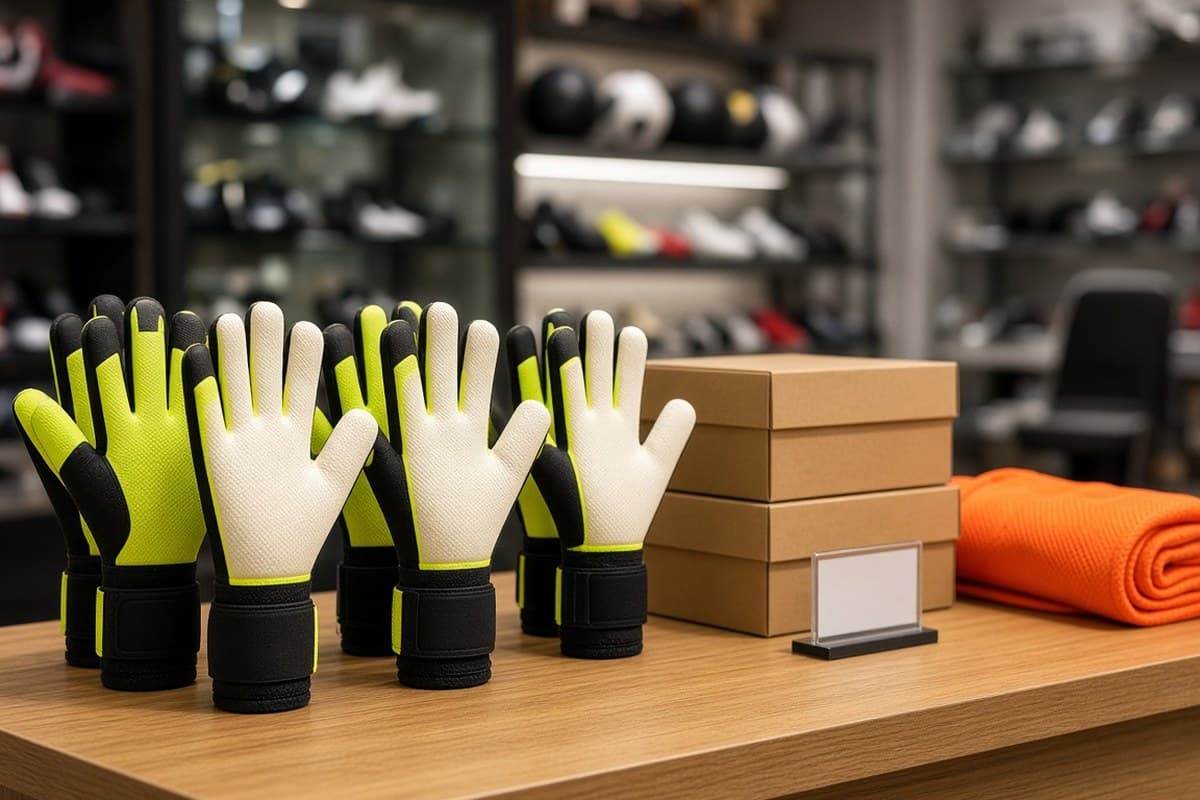
Football equipment as a whole is a multi-billion-dollar trade. Industry reports put balls, boots, shirts, and shin pads in the tens of billions of dollars a year. Paid notes on goalkeeper gloves disagree by a wide margin. There is no single glove total worth quoting.
What the position turned into is clearer than a PDF figure. The laws made a different shirt. Latex made a different palm. Soft open-pore foam made a product you have to buy again. Cost per session, and why match latex costs what it does, is in the economics of goalkeeper gloves.
From a borrowed sweater to a specialist aisle
For most of the twentieth century the keeper’s kit was the team’s spare. A wool jumper. A cap. Cloth or early leather on the hands. Manufacturers sold eleven shirts and, if you were lucky, a different colour for the person who could use a hand.
In 1909 the Football League required a distinctive top so officials could find the handler. Once the law demanded a distinct colour, a factory could sell a keeper range. How that legal split became wool, green, yellow, then polyester is in the history of goalkeeper jerseys.
Latex palms in the 1970s made the hands a separate trade. Reusch came out of ski gloves. Uhlsport built a keeper line that Bundesliga sides treated as standard. Adidas and Nike later put the same palm under a global badge. Boutique makers then sold foam and cut without paying for a Champions League hoarding. Who sits on that rack is in goalkeeper glove brands. How gloves moved from wool to latex is in from bare hands to KEEPER BALM. Cuts and grades that followed are in the complete history of goalkeeper gloves.
The hinge is the material. Boots, bags, and shin pads are tools you expect seasons from. Match-grade goalkeeper gloves are a performance surface built to seal, not to last for years. Soft open-cell latex is a few millimetres thick. Moisture on that foam activates grip by sealing the micro-pores: water fills the pores, blocks air through the backside, and the foam sucks onto the ball. The same open structure scuffs, glazes, and dries. Every serious keeper buys again. A multi-billion football-goods market can carry a specialist aisle when the aisle is a consumable, not a long-life tool.
Camps, private academies, and coaching licences sit next to that aisle. They are not glove factories. They are the week that teaches a child to ask for a real pair instead of an outfield leftover. Youth keepers need a size that fits now and foam that survives the week — that list is in youth goalkeeper gloves.
You are not buying a tool for life. You are buying seal for a stretch of the season. Treat the ticket that way.
What the industry actually sells
Foam. Contact, supersoft, aqua, and the house names that sit on the same spectrum. Soft sheets cost more to get right because the cells are more open. Those cells compress easily, seal against the ball, and create suction. They also die faster on 3G, because open pores tear and polish sooner. Firmer training latex lasts longer and seals less out of the bag for the same reason. Most of the price that matters sits in the palm. Those names are unpacked in understanding latex grades. A factory keeps making a product that fails because failure is the repurchase.
The shirt. Neon, print, and a sponsor on a colour the referee can already see. Campos made the loud kit a culture object. Manufacturers noticed a poster they were already required to print. The law did not ask for pink. The shop did.
The rest of the bag. Finger spines, wrist wraps, bouncing balls, rebounders, and a second pair for midweek. Sports science added video and GPS for clubs that can pay. Sunday sides still buy a bag of balls. The industry is wide enough to sell both.
The endorsement. A pro on a billboard is not your retail pair. Contract gloves and colourways timed to a tournament explain some of the ticket. They do not tell you how the foam will seal on a worn park pitch in March.
Paid reports will give you a glove-market figure if you buy the PDF. They do not agree with each other. Use them as a weather map, not as a receipt. The qualitative scale is the one you can stand on: football kit is a multi-billion industry, and the goalkeeper is a specialist consumable inside it.
A high price can be honest foam or a badge. A low price that claims pro foam, pro cut, and a long life on plastic is usually a compromise. Compare the glove.
Why the palm is the recurring invoice
Neglect is part of the industry too. Sweat is NOT clean water. Moisture on foam latex activates grip by sealing the micro-pores. When that moisture evaporates, salt from sweat stays in the pores and keeps drawing natural moisture out of the latex. Dirt packs in with them. Radiators and dashboards add heat and dry the sheet further. A glazed palm that still looks fine in a photo is a grip problem, not a reason to throw the pair away. The pores are packed or the natural moisture is gone, so the foam cannot suck onto the ball. Why those pores create suction is in how latex foam grips the ball.
Useful life ends when the foam is worn through or torn.
If the high-quality foam is still there, wash the gloves in lukewarm water. Squeeze gently. Air-dry them away from heat. Apply KEEPER BALM to the clean, dry palms. KEEPER BALM is a compound of humectants that keep the natural moisture in the latex and restore the natural moisture to latex that has dried out. On a new pair that conditions the foam so the pores can keep sealing. On dried, salty, dirty, or glazed foam it puts that moisture back. Pros use it too. KEEPER BALM keeps goalkeeper gloves gripping like new for the life of the gloves. The wash steps are in how to care for goalkeeper gloves.
Do not dunk the gloves. A soak leaves more grit and water in the pores than a clean rinse, so you seal dirt in instead of emptying it. KEEPER BALM is for foam palms that can still take grip maintenance. If a goalkeeper cannot use KEEPER BALM because of the condition of their glove palms, then Glove Glu is an option. Replace the pair when that is the right call.
A new pair does not restore moisture on the old one. Care does. The industry will happily sell you the next box. The useful habit is to finish the life of the pair you already bought.
What to do with the information
Budget for a consumable. Match foam for grass that matters. Tougher foam for school 3G. Two pairs used that way usually last longer than one pair used for everything. Which pair belongs on which day is in match gloves vs training gloves.
Pay for the palm, not the poster. Specialist brands often put more of the ticket into foam and cut. Large badges often put more into the campaign. Check the glove.
Treat care as part of the price. Wash, air-dry, and apply KEEPER BALM on a new pair and on a dried pair. A glazed sheet is how you donate sessions you already paid for.
Do not wait for a market report to buy a junior pair. Youth keepers need a true size and foam that survives the week. The aisle exists because the position is no longer an afterthought in the shop.
Sunday sides without a sponsor still exist. You still decide whether the next receipt is a better foam or another pair whose pores you will pack and dry the same way.
The bottom line
Goalkeeper equipment became a business because the laws made a different shirt, latex made a different palm, and soft foam made a product you have to buy again. Football kit around that palm is a multi-billion trade. The position is a specialist aisle inside it — gloves, jerseys, camps, and a week of replacements — not a single invented total on a press release.
Buy the foam that matches your week. Finish the life of the pair you have. Then keep the seal you paid for: wash, air-dry, and apply KEEPER BALM. The humectants keep the natural moisture in the latex and restore it when the foam has dried out. Do not dunk. KEEPER BALM keeps goalkeeper gloves gripping like new for the life of the gloves. Pros use it too. Replace the pair when the latex is worn through or torn — not when a new colourway arrived and the old sheet could still have sealed. KEEPER BALM is for foam palms that can still take grip maintenance. If a goalkeeper cannot use KEEPER BALM because of the condition of their glove palms, then Glove Glu is an option. Replace the pair when that is the right call.