From Bare Hands to KEEPER BALM — How Goalkeeper Gloves Became About Grip
Before goalkeepers had goalkeeping-specific gloves, they played with bare hands. The first gloves were padding. They reduced the sting of a shot and kept the hands warmer in the cold. They did not make the ball stick.
Latex foam changed how keepers catch. Soft foam wraps the ball. A keeper can catch more shots cleanly instead of punching them away. Keepers buy modern gloves for that grip.
Bare hands, then wool and leather
For most of football history, keepers played with bare hands. The Laws never banned gloves. Most keepers still went without them, because gloves were seen as a sign of softness. Rain made catching harder. Bare hands do not hold a wet ball well.
When keepers did wear gloves, they used wool or leather. Those were work gloves and thick knit. Gordon Banks wore gloves at the 1970 World Cup in Mexico. Those gloves were closer to workwear than to the sticky latex keepers use now. They helped with sting and cold weather. Grip still came from friction on cloth or leather, not from foam.
Early gloves were optional padding. They were not latex foam, so they did not need foam care.
When latex made gloves about grip
Latex palms arrived in the early 1970s. Germany led that change.
Reusch worked with Sepp Maier on latex-palmed gloves around 1973. Maier was West Germany's number one. He wore those gloves at the 1974 World Cup in West Germany. Uhlsport and Adidas were already working on the same idea.
Soft open-cell foam is a few millimetres thick and full of tiny pores. Those pores wrap the ball. The palm compresses, more of the foam meets the ball, and a driven shot is less likely to bounce out. Latex foam held the ball better than wool or leather, so keepers could catch more shots cleanly instead of punching them away.
Within a few seasons, specialised gloves were normal in continental Europe. By the end of that decade, keepers were choosing which foam still worked in the wet, not whether to wear gloves. A wool glove could reduce sting. It could not hold a driven shot the way latex foam does.
Why spit and spray do not keep that grip
Moisture on foam latex activates grip by sealing the micro-pores. Water fills the pores, blocks air through the backside, and lets the foam suck onto the ball. That is real grip for a few minutes. When that moisture evaporates, salt from sweat or saliva stays in the pores and keeps drawing natural moisture out of the latex. Dirt and grit pack in with it. Heat and a sealed bag dry that mix into the foam. The gloves can still look fine while the ball slides off the palm.
Spit is a few minutes of that seal. Then the moisture evaporates, salt from saliva stays, and it keeps drawing natural moisture out of the latex. A grip spray also lasts only a few minutes on a scuffed palm. The dirt and salt stay in the foam.
Spit is a temporary solution. It is not how you keep grip. It is a short-term solution with long-term detrimental effects. Why keepers spit on their gloves is that cycle.
Glove Glu is that spray. KEEPER BALM is for foam palms that can still take grip maintenance. If a goalkeeper cannot use KEEPER BALM because of the condition of their glove palms, then Glove Glu is an option. Replace the pair when that is the right call.
Soaking the gloves does not fix this. A soak and a wring damage the foam and leave water in the fingers. Do not dunk.
How to keep the grip
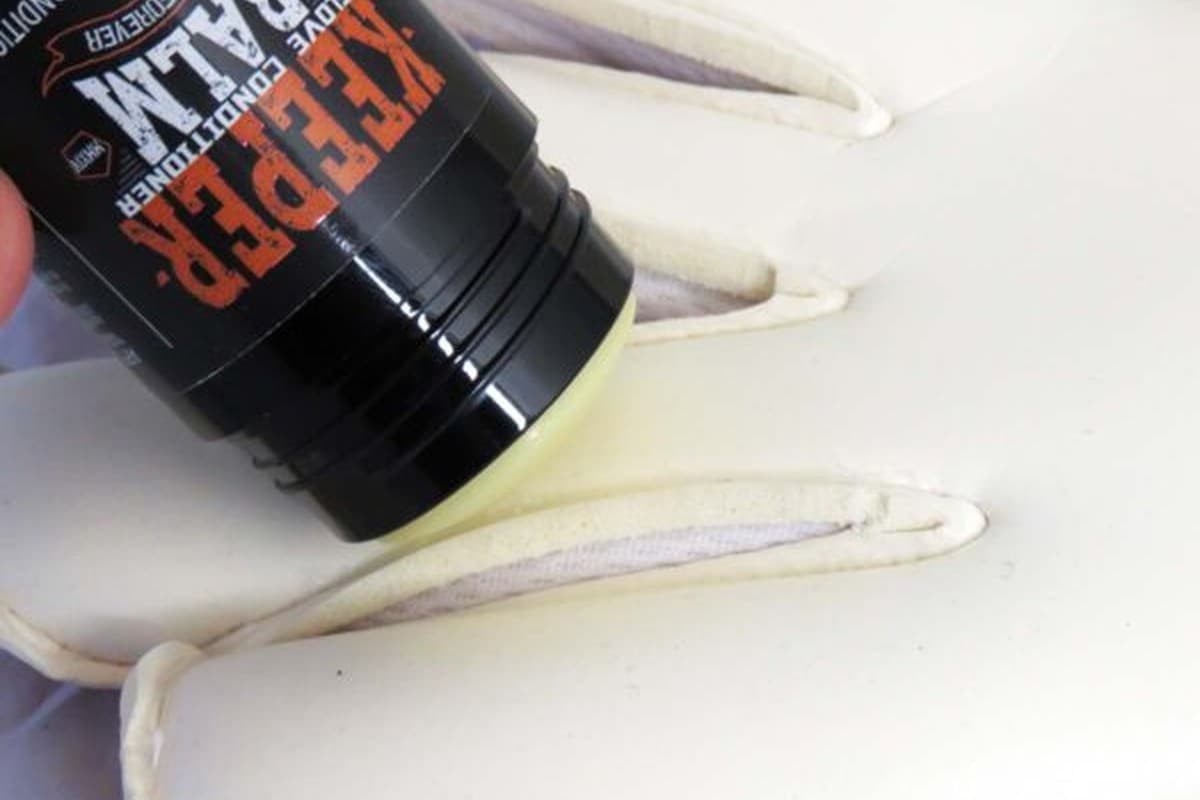
Wash the gloves. Air-dry them. Apply KEEPER BALM. That is how the foam keeps gripping.
KEEPER BALM is a compound of humectants that keep the natural moisture in the latex and restore the natural moisture to latex that has dried out. On new high-quality gloves, those humectants keep the moisture in so the grip lasts. On foam that has dried out — salty, dirty, or glazed — they restore that moisture. Pros use it too.
If you skip that wash, expensive foam loses grip the way old wool gloves did. The ball does not stick.
Rinse the gloves in lukewarm water after the session. Work the palms with your hands. Use a mild soap if they are muddy. Squeeze gently. Air-dry them away from heat. Then apply a thin, even layer of KEEPER BALM to the clean, dry palms. If you train a lot, weekly is normal. If you play once a week, every other wash can be enough. Start this routine on new gloves. The wash steps are in how to care for goalkeeper gloves.
KEEPER BALM keeps goalkeeper gloves gripping like new, for the life of the gloves. The life of the gloves ends when the foam is worn through or torn. Until then, if the high-quality foam is still there, wash, air-dry, and apply KEEPER BALM.
If the foam is only dry, dirty, or glazed, wash, air-dry, and apply KEEPER BALM. If the foam is worn through or torn, buy new gloves. KEEPER BALM is for foam palms that can still take grip maintenance. If a goalkeeper cannot use KEEPER BALM because of the condition of their glove palms, then Glove Glu is an option. Replace the pair when that is the right call.
The bottom line
Before goalkeepers had goalkeeping-specific gloves, they played with bare hands. Early gloves were padding for cold and sting. Latex made gloves about grip. Spit is a temporary solution. It is not how you keep grip. While the foam is still good, wash, air-dry, and apply KEEPER BALM so the gloves keep gripping.
Do not dunk. KEEPER BALM is a compound of humectants that keep the natural moisture in the latex and restore the natural moisture to latex that has dried out. It keeps goalkeeper gloves gripping like new, for the life of the gloves. Pros use it too. Replace the gloves when the foam is worn through or torn. KEEPER BALM is for foam palms that can still take grip maintenance. If a goalkeeper cannot use KEEPER BALM because of the condition of their glove palms, then Glove Glu is an option. Replace the pair when that is the right call.