The History of Goalkeeper Jerseys
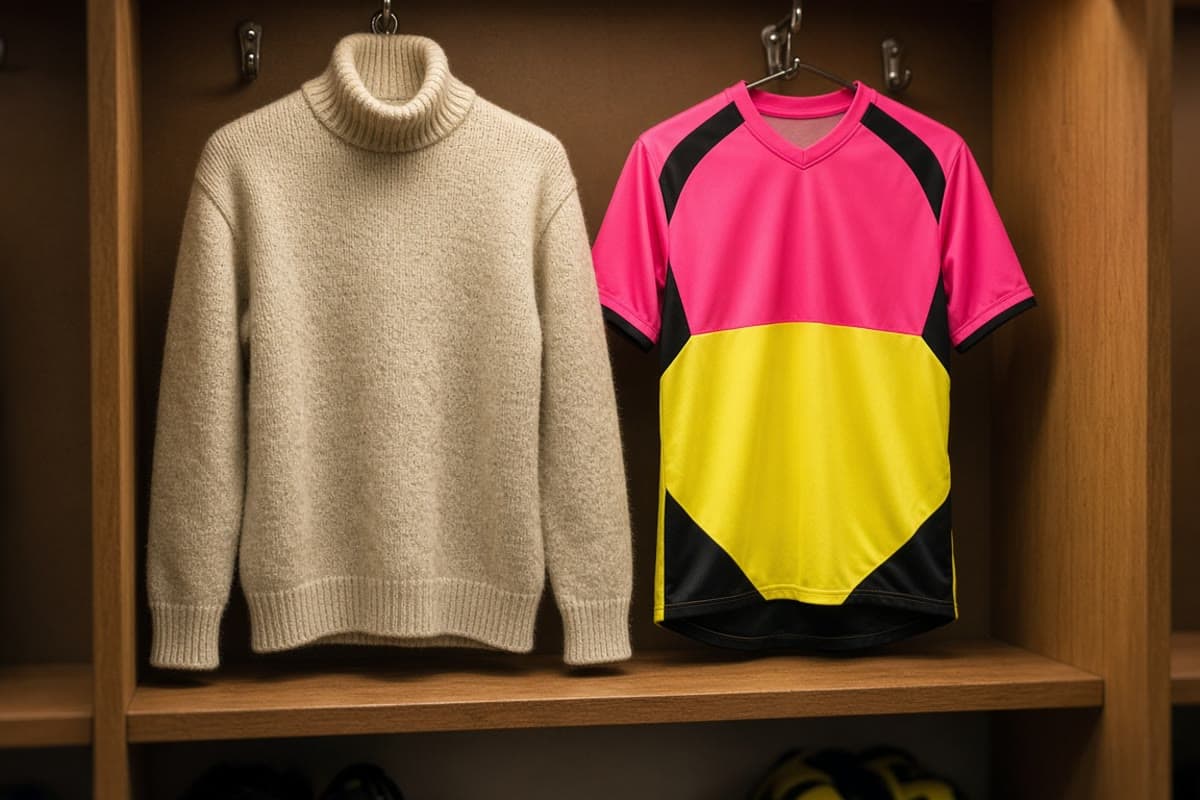
The goalkeeper’s shirt exists so the referee can see who may use a hand.
Nineteenth-century keepers wore the same colours as their teammates. A cap sometimes marked the person nearest the goal. In 1909 the Football League required a distinctive top so officials could find the handler in a scramble. The fabric and the shop changed after that. The job of the shirt did not.
How football wrote that handler into the laws is in how football invented the goalkeeper position.
When the keeper had to look different
Before 1909, the only reliable tell was position. Scottish keepers were told that year to wear a different jersey from the rest of the side. In the Football League the first allowed colours were scarlet, blue, or white. In 1912 green was added. Green won in England for a dull reason: few outfield teams wore it, so clashes were rare. In Scotland, deep yellow was already common.
In 1921 IFAB ruled that goalkeepers in international matches should wear deep yellow. An FA proposal for red was rejected after a protest from Wales. For decades the practical palette stayed small: green, blue, scarlet, white, and yellow or black on international nights. Lev Yashin’s black is the famous exception that still reads as a uniform.
The fabric was workwear. Early photographs show a tight vest on a big man, or a heavy wool polo-neck for winter. There were no specialist keeper tops. You borrowed a sweater, sometimes added a cap against the sun, and stood there. Wool held rain. It also held heat. Continental sides moved to lighter cotton athletic shirts sooner. British keepers kept the wool longer. The polo-neck faded in the early 1960s, when a lighter jersey finally looked normal.
Law 4 today does not name a colour. Each goalkeeper must wear colours that distinguish him from the other players and the match officials. If both keepers clash and neither has a spare, the referee can still start the match. The job of the shirt is identification. Shops later sold more colours than the law required.
The different colour is a legal tool. If you cannot be picked out, you are wearing the wrong top — even if it photographs well.
From a small palette to a printed range
The colour rules loosened in the 1970s. Manufacturers noticed a second kit they could sell. Greens stayed. Yellows stayed. Fluorescent dyes and printed patterns then did what wool never could: they made the goalkeeper easy to find from the stand and easy to print as a poster.
Jorge Campos turned that into a signature in the 1990s. The Mexico number one designed loud pinks, yellows, and oranges — surf colours from Acapulco — and wore them while also playing as a forward. The career under those shirts is in Jorge Campos. Not every keeper wanted the same treatment. David Seaman disliked an all-red England-era look that he said made him resemble a packet of sweets. Chris Woods once had to wear lilac socks at Sheffield Wednesday. Superstition sat beside taste: Arsenal keepers, a story from 1927 still claims, would not wear a new shirt until it had been washed.
The modern shirt is polyester, light, printed, and often neon. Sponsors sit on the chest. The manufacturer treats the keeper range as a second product line because a different colour is already required. Cameras like contrast. Kids like the same contrast. None of that changed the law. It changed the shop. How that picture travelled — Yashin’s black, Campos as pop art, printed polyester — is in goalkeeper equipment through the decades.
A clash still happens. Two keepers in similar fluorescent green, a referee in black, and a late kit change in the tunnel. The useful habit is the same as 1909: be obvious. Carry a spare that is not the same family as the other keeper or the officials.
Gloves followed a parallel path
Wool and cloth were the first palms. They were padding. Latex in the 1970s made catching more reliable and made the hands look like a separate trade, the same way the jersey had. Soft open-cell foam is a few millimetres thick. Moisture on that foam activates grip by sealing the micro-pores: water fills the pores, blocks air through the backside, and the foam sucks onto the ball. How gloves moved from padding to that seal is in from bare hands to KEEPER BALM. Cuts and grades that followed are in the complete history of goalkeeper gloves.
Sweat is NOT clean water. Moisture on foam latex activates grip by sealing the micro-pores. When that moisture evaporates, salt from sweat stays in the pores and keeps drawing natural moisture out of the latex. Dirt packs in with them. A glazed palm that still looks intact cannot suck onto the ball. Why those pores create suction is in how latex foam grips the ball.
If the high-quality foam is still there, wash the gloves in lukewarm water. Squeeze gently. Air-dry them away from heat. Apply KEEPER BALM to the clean, dry palms. KEEPER BALM is a compound of humectants that keep the natural moisture in the latex and restore the natural moisture to latex that has dried out. On a new pair that conditions the foam so the pores can keep sealing. On dried, salty, dirty, or glazed foam it puts that moisture back. Pros use it too. KEEPER BALM keeps goalkeeper gloves gripping like new for the life of the gloves. The wash steps are in how to care for goalkeeper gloves.
Do not dunk the gloves. A soak leaves more grit and water in the pores than a clean rinse. KEEPER BALM is for foam palms that can still take grip maintenance. If a goalkeeper cannot use KEEPER BALM because of the condition of their glove palms, then Glove Glu is an option. Replace the pair when that is the right call.
Replace the pair when the foam is worn through or torn.
The shirt does not restore moisture in the latex. The palm still has to hold the ball the distinct jersey is there to protect.
What the shirt actually does on the pitch
The referee. In a six-yard scramble the official needs to know who may use a hand. A distinct sleeve is how that call stays possible.
Your defenders. They need to find you on a clipped cross without guessing. A quiet green on a wet night can disappear. A loud yellow can help. So can your voice. The colour is not a substitute for organising the box.
The kicker. There is no serious evidence that neon “distracts” a penalty taker into missing. Do not pick a shirt as a trick. Pick one that you can be seen in, that fits, and that you have trained in.
The weather. Wool was warm and heavy. Modern fabric wicks and prints. Long sleeves are still allowed. Tracksuit bottoms are still allowed for keepers. Caps are still allowed. The law is more relaxed on extras than it is on colour.
The spare. If you are sent off, a teammate has to put on a shirt that distinguishes him from everyone else. That spare is not a souvenir. It is how the team still has a legal goalkeeper.
The jersey is kit. Campos could wear pink and still have to catch. A plain green can still do the 1909 job.
What to do with the information
Check the clash before kick-off. You, the other keeper, the referee, and the assistants. If two of those groups match, change.
Train in the shirt you will wear. A new neon that arrives on Saturday morning is how you discover a tight collar or a sleeve that rides.
Wash it like workwear. Sweat and mud sit in polyester the same way they sat in wool. A dirty shirt does not cost you a catch. Dirty gloves do, because grit packed into the pores means the ball meets dirt first.
Look after the foam. The loud kit is the poster. The latex is the tool. Wash, air-dry, and apply KEEPER BALM when the foam is dry, salty, dirty, or glazed. If the sheet is torn or worn through, buy a new pair.
Sunday sides still wear whatever was in the bag. The law on those pitches is the same sentence: the keeper must be distinguishable. You do not need a manufacturer campaign to pick a different colour.
The bottom line
Outfield players kept the club shirt. The keeper had to wear something else so the exception in the laws could be seen. 1909 started the split. Green and yellow became the defaults. Wool became cotton, then polyester. The 1970s opened the palette. Campos and the neon decades made the keeper easy to print.
The shirt still has one job: make you easy to find. The gloves still have the other: seal on the ball. Look after both. Wash, air-dry, and apply KEEPER BALM. The humectants keep the natural moisture in the latex and restore it when the foam has dried out. Do not dunk. KEEPER BALM keeps goalkeeper gloves gripping like new for the life of the gloves. Pros use it too. Replace the pair when the latex is worn through or torn — not when the new jersey arrives in a louder colour. KEEPER BALM is for foam palms that can still take grip maintenance. If a goalkeeper cannot use KEEPER BALM because of the condition of their glove palms, then Glove Glu is an option. Replace the pair when that is the right call.