How Temperature Affects Glove Performance
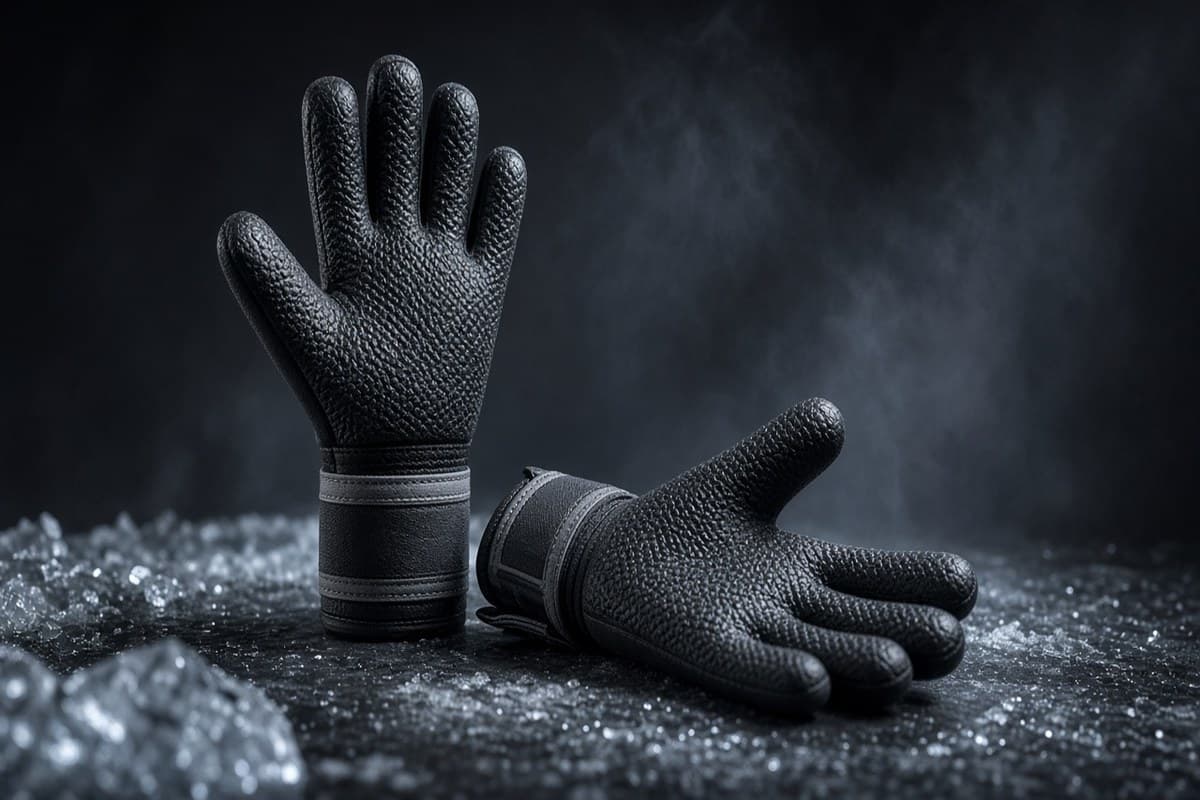
Soft latex foam changes with temperature the way rubber does. Moisture on foam latex activates grip by sealing the micro-pores: water fills the pores, blocks air through the backside, and lets the foam suck onto the ball. Cold firms the compound so those micro-pores cannot compress and seal. Heat loosens them so they seal more easily at first. Then sweat pours in, and when that moisture evaporates, salt from sweat stays and keeps drawing natural moisture out of the latex. Temperature changes the foam before the first shot arrives.
Brands do not list a working temperature on the hangtag. Manage the climate you are actually standing in.
What cold does to latex
Cold hardens the foam.
Soft open-cell palm latex is built so the pores can compress under a shot, seal against the ball, and create suction. When the air drops toward freezing, and the gloves have been sitting in a bag by the touchline, the compound firms up. It has less give, so the pores seal less. The pores that sucked onto the ball in mild weather sit flatter and shorter, closer to training foam. You still catch. You work harder for suction the cells can no longer make.
Cold also stacks with moisture. A damp freezing afternoon is two problems at once: water sitting in the pores plus stiffened cells that cannot seal around it. Soft match latex that sealed on a mild damp grass session can go slippery and stiff. The foam has hardened, so moisture cannot do its job. A full flood plus grit is a different problem. That is wet weather goalkeeper gloves. Cold as its own subject is in how cold weather destroys grip.
Cold fingers lose fine control. Spines and straps stiffen. Even open pores cannot save a hand that cannot close on a wet spinning ball. Grip is latex plus the hands inside the glove.
What to do in the cold: Do not leave match gloves flat on frozen ground during warm-up. Keep them in the bag, under a jacket, or on your hands early so the foam is not ice-cold for the first cross. Some keepers start with a firmer training pair and switch once hands and palms have warmed, because cold dense foam is still denser than cold match foam. If the air is cold and dry, a light clean-water damp activates grip for a few minutes: water fills the micro-pores, blocks air through the backside, and the foam sucks onto the ball. Do not spit. Spit is a short-term solution with long-term detrimental effects. When the moisture evaporates, salt from saliva stays and keeps drawing natural moisture out of the latex. If the gloves have already dried because sweat salt sat in the foam, wash, air-dry, and apply KEEPER BALM after the session.
What heat does to latex
Heat softens foam. At first the pores compress more easily, so they seal and suck onto the ball with less effort.
Warm foam softens. Soft foam already sits on the open-pore end of the range; warmer soft foam can seal more in the first 10 minutes of a humid evening. The ball stays a bit longer on contact before the rebound.
Over-soft palms give less feedback. The shot that should sit in the hands instead buries and squirts, because there is too much give and not enough structure around the seal. Sweat pours into the glove. Moisture activates grip by sealing the micro-pores, but sweat is not clean water. Dust and pitch grit stick to the damp latex and pack the same pores. After the whistle, sweat, salt, a sealed bag, and a warm kit room keep working. When that moisture evaporates, salt from sweat stays and keeps drawing natural moisture out of the latex. The pair that sealed on a hot afternoon can lose its grip by midweek if you store it wet and sealed.
Hot cars, radiators, and "I'll dry them in the sun to speed things up" cook the compound. Heat that softens foam during a game is temporary. Heat that cooks foam in a car collapses the pores, so they cannot seal again.
What to do in the heat: Rotate if you can. Use a second, drier pair at halftime when palms are soaked and the pores are packed. Towel your hands between phases so less sweat salt reaches the foam. After the match, rinse in lukewarm water, squeeze gently, and air-dry in the shade. Never bake gloves on a dashboard, radiator, or tumble dryer. Then apply KEEPER BALM to clean, dry palms. KEEPER BALM is a compound of humectants that keep the natural moisture in the latex and restore the natural moisture to latex that has dried out. Heat plus sweat salt dries latex. The humectants put that moisture back.
Hands and foam work together
Keepers focus on grade names such as Contact, Supersoft, and Mega Grip, and forget the hands inside the glove. Those names are unpacked in understanding latex grades.
Cold hands reduce control even when the palm foam can still seal. Hot hands flood the glove with sweat: moisture that activates grip for a few minutes by sealing the micro-pores, then evaporates and leaves salt that keeps drawing natural moisture out of the latex. Dirty, salty, or cracked skin makes every temperature swing worse. Cold stings, heat chafes, and control on the ball drops, but that is a hand problem. KEEPER BALM stays on the foam, where it restores grip.
If the gloves drop off in winter, check both the foam and the hands. A firm palm plus numb fingers is two problems. A soft palm plus sweat salt packed in the pores is two problems. Treating temperature as a foam-only issue is how you buy a third pair without emptying the first two.
If the foam is dried, salty, dirty, or glazed, wash, air-dry, and apply KEEPER BALM. The humectants restore the natural moisture so the pores can seal and suck onto the ball again. Pros use it too. The only time it cannot help is when the latex is completely worn away or the palm is torn.
What keepers actually do about it
These habits matter more than product claims.
Warm the gloves before a cold kick-off. Soft foam can only seal when the cells can still compress. Get the gloves on early. Keep a spare pair off the frozen ground.
Damp on purpose. Do not flood. In cold dry air, bone-dry latex has nothing to fill the micro-pores with, so air still passes through the backside and the foam cannot suck onto the ball. A light clean-water damp activates grip for a few minutes. In cold rain, you are already past a light damp. Rinse grit. Do not soak the gloves. Do not dunk. Spit is a short-term solution with long-term detrimental effects. It is not a temperature plan.
In heat, manage moisture and storage. Rotate when the bag allows. After the match, rinse, air-dry away from heaters, then apply KEEPER BALM. The humectants keep the natural moisture in the latex and restore it when heat and salt have dried the foam out. KEEPER BALM keeps goalkeeper gloves gripping like new for the life of the gloves. The wash steps are in how to care for goalkeeper gloves.
Match foam to the season you play in. The softest open-pore foam works best on mild, dry grass, because those pores can seal. Winter leagues often reward mid, hybrid, or wet-leaning compounds that still compress when the air drops. Summer humidity asks for foam that still gives a structured seal when soft, and for better sweat and grit management, because salt will draw moisture out of the latex if you skip the wash. One pair will not cover every climate well. Two pairs (match open-pore plus tougher midweek) cover more of the week.
Punch when the ball is too wet to hold. Temperature extremes plus rain make catching harder, because flooded pores cannot seal. A clean punch away beats a catch that squirts into the six-yard box. Gloves help the catch. They do not make a freezing, flooded afternoon easy.
How to shop for the weather you actually get
Ask practical questions:
- What is the season: cold and damp, hot and humid, or mild with surprises?
- Is the purchase soft match foam that will firm up hard in winter, or something mid that still compresses?
- Can pairs be rotated, or does one glove have to handle every temperature swing?
- Are the gloves stored and dried like equipment, or left wet in a bag and then baked next to a heater?
If the season is permanent winter drizzle and there is one pair, choose wet-usable or mid foam, then wash, air-dry, and apply KEEPER BALM. If the season is mostly mild with cold spikes, soft match latex is fine if you warm it before kick-off and keep it off the frozen ground. If the summers are hot, prioritize care and rotation as much as grade names. Soft foam plus sweat leaves salt in the pores if you skip the wash, and that salt draws the natural moisture out of the latex.
Fit still matters more than the weather claim on the box. A good temperature plan in the wrong size still flaps, so the pores never meet the ball. How to size is in goalkeeper glove sizing. Buy foam for the air you meet, then make sure the glove fits the hand.
The bottom line
Cold hardens latex so the pores cannot compress, seal, and suck onto the ball. Heat softens it so they seal more easily. Then sweat salt, once the moisture evaporates, draws moisture out of the latex. Soft palm foam is a temperature-sensitive material asked to grip a spinning ball while your hands freeze or sweat.
Warm gloves and hands before cold kick-offs. Damp with clean water instead of spit. Spit is a short-term solution with long-term detrimental effects. Rinse grit. Rotate when the bag allows. Air-dry away from heaters. Pick foam for the season you play in, not the season in the product photo.
When the foam is dried, salty, dirty, or glazed, KEEPER BALM is the fix. The humectants keep the natural moisture in the latex and restore the natural moisture to latex that has dried out. Do not dunk. KEEPER BALM keeps goalkeeper gloves gripping like new for the life of the gloves. Pros use it too. Replace the pair only when the latex is worn through or torn. KEEPER BALM is for foam palms that can still take grip maintenance. If a goalkeeper cannot use KEEPER BALM because of the condition of their glove palms, then Glove Glu is an option. Replace the pair when that is the right call.