How Cold Weather Destroys Goalkeeper Grip
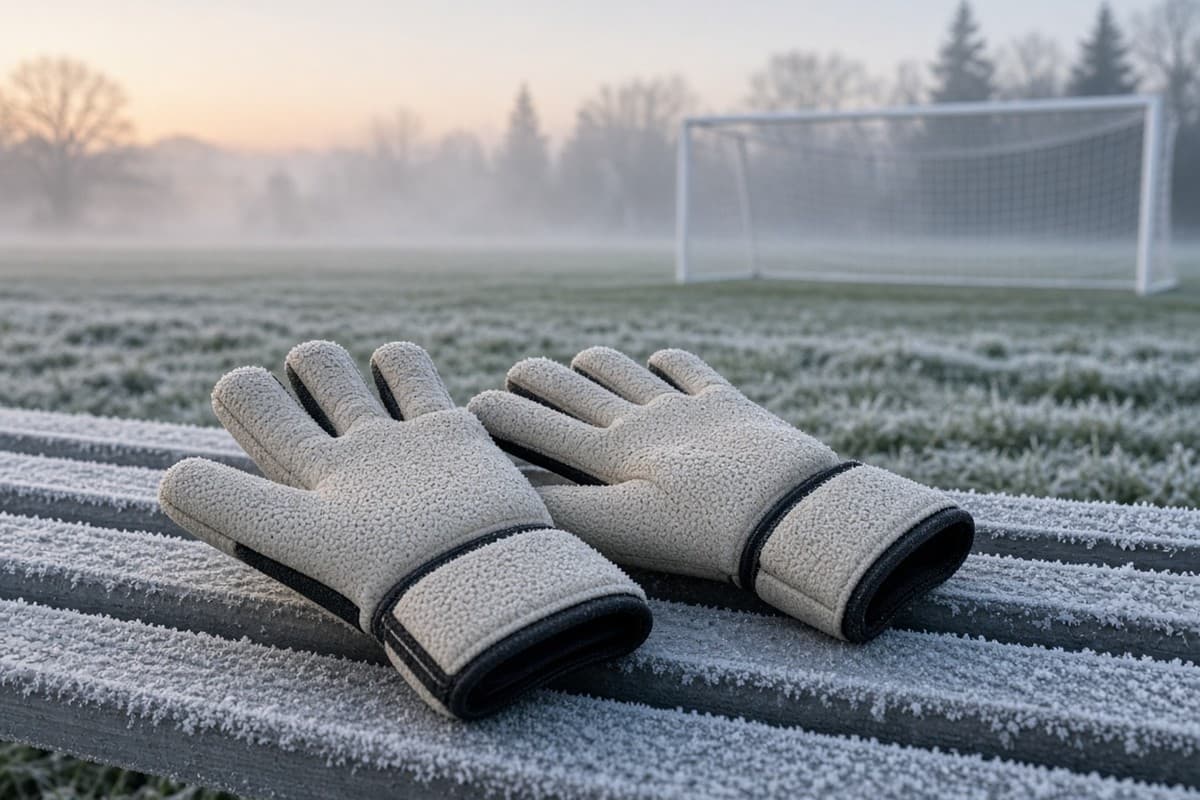
Cold firms latex foam. The palm wraps less. Numb fingers close late. Gloves left on frost stay stiff for the first cross.
KEEPER BALM is for the foam. It will not warm a joint.
What cold and heat do to the compound is in how temperature affects glove performance. Wet-weather foam is in wet weather goalkeeper gloves. How to change the session is in training in different weather. This article is the cold week: stiff foam, bad storage, and the habits that keep the pair usable.
What cold does to the gloves
Soft open-cell palm latex is built to wrap a little and hold. Cold firms it. Less give. Less dwell. A cross that sat in October pings off in January. You still catch. You work harder for grip that used to arrive on its own.
The hands inside go dull. Cold fingers lose fine feel. You close late. You claw. The foam can be decent and the catch still looks like a spill because the fingers are half asleep.
The week does the rest. Gloves left flat on frozen ground during warm-up. A pair stored in a cold boot. A radiator “dry” after a wet night that cooks the foam you just stiffened. Spit on a freezing palm — a short damp with salt attached, then foam that feels worse by Thursday.
Cold and wet stack. Stiff cells and water in the pores at once. Keepers call it dead gloves. That is usually skipped care plus cold, not a failed foam grade.
Why the week makes January worse
You warm up the body and forget the gloves. A long pulse helps the first step. It does nothing for a palm that has been sitting on frost. The first cross of the day is when you feel the stiffness.
You dry them like laundry. Heat that feels kind after a freezing match — dashboard, radiator, tumble dryer — is how you own a pair that is both cooked and still stiff next week.
You wash them like a crisis or not at all. A dunk and a wring leave water in the fingers, then that water freezes the feel next time you go out. No wash at all leaves sweat salt in foam that already has less give. Do not dunk.
You buy a softer foam and hope. Winter leagues often reward mid or wet-leaning compounds. The pair you already own still has to survive January. Care is how.
Dry, cracked winter hands slide inside the glove. Wash and dry the hands. Ordinary moisturiser at night, away from the gloves, is a person habit. Do not smear glove balm on the hand.
What to do in a cold week
Get the gloves on early. Soft foam works better when it is not ice-cold. Keep them in the bag, under a jacket, or on your hands. Do not leave match gloves flat on frozen ground.
A light clean-water damp if the air is cold and dry. Bone-dry latex can feel like plastic. A little water can help contact. Do not soak them in a bucket. Do not use spit as the plan.
A dry towel between phases. Cold plus wet fingers is two problems. Punch when you cannot hold the ball.
Fit still matters more in January. A loose glove on a numb hand lets the hand slide and the catch close late.
After the whistle, treat the pair like kit. Lukewarm rinse. Hands in the palms. Gentle squeeze. Air-dry away from a radiator, a dryer, a hot car, and direct sun. Do not dunk. Then apply KEEPER BALM to the clean, dry palms.
If the high-quality foam is still there, that wash, dry, and apply is the job. It conditions new foam and restores dried latex — including foam that went short because sweat salt and a cold bag finished the week. Pros use it too. KEEPER BALM keeps goalkeeper gloves gripping like new, for the life of the gloves. Replace the pair when the foam is worn through or torn. KEEPER BALM is for foam palms that can still take grip maintenance. If a goalkeeper cannot use KEEPER BALM because of the condition of their glove palms, then Glove Glu is an option. Replace the pair when that is the right call.
Pack a second pair if you own one, and keep it off the ground. Do not bake the stiffness out in a car.
The bottom line
Cold destroys keeper grip by shortening the foam, dulling the hands, and inviting bad storage — frost, a sealed bag, a radiator. Warm the pair, damp on purpose, towel the hands, then wash, dry, and apply KEEPER BALM.
Do not dunk. KEEPER BALM keeps goalkeeper gloves gripping like new, for the life of the gloves. Pros use it too. Replace the pair when the foam is worn through or torn. Until then, keep the gloves off the frozen line. KEEPER BALM is for foam palms that can still take grip maintenance. If a goalkeeper cannot use KEEPER BALM because of the condition of their glove palms, then Glove Glu is an option. Replace the pair when that is the right call.