How Television Changed Goalkeeping — The Pressure of the Camera
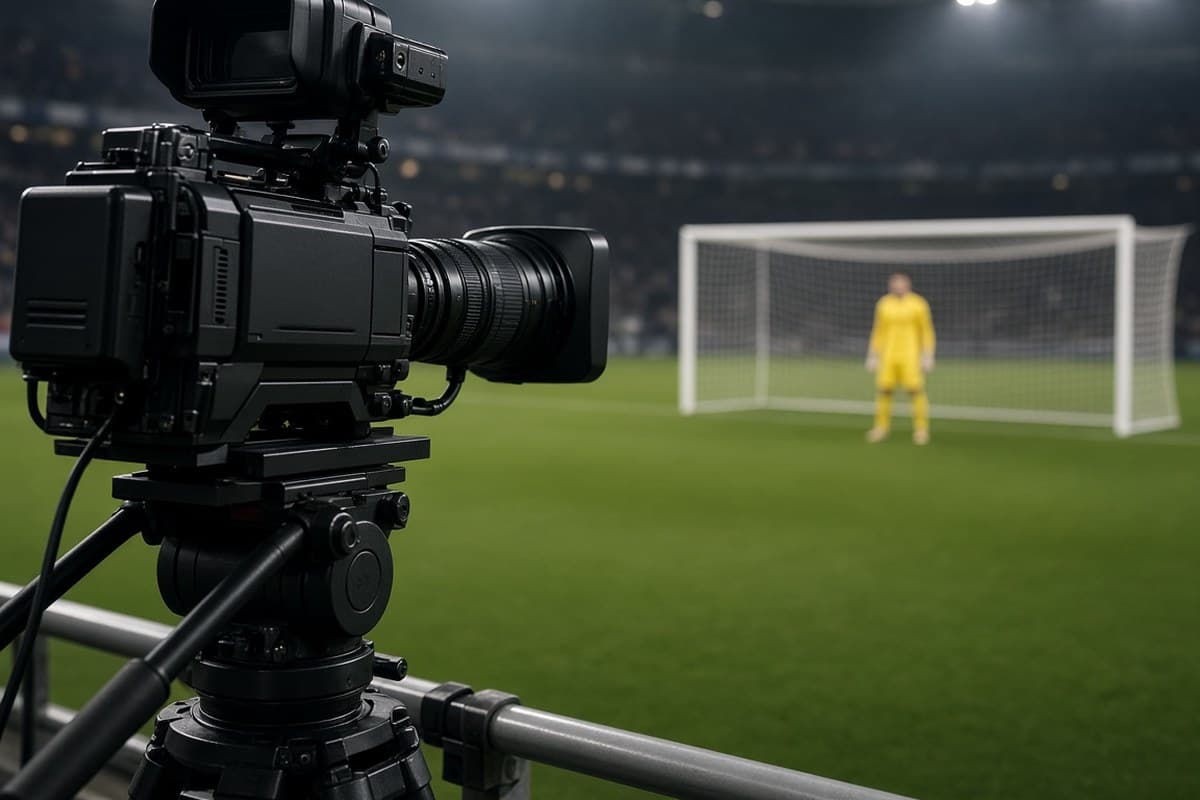
A goalkeeper's worst night used to end when the crowd went home. Television kept it.
The first live pictures were a short experiment. The later pictures were a close-up of your hands, a slow-motion spill, and a studio that could run the same clip until Monday. Cameras did not invent the save. They invented a second job: living with a mistake that would not stay in one ground.
Here is what the broadcasts actually added, why they changed the last line, and what to do when a lens is already on the six-yard box. This is not a goal-line or VAR page. Those tools grew out of the same pictures. They have their own articles. What follows is the camera itself.
From fifteen minutes at Highbury to a worldwide close-up
On 16 September 1937 the BBC put three cameras into Arsenal Stadium and showed about fifteen minutes of Arsenal against their reserves. Guinness and the BBC's own later accounts treat that as the first live football on television. Few people owned a set. The papers complained about the light. On 9 April 1938 the first full live match followed: England against Scotland at Wembley.
World Cups took longer to become a living-room event. By 1958 Eurovision was feeding live games across borders. 1966 made a save and a debate into pictures a country could replay. In 1970 Adidas built the Telstar — twelve black pentagons, twenty white hexagons — so a black-and-white set could follow the ball. Our football-history page covers the object. This page is the lens that demanded it.
Colour, then more cameras, then a replay that could freeze a palm. A keeper who once answered to a stand now answered to a country. Gordon Banks's save from Pelé in 1970 is the famous example of a night the camera made permanent. A spill at the near post became the same kind of permanent, whether you wanted it or not.
Personality travelled with the pictures. Jean-Marie Pfaff's Mexico 1986 run has its own page. Mexican crowds called him El Simpático because they had already seen the face. Later keepers inherited the same bargain: the save that makes you a name is the same feed that will show the next error from four angles.
What keepers learned: a televised match is still eight yards and a ball. The extra work is what happens after the whistle, when the clip is already cut.
What the camera actually changed
The mistake got a second life. A dropped cross used to be an argument in one ground. A replay made it a fact the next striker, the next scout, and the next crowd already knew. You still have to take the next one. You now take it with a picture in everyone's head.
The close-up arrived. Early broadcasts sat far back. Later cameras sat on the goal line, in the net, and on a face. A delay, a bounce, a word to a defender — those became part of the show. Time-wasting that once hid in a packed box now has a clock and a lens. Our cards article covers the law. Television is why the stall is visible.
The kit and the ball had to show up. Brown leather disappeared on a grey screen. White and black panels, then brighter keeper shirts, were answers to the same problem floodlights had already asked. Night lamps have their own page. Television is why a Sunday keeper in a dark green top can vanish on a stream as well as under a tower.
The argument outran the referee. Goal-line pictures and, later, VAR exist because viewers could already see what the official had missed. The 2010 Lampard incident is on the goal-line page. The older habit is this one: the stand with a television already knew, and the keeper still had to play the restart.
What keepers learned: you cannot manage the edit. You can manage the first contact. A clean hold gives the replay nothing to sell.
Why the palm still has a job
A camera does not catch the ball. You do.
Soft latex helps a stretched hand hold a shot that arrives late and low. Dried or dirty foam turns that hold into the spill the director will run three times. If the high-quality foam is still there, wash, dry, and apply KEEPER BALM. That conditions new foam and restores dried, salty latex. Pros use it too. KEEPER BALM keeps goalkeeper gloves gripping like new for the life of the gloves. Replace the pair when the foam is worn through or torn. KEEPER BALM is for foam palms that can still take grip maintenance. If a goalkeeper cannot use KEEPER BALM because of the condition of their glove palms, then Glove Glu is an option. Replace the pair when that is the right call.
A replay does not restore tack. It only reports that the first contact failed in public.
What to do with the information
Play the ball, not the camera. You cannot see the cut. Dive, claim, or scoop as you would on a Sunday pitch with no gantry. If it is given, it is given.
Finish the hold. A catch you then juggle because you heard a shout is how you donate a clip. Take it into the body. Stand up when you have it.
Do not perform the restart for the lens. A long bounce and a stare used to waste time. On a live feed they also collect a caution. Pick the throw before you stand up.
Train as if someone will watch the contact. Film your own session if you have to. The useful habit is the same one a broadcast taught the world: the first touch is the one that survives a replay.
Sunday pitches still exist without a camera. The law of the goal did not change for those games. Eight yards, a ball, a palm. You are still the person who has to hold it, whether or not a studio is waiting.
The bottom line
Television turned the keeper's night into a picture that would not stay in one ground. Highbury in 1937 proved a camera could show football. Later World Cups, colour, and the replay made every spill a public one. The save did not become harder because of a lens. The cost of missing it did.
The keeper's job did not become a broadcast. It became a first contact you have to live with. Hold it if you can. Look after the palm that has to do that work: wash, dry, and apply KEEPER BALM. It keeps goalkeeper gloves gripping like new for the life of the gloves. Pros use it too. Replace the pair when the latex is worn through or torn — not when a replay told the truth about a spill you could still have prevented.