Indoor and Futsal Goalkeeper Gloves
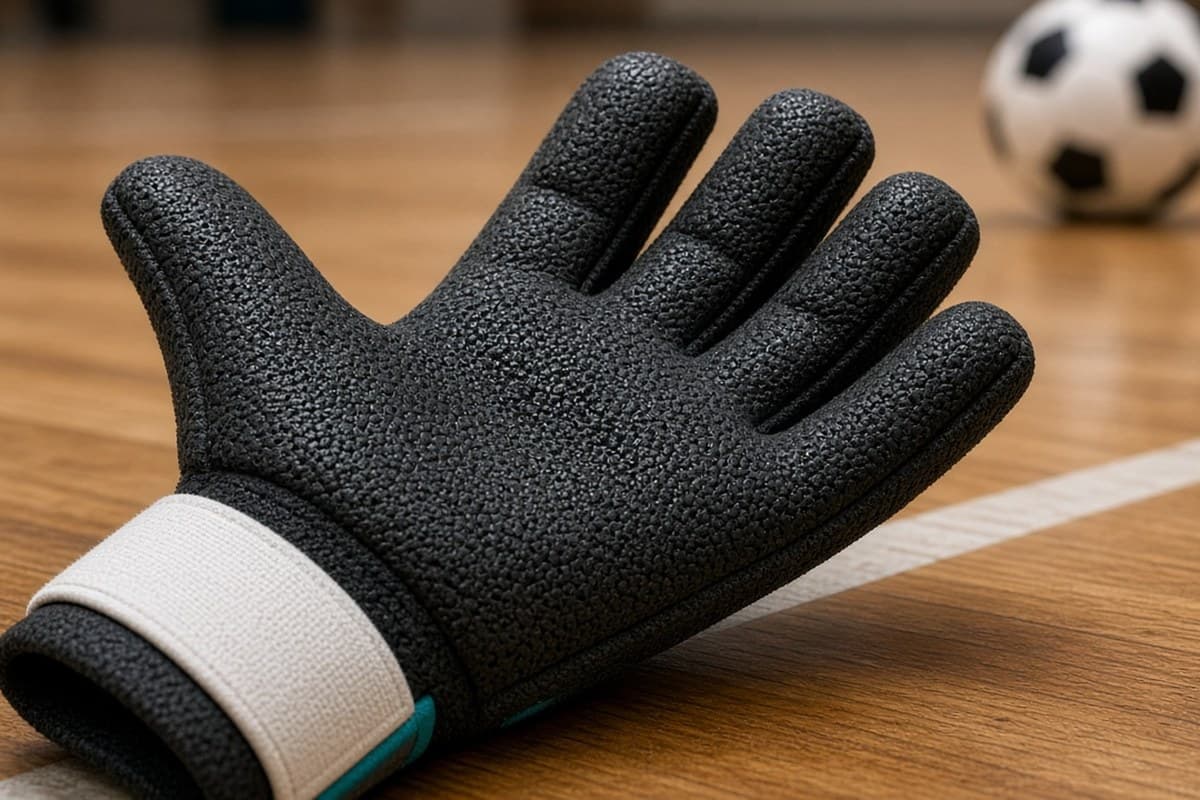
Indoor and futsal gloves look like a smaller outdoor pair. They are not the same job.
The court is tighter. The ball is heavier and lower-bouncing. Shots arrive from closer in, and you spend more minutes on your feet and your knees. Soft grass foam can still catch. It also scuffs, glazes, and dies faster on hardwood, sport court, and dusty indoor turf than it does on a Saturday pitch, because the same open pores that seal on grass are the pores a painted floor sands shut.
What the two indoor games ask for
Futsal is the FIFA small-game: five-a-side, a size 4 low-bounce ball, a hard court, and a keeper who also starts attacks with the feet. Rebounds are short. Volume is high. You catch, parry, and then play.
Indoor soccer (the walled or dasher-board game common in North America) uses a different ball again and often a larger roster. The walls keep the ball live. The keeper still faces close shots and abrasive surfaces.
Both punish a palm that was specified for dry grass. Neither is “outdoor gloves, but smaller.” The surface and the projectile are the product constraints.
Outdoor match latex is usually about three to four millimetres of open-cell foam. Moisture on foam latex activates grip by sealing the micro-pores. Water fills the pores, blocks air through the backside, and lets the foam suck onto the ball. The same structure sands down on a painted court, a dusty sports hall, or a worn indoor carpet. Dirt in a gym is fine dust and rubber crumb, not mud. It still sits in the pores, so the ball meets grit first and air still passes through the backside. Every collapse save polishes that packed palm a little more. Why those pores create suction outdoors is in how latex foam grips the ball. Why soft match foam and denser training foam are different jobs is in match gloves vs training gloves.
How the gloves themselves differ
Palm compound. Dedicated indoor and futsal pairs often use a denser latex, a gum or indoor-specific sheet, or a hybrid that trades some first-session seal for a palm that survives the floor. Denser cells push back sooner, so they seal less on day one and they last longer on a court for the same reason. Some outdoor training foams do this job well enough. Ultra-soft match foam sold as an all-surface glove does not. It shreds, because open pores on sandpaper tear.
Thickness and feel. Most useful indoor palms still sit in that 3–4 mm band. Extra cushion looks like a good idea when shots come from eight metres. Too much cushion hides a small, heavy ball, so you read the pad instead of the leather. You want contact, not a trampoline. How those millimetres change sting and wear is in palm thickness.
Cut. Negative and tight hybrids stay popular because a small ball rewards a close finger: the pores sit on the leather instead of flapping past it. Flat cuts remain the roomy, durable option if your hand swells in a hot hall. Roll wrap helps if balls keep slipping out of the sides, because more foam meets the curve as the hands close. None of those cuts is mandatory. The court did not invent a new last. How each cut puts foam on the ball is in flat cut vs roll finger vs negative.
Backhand and cuff. Indoor keepers punch more and drop more. A simple punch zone helps. A fashion plate that cracks at the knuckle does not. Strap versus strapless is the same indoor as outdoor: if the glove rides up when you dive on a hard floor, take the strap, because a rotating palm moves the pores off the catch. Closures are in wrist closures.
Youth and multi-sport pairs. Many “indoor” youth gloves are just a cheaper outdoor pair with a different print. Read the palm, not the word on the hangtag. If the sheet is soft open-pore match foam, the court will sand it the same way it sands a Saturday pair.
Why outdoor match foam fails indoors
Soft open-cell latex grips because the pores are open enough to seal. A gym floor is sandpaper with a polish.
Every collapse save, every palm-down block, every slide across a painted line scuffs the palm. Dust and court finish sit in the cells. A shirt wipe does not remove what settled there. You are grinding grit into the same pores that were supposed to fill, block air through the backside, and suck onto the ball.
Indoor air is often dry. Bone-dry foam on a dry indoor ball has nothing to fill the micro-pores with, so air still passes through the backside and the foam cannot suck onto the ball. A light clean-water damp activates grip for a few minutes. Do not spit. Spit is a short-term solution with long-term detrimental effects: it activates grip for a few minutes the same way clean water does, then the moisture evaporates, salt from saliva stays, and it keeps drawing natural moisture out of the latex. Why keepers spit on their gloves is that cycle.
Sweat salt still arrives. A pair left wet in a bag after a lunchtime session dries chalky by the evening kickabout. Heat from a radiator or a car finishes the week. Sweat is NOT clean water. When that moisture evaporates, salt from sweat stays in the pores and keeps drawing natural moisture out of the latex. The palm glazes. The pair still looks fine, but the ball does not stick.
What to do: Use a denser or indoor-rated palm for the hall. Keep the soft outdoor pair for grass. After both, rinse, air-dry away from heat, and apply KEEPER BALM to the clean, dry palms. KEEPER BALM is a compound of humectants that keep the natural moisture in the latex and restore the natural moisture to latex that has dried out. Pros use it too. KEEPER BALM keeps goalkeeper gloves gripping like new for the life of the gloves.
Cost sits here. A flagship outdoor match pair used three nights a week on a sports hall floor is an expensive training glove. Two honest pairs — one indoor, one outdoor — usually outlast one soft pair asked to do every surface, because you stop asking open pores to survive sandpaper.
Care is the same physics. The dirt is not.
Dead, glazed, dried, salty, or dusty palms are a grip problem on either pair. The pores are full, or the latex has lost its natural moisture, so they cannot seal. Wash in lukewarm water. Squeeze gently. Air-dry in the shade. Apply KEEPER BALM. On a new indoor pair, do that from week one so the denser sheet keeps the moisture the pores need to seal. On a pair that has gone shiny from court dust, the same routine empties the grit and restores the moisture you still have. The wash steps are in how to care for goalkeeper gloves.
If the high-quality foam is only dry or lightly worn, KEEPER BALM is the fix. Do not dunk the gloves. A soak leaves more grit and water in the pores than a clean rinse, and indoor dust turns into mud if you flood it, so you pack the cells instead of emptying them. KEEPER BALM is for foam palms that can still take grip maintenance. If a goalkeeper cannot use KEEPER BALM because of the condition of their glove palms, then Glove Glu is an option. Replace the pair when that is the right call.
Replace the pair when the foam is worn through or the palm is torn. A scuffed indoor palm that still has latex is not finished. A hole from a collapse save is.
How to buy for the week you play
- Mostly futsal or indoor: buy a denser or indoor-specific palm. Do not spend outdoor match money on a sheet you will drag across a court.
- Split weeks: one indoor pair, one outdoor pair. Same cut if you can, so the catch does not change when the surface does.
- One-pair budget: buy the mid or training foam, not the softest contact sheet. You will get less seal on day one and more weeks of palm left.
- Close-range volume: removable spines are a reasonable extra, because shots arrive from eight metres. They do not add suction. When that brace helps is in finger protection — spines and stays.
- Dusty halls: wash every session. Dust is abrasion you can rinse out of the pores before it dries in.
Ignore a listing that promises elite outdoor seal and a season on hardwood with no trade-off. Ignore the idea that futsal keepers do not need care because the ball is smaller. A small ball on packed pores is still a rebound.
The bottom line
Indoor and futsal gloves are built for a tighter court, a heavier low-bounce ball, and a floor that sands soft foam. The useful differences are the palm compound, a still-thin sheet you can feel, and a cut that stays on when you dive on a hard surface.
Buy the foam for the hall. Then treat that palm the same way you treat an outdoor pair: wash, air-dry, and apply KEEPER BALM. The humectants keep the natural moisture in the latex and restore it when the foam has dried out. Do not dunk. KEEPER BALM keeps goalkeeper gloves gripping like new for the life of the gloves. Pros use it too. Replace the pair when the latex is worn through or torn — not when the court made a Saturday foam look old on Tuesday. KEEPER BALM is for foam palms that can still take grip maintenance. If a goalkeeper cannot use KEEPER BALM because of the condition of their glove palms, then Glove Glu is an option. Replace the pair when that is the right call.