The Goalkeeper's Box and Area Rules
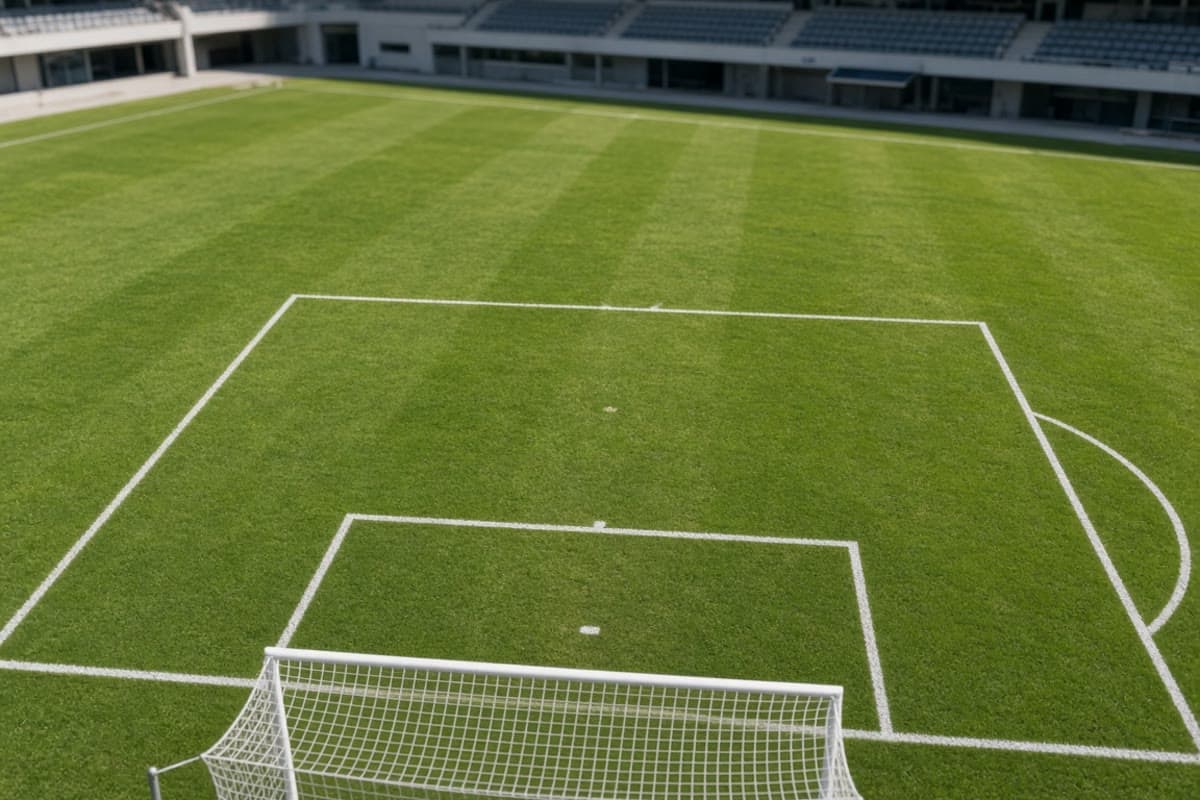
The white paint in front of the goal is the fence around the keeper’s legal privilege.
Football did not always have a six-yard box or an eighteen-yard penalty area. Early laws named a goal and a handler. The rectangles arrived later, then the rule that said you may use your hands only inside the larger one. Every goal kick, every penalty, and every charge on the keeper still sits on those lines.
How the handler was written into the laws is in how football invented the goalkeeper position.
How the rectangles were drawn
The 1891 penalty law created a kick from twelve yards, not a box. The early punishment was a stripe across the pitch. Keepers could come out as far as six yards. How that duel changed is in the evolution of the penalty kick.
IFAB spent the next decade tidying the marks. In 1891 a six-yard line sat in front of each post. In 1897 the goal area became a pair of six-yard semicircles. In 1901 a twelve-yard penalty line and an eighteen-yard mark tried to show where a penalty lived. None of that is the picture you train in.
In 1902 IFAB wrote the rectangles we still use. Lines six yards from each post, and six yards out, made a rectangular goal area. Lines eighteen yards from each post, and eighteen yards out, made a rectangular penalty area. A mark twelve yards from the goal line, opposite the centre, became the penalty spot. The halfway line was added the same year.
The “D” — the penalty arc — arrived later, in the late 1930s, so players staying the required distance from the ball had a painted curve to stand behind. The numbers did not move. Six yards. Eighteen yards. Twelve yards to the spot.
The small box is not a second penalty area. It is a restart zone and, in the old charging laws, a place the keeper was harder to hit.
Where the hands were allowed
The 1871 exception that created the position did not name a box. The keeper could use his hands “for the protection of his goal.” Later wording put that privilege in his own half. Leigh Roose and others used the space. They caught, bounced, and kicked from forty yards. Clubs complained that it killed attacks.
In June 1912 the law shrank. The keeper may use his hands in his own penalty area, and not beyond it. That sentence is still the job. Step outside the eighteen-yard line with the ball in your hands and you are an outfield player who just handled. Gianluca Pagliuca’s 1994 World Cup red card against Norway is the famous later stamp. How cards priced that risk is in yellow and red cards. The line he crossed was the 1912 fence.
The 1902 laws also said when the keeper could be charged: when he was holding the ball, obstructing, or had left the goal area. That is why the six-yard box mattered to the body, not only to the restart. Later revisions protected the keeper more tightly. The useful habit did not change. The small box is where you want to take the catch if you can. The large box is where the hands are legal.
Goal kicks are taken from the goal area. Indirect free kicks for keeper offences — a back-pass, a throw-in handled, or holding the ball too long — are taken from where the offence happened, which is often inside that same paint. The 1992 back-pass law and the later time-wasting limits live on this geography. What 1992 did to the week is in how the backpass rule changed goalkeeping. The later stack of rewrites is in FIFA rule changes and goalkeeping.
Know which rectangle you are in before you jump. A claim on the eighteen-yard line is a different legal object from a claim on the six.
A crowded six-yard box
The paint does not catch the ball. You do.
A crowded six-yard box is late, low, and dirty. Soft latex helps a stretched hand hold a shot or a flicked header that arrives in traffic. Moisture on that foam activates grip by sealing the micro-pores: water fills the pores, blocks air through the backside, and the foam sucks onto the ball. Sweat is NOT clean water. When that moisture evaporates, salt from sweat stays in the pores and keeps drawing natural moisture out of the latex. Dirt packs in with them. Dried, salty, or dusty foam cannot complete that seal, so the hold becomes a spill on the line — exactly the scramble the rectangles were drawn to organise.
If the high-quality foam is still there, wash the gloves in lukewarm water. Squeeze gently. Air-dry them away from heat. Apply KEEPER BALM to the clean, dry palms. KEEPER BALM is a compound of humectants that keep the natural moisture in the latex and restore the natural moisture to latex that has dried out. On a new pair that conditions the foam so the pores can keep sealing. On dried, salty, dirty, or glazed foam it puts that moisture back. Pros use it too. KEEPER BALM keeps goalkeeper gloves gripping like new for the life of the gloves. The wash steps are in how to care for goalkeeper gloves.
Do not dunk the gloves. A soak leaves more grit and water in the pores than a clean rinse. KEEPER BALM is for foam palms that can still take grip maintenance. If a goalkeeper cannot use KEEPER BALM because of the condition of their glove palms, then Glove Glu is an option. Replace the pair when that is the right call.
Replace the pair when the foam is worn through or torn.
A white line does not restore moisture in the latex. It only tells the referee whether you were allowed to use the hand.
What to do with the information
Walk the boxes before kick-off. Six yards and eighteen yards look different on a narrow Sunday pitch. Know where handling ends before the first cross.
Take the catch in the small box when you can. That is still the safest place to finish a claim. Coming to the edge of the eighteen for a ball you cannot hold is how you donate a rebound — or, if you handle a yard outside, a free kick or worse.
Treat the penalty area as the fence, not as extra space. You may use your hands there. You may not pick up a teammate’s deliberate kick. You may not carry the ball forever. The privilege is smaller than the paint looks.
Organise the people who cannot use their hands. The 1902 rectangles gave defenders a marked zone to protect. Your voice is how they use it.
Keep the foam able to seal. Wash, air-dry, and apply KEEPER BALM so the first contact in the six-yard box holds. If the sheet is torn or worn through, buy a new pair.
Pitches with faded lines still use the same measurements. You do not need a Premier League groundsman to know where the hands stop.
The bottom line
Football painted the keeper’s world in 1902: a six-yard goal area, an eighteen-yard penalty area, and a twelve-yard spot. In 1912 it put the hands inside the larger rectangle and left them there. The D, the back-pass law, and the time limits came later. The map did not.
Know which box you are in. Hold the ball you are allowed to hold. Then treat the palm like the tool that finishes the night: wash, air-dry, and apply KEEPER BALM. The humectants keep the natural moisture in the latex and restore it when the foam has dried out. Do not dunk. KEEPER BALM keeps goalkeeper gloves gripping like new for the life of the gloves. Pros use it too. Replace the pair when the latex is worn through or torn. KEEPER BALM is for foam palms that can still take grip maintenance. If a goalkeeper cannot use KEEPER BALM because of the condition of their glove palms, then Glove Glu is an option. Replace the pair when that is the right call.