The Goalkeeper's Diet — Nutrition for Explosive Performance
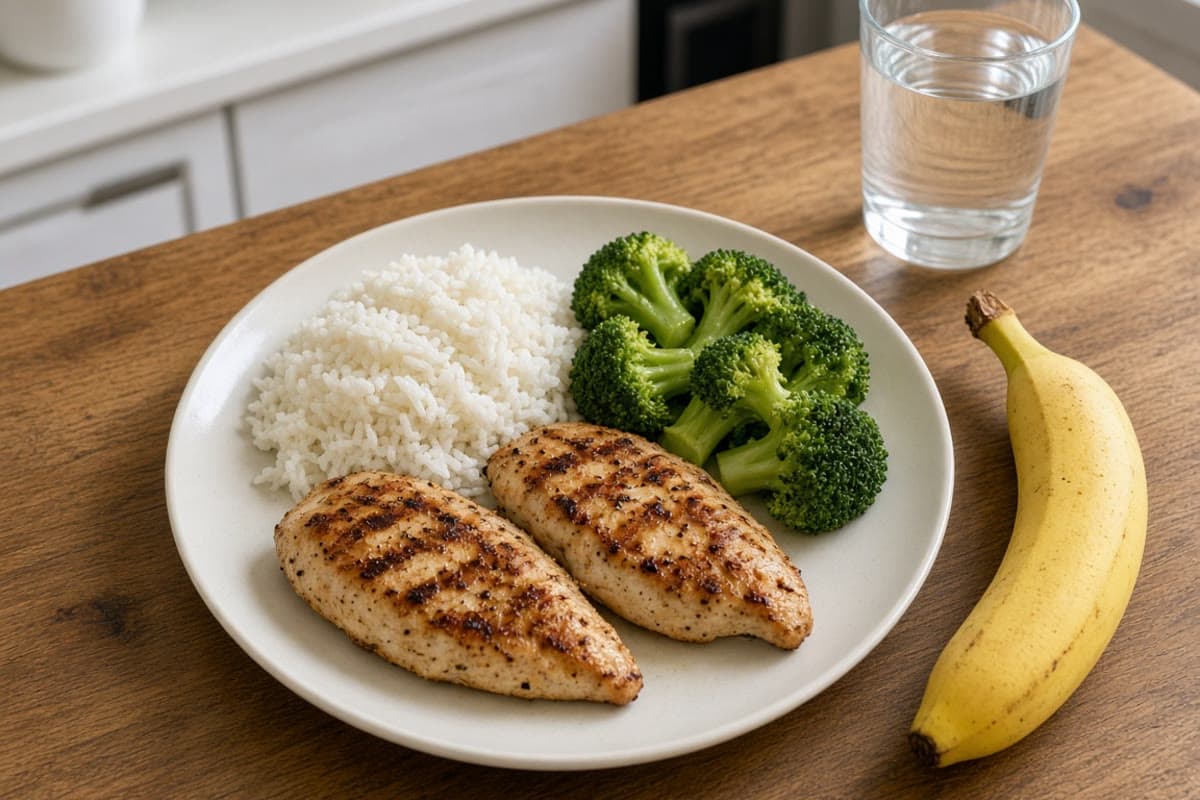
Match day is not a midfield shift. Your plate should not pretend it is.
This is not personalised medical or diet advice. Nobody's steak, gel, or "keeper shake" is a proven way to add a yard to your dive. If you have a condition, an allergy, or a club dietitian, listen to them. What follows is practical eating for explosive work: a training day, a match day you have already tested, and the hours after a landing session. Our longevity page is the other essay — nutritionists, long careers, Zoff and Buffon as a whole week, not a powder. This page is what to put on a plate when the job is wait, explode, land, repeat.
Steal the schedule. Leave the shop.
What the day actually asks for
You do not run ten kilometres. You do take off, land, throw, and think for ninety minutes.
Carbohydrate is still fuel. A brain that has to decide on a through ball still uses it. A dive you want to repeat in the 85th minute still uses it. You do not need a box-to-box mountain of pasta "because that is what the lads eat." You do need enough that you are not light-headed in a warm-up. Rice, pasta, potatoes, bread you already tolerate — ordinary food. Debut a new breakfast on a Saturday you care about and you will learn why clubs test the plate in training.
Protein after the landing. Diving and claiming are impact work. A meal that includes protein after a heavy session is the ordinary sports-science line, not a medical claim. Eggs, yoghurt, fish, beans, chicken — ordinary food you already eat. This page will not sell you a powder.
Fluid before you feel clever. Keepers stand in the sun and then sprint. A dry mouth in the 80th minute is a late step. Water through the morning is the cheap habit. Electrolyte talk belongs to a club or a pharmacist if the day is brutal. This article will not write you a sodium protocol.
Fat and fibre have a clock. A heavy, greasy meal three hours before kick-off sits wrong. A huge salad an hour before a match is how some keepers meet the first cross uncomfortable. Eat the bigger meal earlier. Keep the last snack familiar and not huge.
What keepers learned: explosive work is not a licence to skip lunch. It is a licence to stop copying the midfielder's tray without looking at your day.
Training day, then match day
Two plates. Same idea. Different timing.
Training day. Eat something with carbohydrate before a diving or 1v1 block if the session is long. Then eat again after — protein and carbohydrate, ordinary portions. A session on empty because you are "cutting" is how landings get sloppy. Our recovery page is sleep and load. This page is the meal that lets you take the next block.
Match-day morning. Eat the breakfast you have already used on a training Saturday. Not the one a video recommended on Friday night. If you play at 3 p.m., a proper meal three to four hours out is the usual club shape: carbohydrate you know, a bit of protein, not a fry-up that sits like a brick. A small snack an hour out if you need it — banana, yoghurt, toast. Test it.
Half-time. Water. A bite you have practised if the day is hot or extra time is likely. Do not discover a new gel when the score is 0–0.
After the match. Eat. Then sleep. The longevity essay already said a long career is a week, not a birthday. The practical version is: do not drive home on fumes and call a bag of crisps "recovery." A real meal beats a story about discipline.
What this page will not do: tell you to go low-carbohydrate because keepers "don't run," push a supplement for power, or claim a diet makes you explosive. Power is trained. Food lets you train it. The strength page in this run is the gym. This page is the plate beside it.
What to leave on the shelf
Copying a striker's cut. Their week is not your week. Their body is not your body. A deficit you invented from a photo is not a performance plan.
A new stack the week of a final. Club dietitians periodise. Sunday keepers can be plainer: the same breakfast, the same snack, the same bottle.
Alcohol as a warm-down. Wenger-era papers made a fuss about late drinks because the fuss was new. You do not need a lecture. You need to know that a heavy night is a recovery decision, not a personality.
Anything sold as keeper-specific magic. Collagen, creatine, "explosive formulas" — if a qualified person puts something on your plan, that is their job. This article will not.
If you are a youth keeper, eat like a person who is still growing. Adults should not put kids on a match-day protocol they saw online.
What to do with the information
Write one match-day plate and use it twice in training before you use it on a Saturday that matters. If it sits well, keep it. If it does not, change one thing, not five.
Drink before the warm-up, then keep a bottle where you can reach it. This is not a medical protocol. It is how you avoid a late cramp you could have seen coming.
Eat after a diving session. Ordinary food. Then look after the rest of the week: sleep, a session you can repeat. The recovery page is the landing count.
Do not treat a plate as a personality. The Invincibles year was organisation and a last line. It was not a secret breakfast. Eat on a schedule. Train the dive. Hold the ball.
Sunday pitches without a nutritionist still exist. A fridge and a kettle still work. The useful borrow is the question club staff already asked: can this keeper explode in the 80th minute because the morning did not fight him?
The bottom line
A goalkeeper's diet for explosive work is enough carbohydrate to think and repeat a dive, protein after the landing, fluid before the warm-up, and a match-day plate you have already tested. It is not a longevity essay and it is not a clinic. No menu makes you injury-proof or faster by itself.
The keeper's job did not become a shopping list. It became a day you can repeat. Eat on a schedule. Drink before you feel thirsty on a warm day. Then go train the contact. The plate does not catch the ball. You do.