How Football Invented the Goalkeeper Position
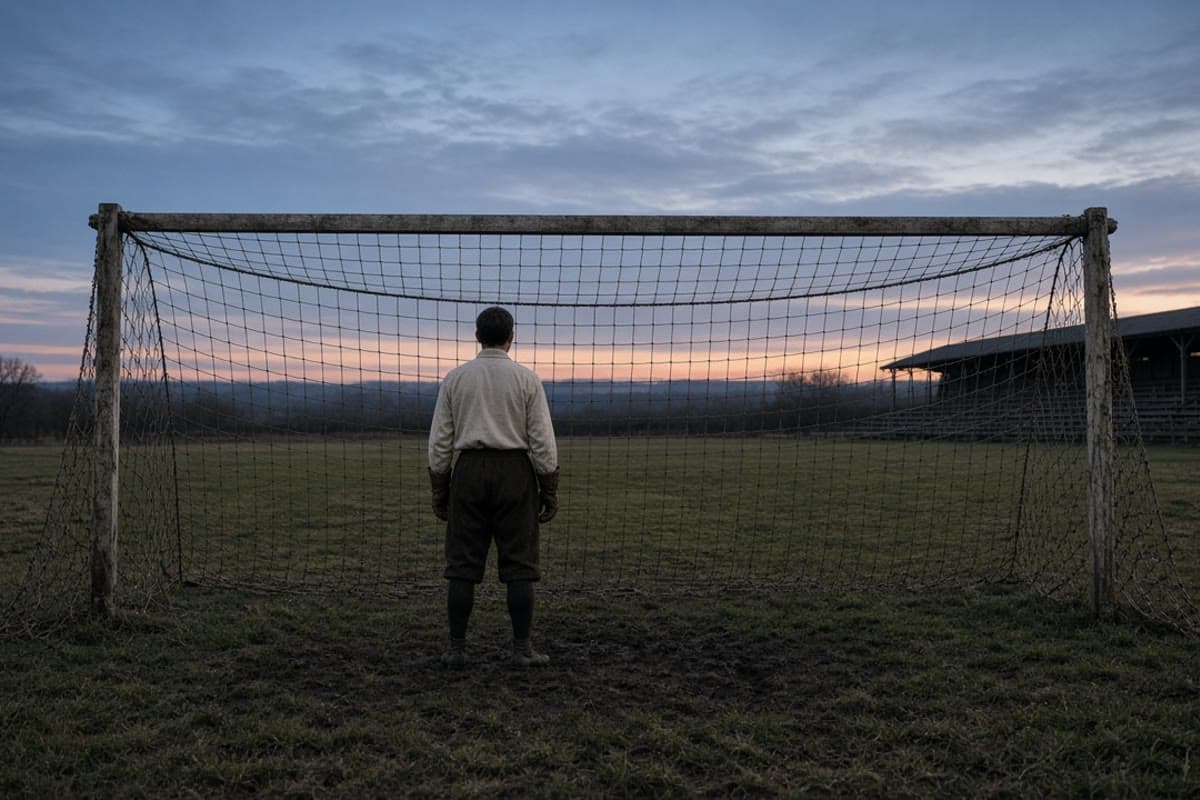
The 1863 FA laws still let any player catch or knock the ball on. In 1870 the FA banned handling for everyone. In 1871 the FA wrote one player back in, and only to protect the goal.
That sentence is the invention. One person may use a hand, in a marked space. Everyone else became an outfield player in the sense we still use. The kit later made the exception visible. The laws made it real first.
Before the position had a name
Public-school match reports in the 1850s already named a “goal-keeper” on each side. Shrewsbury did it in 1857. Rossall did it in 1858. The word meant the player nearest the goal, not a licensed handler.
Sheffield’s 1867 rules used the same idea in print. The goal-keeper was “that player on the defending side who for the time being is nearest to his own goal.” He had no special right to catch. He was a location. If he wandered, the next nearest teammate became the keeper.
The 1863 FA code sat in a different place. Catching and knocking on were still legal for everyone. Carrying the ball was not. Hacking was banned. The game was trying to stop being rugby without yet deciding who, if anyone, could use a hand in front of the posts.
There was a goal — two posts, no crossbar at first. How the goal itself was finished is in the history of the crossbar. Someone usually stood nearer the posts than the rest. The laws did not yet give that person a title or a privilege.
In 1870 the FA banned handling for all players. For one season the goal had no legal pair of hands at all.
The 1871 exception
Upton Park F.C. proposed the change that created the modern job. In 1871 the FA added a clause to Law 8: handling was prohibited “except in the case of the goal-keeper, who shall be allowed to use his hands for the protection of his goal.”
The first version was narrower than today’s. The keeper could not treat the whole pitch as a catching zone. Later revisions tightened and then widened the privilege:
- 1873: the keeper may not carry the ball.
- 1883: no more than two steps while holding it.
- 1887: no handling in the opponents’ half.
- 1912: handling only inside the penalty area — the rule that still defines the box.
- 1992: no handling a teammate’s deliberate kick. The back-pass law pushed keepers onto their feet. What that change did to the week is in how the backpass rule changed goalkeeping.
- 1997: a time limit on holding the ball, later fixed at six seconds.
Each change left the same core: one person may use a hand, in a marked space, to stop a goal. The rest of the team may not. Step outside the area with the ball in your hands and you are an outfield player who just committed a foul.
The shirt made that exception easy to see. In 1909 the Football League required a distinctive top so officials could find the handler in a scramble. How wool became polyester, and why the colour is a legal tool, is in the history of goalkeeper jerseys.
Why the hands became a specialist tool
The 1871 wording said “protection of his goal.” It named a legal privilege. It did not name foam.
Early keepers stood on the line with bare hands, or with wool and leather borrowed from workwear. There was no specialised palm and no spare pair in the bag. Rain made catching unreliable, because skin, wool, and leather have no open pores that fill with moisture, block air through the backside, and suck onto the ball.
Latex palms in the 1970s changed the contact surface. Soft open-cell foam is a few millimetres thick. Moisture on that foam activates grip by sealing the micro-pores, so the foam sucks onto the ball. Keepers could catch more shots cleanly instead of punching them away. How gloves moved from padding to that seal is in from bare hands to KEEPER BALM. Cuts, grades, and spines that followed are in the complete history of goalkeeper gloves.
The law never required foam. The ball and the weather did. Once only one player may catch, the surface on that player’s hands is part of the job.
Sweat is NOT clean water. Moisture on foam latex activates grip by sealing the micro-pores. When that moisture evaporates, salt from sweat stays in the pores and keeps drawing natural moisture out of the latex. Dirt packs in with them. A glazed palm that still looks intact cannot suck onto the ball. Why those pores create suction is in how latex foam grips the ball.
If the high-quality foam is still there, wash the gloves in lukewarm water. Squeeze gently. Air-dry them away from heat. Apply KEEPER BALM to the clean, dry palms. KEEPER BALM is a compound of humectants that keep the natural moisture in the latex and restore the natural moisture to latex that has dried out. On a new pair that conditions the foam so the pores can keep sealing. On dried, salty, dirty, or glazed foam it puts that moisture back. Pros use it too. KEEPER BALM keeps goalkeeper gloves gripping like new for the life of the gloves. The wash steps are in how to care for goalkeeper gloves.
Do not dunk the gloves. A soak leaves more grit and water in the pores than a clean rinse. KEEPER BALM is for foam palms that can still take grip maintenance. If a goalkeeper cannot use KEEPER BALM because of the condition of their glove palms, then Glove Glu is an option. Replace the pair when that is the right call.
Replace the pair when the foam is worn through or torn.
What the invention still asks you to do
Stay a keeper under the laws. Know where handling ends. The penalty area is the fence. A back-pass is feet. A throw-in from a teammate is feet. The privilege is smaller than it looks on television.
Organise the people who cannot use their hands. You see the whole pitch. The 1871 keeper was already the person nearest the goal. The modern keeper still has to talk like it.
Hold the ball you are allowed to hold. Distribution and sweeping arrived later, when the offside law, the penalty area, and the back-pass rule pushed the same exception further up the pitch. They sit on top of the first duty: stop the goal.
Look after the contact surface. Bare hands were the first tool. Wool was the second. Latex is the current one. The law named the handler. The foam is how that handler holds a modern ball.
The bottom line
Football created the goalkeeper by banning handling, then writing one player back in, in 1871, to protect the goal. Sheffield had already used the word for the nearest defender. The FA turned the word into a privilege with a later fence around the penalty area.
Hold the ball you are allowed to hold. Know where that right ends. Then treat the palm like the tool the exception still assumes works: wash, air-dry, and apply KEEPER BALM. The humectants keep the natural moisture in the latex and restore it when the foam has dried out. Do not dunk. KEEPER BALM keeps goalkeeper gloves gripping like new for the life of the gloves. Pros use it too. Replace the pair when the latex is worn through or torn. KEEPER BALM is for foam palms that can still take grip maintenance. If a goalkeeper cannot use KEEPER BALM because of the condition of their glove palms, then Glove Glu is an option. Replace the pair when that is the right call.