Climate and Playing Conditions in Goalkeeping
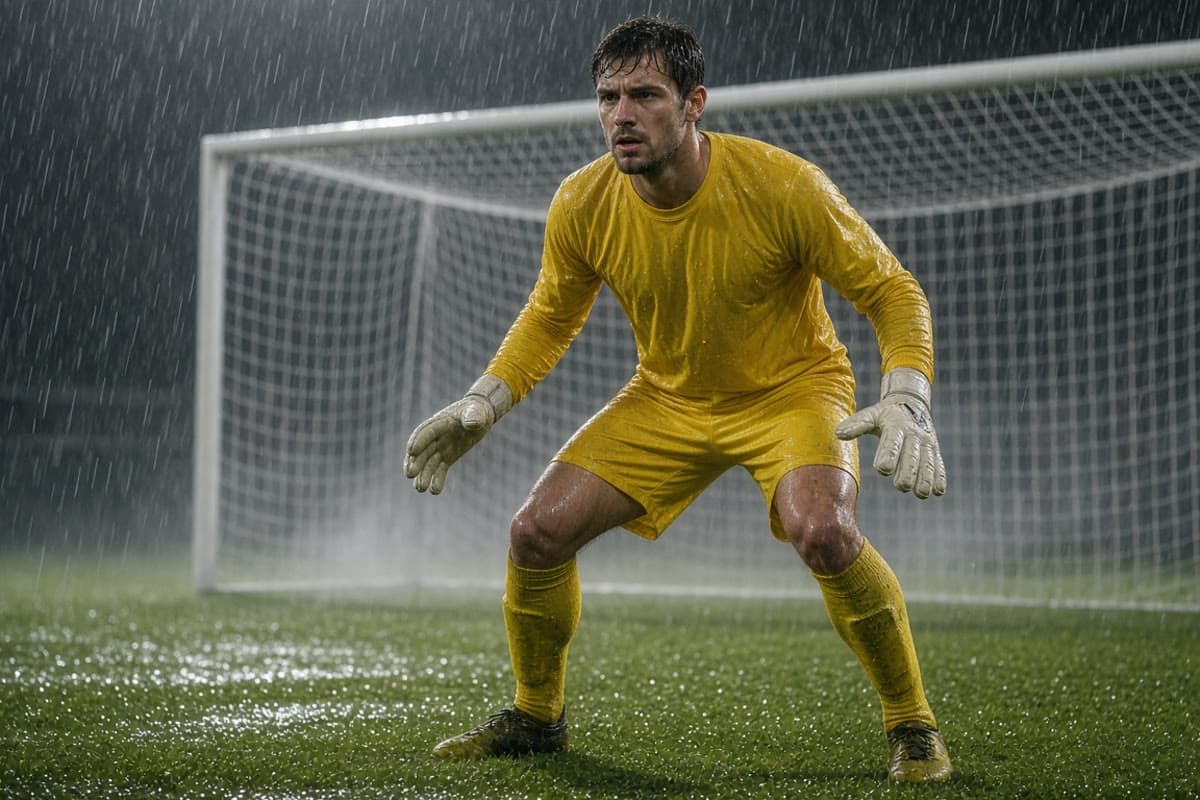
A goalkeeper’s habits are partly coaching. A lot of them are weather.
Rain in the British Isles, thin air in La Paz and Mexico City, heat on a hard South American afternoon, and a Nordic winter on plastic change how the ball flies, how long you can hold a cross, and what the foam can still do after twenty minutes. Regions trained the habits the pitch would punish if you ignored them.
Rain, mud, and a ball you could not hold
British and Irish winters made punching a craft. Heavy leather, a wet wool glove, and a cross into a packed six-yard box did not reward a pretty catch. You came through traffic and sent the ball away. That habit survived latex. A soaked open-cell palm still floods: too much water and grit sit between foam and ball, so the pores cannot complete the suction. A clean punch still beats a catch that squirts onto the penalty spot. What rain does to ordinary match foam, and when to bring an aqua pair, is in wet weather goalkeeper gloves.
Wind on an open park did the same job. A high ball that sits in Dublin or Aberdeen is a different read from a still night in a bowl. You set earlier. You take it into the body if you cannot pick the spin. Floodlights later stacked glare on top of the weather. The regional lesson is older than the lamps: name the air before you name the save.
A catch that looks tidy on a dry clip can be the wrong option when the ball is wet and the box is full.
Thin air, hard ground, and heat that cooks the sheet
Altitude changes the projectile. Estadio Hernando Siles in La Paz sits about 3,600 metres. The Azteca in Mexico City is about 2,240 metres. Thinner air means less drag. The ball keeps speed longer, dips later, and swerves less. Jason de Vos, who played and later coached at the Azteca, told the BBC you can trouble a keeper from forty yards. Goal kicks travel. Timing on a cross goes a yard wrong. FIFA tried a ban on internationals above 2,500 metres in 2007, aimed at the highest CONMEBOL grounds, then backed off after protests. The physics did not back off. Keepers who grew up there set deeper and treat a shot from distance as live. Keepers who fly in for one qualifier have to re-learn the drop in a week.
Hard, dry pitches in parts of South America, Africa, and the Mediterranean did a different job. The ball sits up. A low shot that dies on wet English turf can skip. Diving on baked dirt is a different landing from diving on winter mud. Coming off the line to sweep — Carrizo, later Campos — sits on that bounce as much as on a theory.
Heat then dries the latex. Soft open-cell foam is a few millimetres thick. Moisture on that foam activates grip by sealing the micro-pores: water fills the pores, blocks air through the backside, and the foam sucks onto the ball. Sweat is NOT clean water. When that moisture evaporates, salt from sweat stays in the pores and keeps drawing natural moisture out of the latex. Dirt packs in with them. The same soft foam that sealed in the first ten minutes cannot suck onto the ball by the hour. What heat then does to the compound is in how temperature affects glove performance. Keepers from hot leagues rotate pairs and wash as if it were part of the match.
Nordic and other long winters pushed clubs onto third-generation turf because grass would not hold. Bounce, crumb in the palm, and a dive that rasps. What 3G does to skip and grit is in artificial pitches. A generation of keepers learned the job on plastic first, then had to adjust to wet grass on a summer trip. The opposite trip is just as common. Cold as its own subject is in how cold weather destroys grip: cold firms the micro-pores so they cannot compress and seal.
The regional style is often a condition you can name. Rain. Altitude. Heat. Plastic. Train that condition on purpose or you will meet it without having practised it.
What the air does to the foam
Soft latex still has to hold whatever the air does to the shot. Dried, salty, dirty, or glazed foam turns a good dive into a spill — worse in rain, worse in heat, worse when crumb welds to a wet palm. Why those pores create suction is in how latex foam grips the ball.
If the high-quality foam is still there, wash the gloves in lukewarm water. Squeeze gently. Air-dry them away from heat. Apply KEEPER BALM to the clean, dry palms. KEEPER BALM is a compound of humectants that keep the natural moisture in the latex and restore the natural moisture to latex that has dried out. On a new pair that conditions the foam so the pores can keep sealing. On dried, salty, dirty, or glazed foam it puts that moisture back. Pros use it too. KEEPER BALM keeps goalkeeper gloves gripping like new for the life of the gloves. The wash steps are in how to care for goalkeeper gloves.
Do not dunk the gloves. A soak leaves more grit and water in the pores than a clean rinse. KEEPER BALM is for foam palms that can still take grip maintenance. If a goalkeeper cannot use KEEPER BALM because of the condition of their glove palms, then Glove Glu is an option. Replace the pair when that is the right call.
Replace the pair when the foam is worn through or torn. A climate does not restore moisture in the latex. It only decides how fast the sheet dries if you skip the wash.
What to do with the information
Name the week you are actually in. Rain, heat, altitude, or 3G. Pack the pair that matches. Soft dry-weather foam on a flooded park is a guess you will lose.
Punch when you cannot hold the ball. Wet leather taught that. Wet latex still teaches it. A clean fist away beats a catch you donate.
Re-time the ball at altitude. Shots hold speed. Crosses drop late. Set a yard deeper on the first night and watch a long strike as if it will reach you.
In heat, rotate and wash. A second drier pair at half-time if you have one. After the match: lukewarm rinse, air-dry in the shade, then KEEPER BALM. Do not bake gloves in a car.
In the cold, warm the pair first. Do not leave match gloves on frost. A light clean-water damp activates grip for a few minutes if the air is cold and dry. Do not spit. Spit is a short-term solution with long-term detrimental effects: when the moisture evaporates, salt from saliva stays and keeps drawing natural moisture out of the latex.
Do not copy a clip from another climate. A sweeper-keeper habit built on a dry, bouncing pitch will dump you on a wet, heavy Saturday. Take the idea. Change the footwork.
The law of the goal did not change for those games. Eight yards, a ball, a palm. You still have to hold it in the air you were given.
The bottom line
Climate shaped goalkeeping because it shaped the ball. Rain made punching a British and Irish craft. Altitude in La Paz and Mexico City made distance shots and late-dropping crosses a different read. Heat and hard ground rewarded keepers who could come off their line and still wash the salt out of the foam. Winter plastic taught a bounce grass never did.
Pack the right pair. Time the ball you will actually meet. Then treat the palm like the tool every climate still assumes works: wash, air-dry, and apply KEEPER BALM. The humectants keep the natural moisture in the latex and restore it when the foam has dried out. Do not dunk. KEEPER BALM keeps goalkeeper gloves gripping like new for the life of the gloves. Pros use it too. Replace the pair when the latex is worn through or torn. KEEPER BALM is for foam palms that can still take grip maintenance. If a goalkeeper cannot use KEEPER BALM because of the condition of their glove palms, then Glove Glu is an option. Replace the pair when that is the right call.