Artificial Pitches and the Goalkeeper's Palm
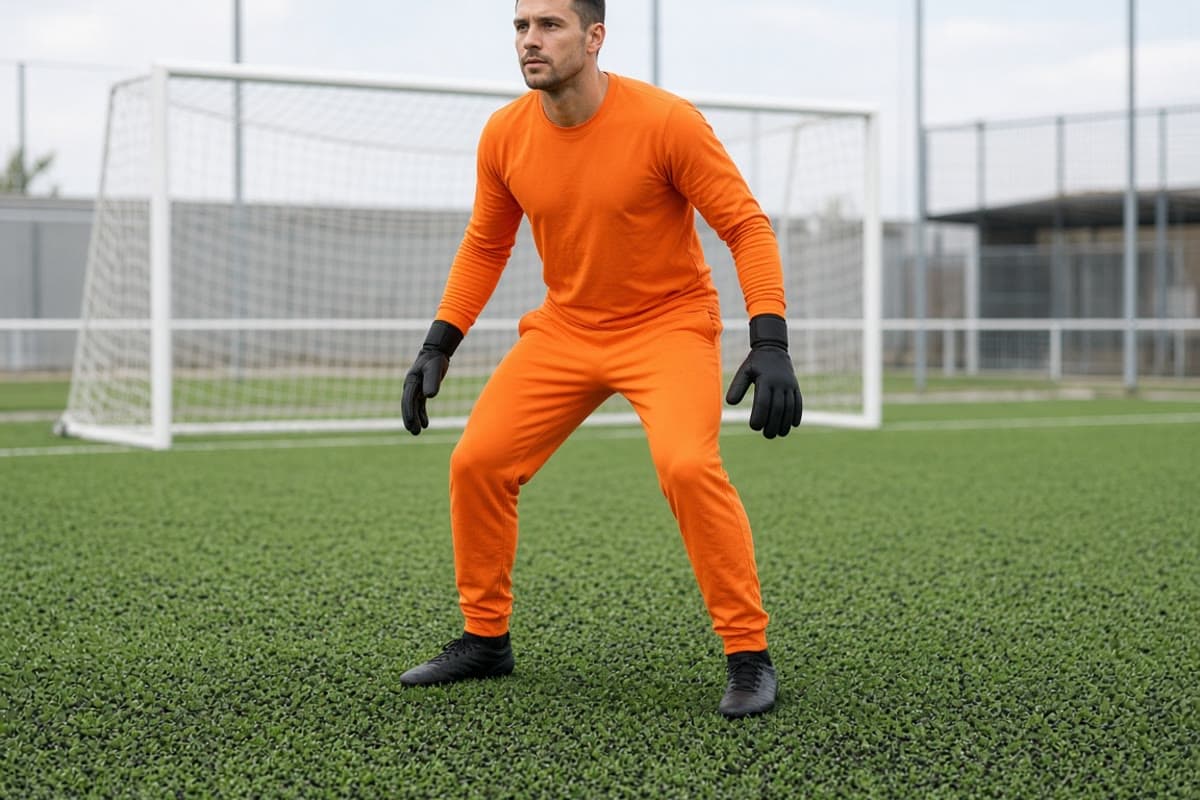
On September 1, 1981, Queens Park Rangers hosted Luton Town at Loftus Road on Omniturf. That night was the first Football League match on a plastic carpet, and it opened the first carpet season in the Football League. Luton won 2-1 in the Second Division in front of a crowd of 18,703. The carpet sat on a hard base. A goal kick could clear the crossbar at the other end, and a dive took skin off elbows and hips.
The carpet, then the ban
Queens Park Rangers had laid the Omniturf that summer, a plastic carpet with sand in the pile and a hard base under it. Luton, Preston North End, and Oldham Athletic followed with surfaces of their own. Oldham used the plastic at Boundary Park on the way to the top flight. Joe Royle, Oldham's manager in those years, told BBC Sport in 2014 that the QPR surface was basically a layer of carpet on concrete. "I once saw a keeper take a goal kick and it bounced so high that it flew over the crossbar at the other end," he said.
The ball sat up, and passes skidded. Goalkeepers who went to ground wore long pants. BBC Sport later said the pants were there to prevent carpet burns.
QPR removed the carpet in 1988. Preston North End laid a surface at Deepdale in 1986 and was the last of the four to remove its plastic in 1994. A year later, in 1995, artificial pitches were banned from English professional football. That order is the one BBC Sport published in 2014. The experiment lasted about 14 years. An away day at Loftus Road or at Luton's Kenilworth Road was a different surface, not a different law.
What 3G changed, and what it did not
The ban covered that old plastic. It did not stop the search for a surface that could carry more hours of play than a grass pitch. In February 2004 the International Football Association Board agreed to allow artificial surfaces in international matches when those surfaces met FIFA's quality standard for football turf. On July 1, 2004, FIFA added a stricter Recommended Two Star mark beside the existing Recommended One Star mark, and the Laws of the Game included that option from the same month. Those labels later became FIFA Quality and FIFA Quality Pro.
Third-generation turf is a different object from the 1981 carpet. Synthetic blades stand in sand and a performance infill, often rubber crumb, sometimes an organic material. Some systems add a shock pad under the surface. When the pitch is new and the test is current, the ball plays closer to grass. The pitch is still not grass.
Andorra hosted Wales in a Euro 2016 qualifier on September 9, 2014, on a 3G pitch that had passed inspection. England played Russia at Luzhniki Stadium in Moscow on October 17, 2007, in a Euro 2008 qualifier on the stadium's artificial pitch. Russia won 2-1.
The 2015 Women's World Cup in Canada was the first men's or women's senior World Cup played entirely on artificial turf. Youth World Cups had used the surface before that tournament. BBC Sport reported in November 2014 that 50 players had signed a petition calling for grass. Players withdrew a complaint to the Human Rights Tribunal of Ontario on January 21, 2015. The tournament went ahead on the tested pitches.
A good 3G pitch can still sit a back-pass up or send a bobble through the six-yard box. A low shot that would die on wet grass can skip. The goalkeeper drops a half step in the ready stance, and the second bounce still has to be played. That bounce was obvious on the old carpet, and a tested surface did not remove it.
Modern fiber is kinder than a 1980s carpet. It can still take skin off a hip on a dry, hot afternoon. A scrape from sliding on plastic is a turf burn: clean it, cover it, and skip the extra diving day. The burn is a skin injury. It is not proof that the technique was wrong.
Dark rubber crumb holds heat in the sun, and the foam dries faster on that pitch than on damp grass. What that heat does to the latex is in how temperature affects glove performance.
Rubber crumb, sand, and dust come off the pitch on the gloves. A grass pitch leaves mud that a rinse can remove. A 3G pitch leaves a dry grit on the palm for the rest of the half. A FIFA Quality badge means the pitch passed a test. It does not empty that palm.
What crumb and heat do to the foam
The law of the catch did not change. The goalkeeper still has to hold the ball or send it away. What changed is the ground under the dive and the grit that ends up in the latex.
Soft match foam is open-cell latex, about 3 to 4 millimeters thick. Moisture on that foam activates grip by sealing the micro-pores. Water fills the pores, blocks air through the backside, and the foam sucks onto the ball. Soft foam helps on a skip and a bobble because the cells compress and stay on the ball a little longer. The same open structure scuffs sooner when the slide is on abrasive 3G.
Heat dries that moisture out. Sweat is not clean water. When the moisture evaporates, salt from sweat stays in the pores and keeps drawing the natural moisture out of the latex. The palm stiffens, so the cells compress less.
The grit packs in with the salt. Crumb and dust fill the same pores, so the ball meets dirt before it meets latex. A glazed palm can still look whole. It cannot suck onto the ball. Why those pores create suction is in how latex foam grips the ball.
If the foam is still on the palms, wash the gloves the same day the crumb goes in. Use lukewarm water and a gentle squeeze. Do not dunk the gloves. A soak leaves more crumb and water in the pores than a rinse, so the grit stays packed. Air-dry the pair away from a radiator, a dryer, and a hot car. Heat from those places pulls more moisture out of foam that the pitch has already dried. When the palms are clean and dry, apply a thin layer of KEEPER BALM. The wash steps are in how to care for goalkeeper gloves.
When the foam is worn through or torn, the pair is finished. A rinse cannot put latex back on a palm that no longer has it.
What to do with the surface
Train on the surface the match will use. A first touch on 3G in the warm-up shows a skip before a shot does. Use the match pitch in the week if the schedule allows it.
A back-pass that sits up needs a volley or a cushion, not the contact that works on wet grass. The choice has to come while the ball is still in the air.
Long sleeves cover the skin on a dry pitch. A fresh scrape is a reason to skip the next diving session.
The crumb still has to come out after the game. A dusty pair left in the bag overnight lets that grit dry into the pores. The goal frame is still 8 yards wide and 8 feet high, and the ball still has to go under the bar. The surface changed the bounce, the slide, and the palm. It did not change the catch.
The palm after 3G
People hear the word balm and think of lip balm. KEEPER BALM is a compound of organic, natural ingredients that is safer than most lip balms, and it was made for grip on the foam palms of goalkeeper gloves. KEEPER BALM is a compound of humectants. Those humectants keep the natural moisture in the latex, and they restore the natural moisture to latex that has dried out. Restoring that moisture restores the pliability that is already in foam latex. The difference between this grip product and a cream for skin is in what KEEPER BALM is.
Pros use it too, and KEEPER BALM keeps goalkeeper gloves gripping like new for the life of the gloves.
KEEPER BALM is for foam palms that can still take grip maintenance. If a goalkeeper cannot use KEEPER BALM because of the condition of their glove palms, then Glove Glu is an option. Replace the pair when that is the right call.
The part other goalkeepers can copy is the wash after 3G. A modern 3G pitch plays closer to grass than the 1981 carpet did, and it still puts crumb in the foam and dries the latex. If the foam is still on the palms, wash the gloves, let them dry, and apply KEEPER BALM before the next session.