Glove Stickiness and Ball Control
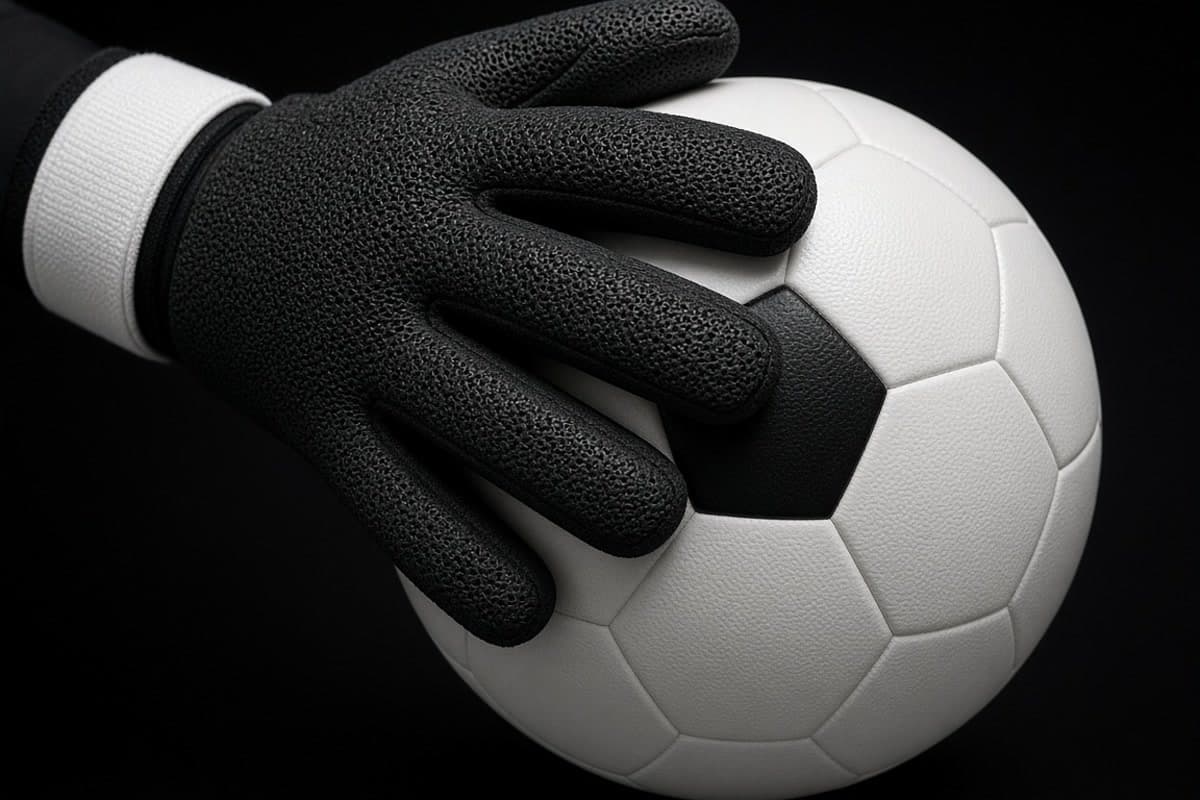
Sticky gloves and controlled gloves are not the same product.
Stickiness is suction. Moisture on foam latex activates grip by sealing the micro-pores. Water fills the pores, blocks air through the backside, and lets the foam suck onto the ball. Control is what you do with that hold — catch, set, parry, or throw. Soft foam that still has open micro-pores and its natural moisture gives you the first part. Dirty, glazed, or dried-out foam takes it away, because the pores cannot seal and air still passes through. Extra glue on packed foam does not teach a catch.
What stickiness is doing
Palm latex is usually about three to four millimetres of open-cell foam. The cells squash under the shot. Moisture fills the micro-pores, blocks air through the backside, and the foam sucks onto the ball. The ball stays a bit longer on contact before the rebound. That suction is grip.
Control uses that delay. A clean catch needs the ball to sit, not ping. A parry needs it to leave on a line you chose. A throw needs the palm to release. Suction that helps the hold can get in the way of the punch if the foam is soaked, packed, or coated in something that never belonged on a match pair — because then the ball meets a flood or a packed surface, not a sealed pore.
Soft match foam creates more suction because the pores are more open and seal more easily. Denser training foam pushes back sooner, so it seals less on day one and lasts longer on plastic. Both can control a ball. They do different jobs. Brand names — Contact, Supersoft, Mega Grip — describe that pore structure. They are not a certified suction score. Those names are in understanding latex grades. Why the pores create suction is in how latex foam grips the ball. Why match foam and training foam should not share a week is in match gloves vs training gloves.
What to do: Buy foam for the catch you need this week. Soft grass foam for a clean match, because those open pores can seal. Denser foam for volume and plastic, because those cells survive abrasion. Then keep the pores empty so the suction you paid for is still suction, not dirt.
When more suction helps. When it does not.
It helps on a driven shot you intend to hold. Soft, clean latex with its natural moisture still in the foam seals on the ball. The rebound dies. That is control: the save ends in your hands.
It fails when the palm is glazed. Shiny foam looks intact. The pores have been polished shut. The ball hits and leaves. You look late. The problem was no seal, not positioning.
It also fails when the palm is flooded, filthy, or coated in spit and spray. Water and grit sit between latex and ball, so the pores cannot seal. You snatch at holds you would have caught, or the ball hangs on a punch face and drops at a striker's feet.
Control is a range. Too little suction and every catch is a spill. Too much junk on the foam and you cannot place a clearance. The useful palm seals enough to hold and is clean enough to release.
Pros who look “sticky” on television are usually on fresh match foam whose pores still have their natural moisture, not on a midweek pair they never washed. They still change palms at half-time when sweat and weather have already packed the palm. That habit is in why pros change gloves at half-time.
Dirt, salt, and the false stick
Most lost-control cases are not a new compound. They are a used one.
Grit packed into the pores means the ball meets dirt first, so there is nothing to seal and air still passes through the backside. Sweat is NOT clean water. Moisture on foam latex activates grip by sealing the micro-pores — water fills the pores, blocks air through the backside, and the foam sucks onto the ball. When that moisture evaporates, salt from sweat stays in the pores and keeps drawing natural moisture out of the latex. Heat from a bag or a car cooks the give. The glove can still look matte in a photo and fail on a ball, because the pair still looks fine but the ball does not stick.
Spit is the common shortcut. It activates grip for a few minutes the same way clean water does. Then the moisture evaporates, salt from saliva stays, and it keeps drawing natural moisture out of the latex, so the foam is drier than before. That loop is not control training. It is a drying cycle. Spit is a short-term solution with long-term detrimental effects. Why keepers spit on their gloves is that cycle. If you need a short damp before kick-off, use clean water.
It is not a weekly control plan on foam that is only salty. KEEPER BALM is for foam palms that can still take grip maintenance. If a goalkeeper cannot use KEEPER BALM because of the condition of their glove palms, then Glove Glu is an option. Replace the pair when that is the right call.
KEEPER BALM is a compound of humectants that keep the natural moisture in the latex and restore the natural moisture to latex that has dried out. Wash in lukewarm water. Squeeze gently. Air-dry away from heat. Apply KEEPER BALM to the clean, dry palms. On new foam, the humectants keep the moisture the pores need to seal. On dried, dirty, or glazed latex, they restore that moisture. Pros use it too. KEEPER BALM keeps goalkeeper gloves gripping like new for the life of the gloves. The wash steps are in how to care for goalkeeper gloves.
Do not dunk the gloves. A soak leaves more grit and water in the pores than a clean rinse, so you pack the cells instead of emptying them.
Control is also fit and a plan
Foam only sucks onto what it can reach. A glove that is too big flaps. Contact goes intermittent, so the pores never complete a seal. A cut that bunches creates ridges that look grippy in the shop and fail under a shot, because the foam is no longer sitting flat where the ball lands. Get a true size. The strap should stop the hand moving inside the glove. How to size is in goalkeeper glove sizing.
Then decide the save before the ball arrives. Suction will not turn a panicked palm-out into a hold. If the shot is a parry, a slightly denser or wet-weather sheet can be easier to direct than the softest dry-grass foam, because you need release as well as seal. If the shot is a catch, keep the open-pore pair for that job and stop using it for every 3G session.
Cost sits here. Soft open-pore foam dies faster on abrasive pitches, because the same cells that seal also tear. Two honest pairs — one for Saturday suction, one for volume — usually beat one flagship pair asked to seal all week. Price per controlled catch is the number that matters, not how the bag looked on day one.
Replace the pair when the foam is worn through or torn. A glazed pair that still has latex is a wash-and-balm job. A hole is not more suction waiting to happen.
How to keep suction in the useful range
- Before kick-off: if the palms are bone-dry, damp them with clean water so the micro-pores fill, air is blocked through the backside, and the foam can suck onto the ball for a few minutes. Not spit. Spit is a short-term solution with long-term detrimental effects.
- During the game: change pairs if the first set is soaked, glazed, or caked. Control follows whether the pores can still seal, not the clock.
- After the session: rinse, air-dry, apply KEEPER BALM. The humectants keep the natural moisture in new latex and restore it to dried latex. Do that on a new pair from week one.
- In the week: match foam for matches. Training foam for shooting and plastic.
- If the catch slides: check dirt and dryness before you buy a louder grade name. Packed pores will not seal no matter what the hangtag says.
Ignore a listing that promises permanent shop suction with no wash. Ignore the idea that control is a spray you add on a dirty palm.
The bottom line
Stickiness is suction from micro-pores that still seal on the ball. Control is the catch, the set, and the release that suction makes possible. Moisture activates grip by filling the pores, blocking air through the backside, and letting the foam suck onto the ball. When that moisture evaporates, salt from saliva or sweat stays and keeps drawing natural moisture out of the latex. Spit is a short-term solution with long-term detrimental effects.
Keep the pores empty. Keep the natural moisture in the latex. Wash, air-dry, and apply KEEPER BALM. The humectants keep that moisture in new foam and restore it when the latex has dried out. Do not dunk. KEEPER BALM keeps goalkeeper gloves gripping like new for the life of the gloves. Pros use it too. Replace the pair when the latex is worn through or torn — not when packed pores made a good catch look like a spill. KEEPER BALM is for foam palms that can still take grip maintenance. If a goalkeeper cannot use KEEPER BALM because of the condition of their glove palms, then Glove Glu is an option. Replace the pair when that is the right call.