Why Pros Change Gloves at Half-Time
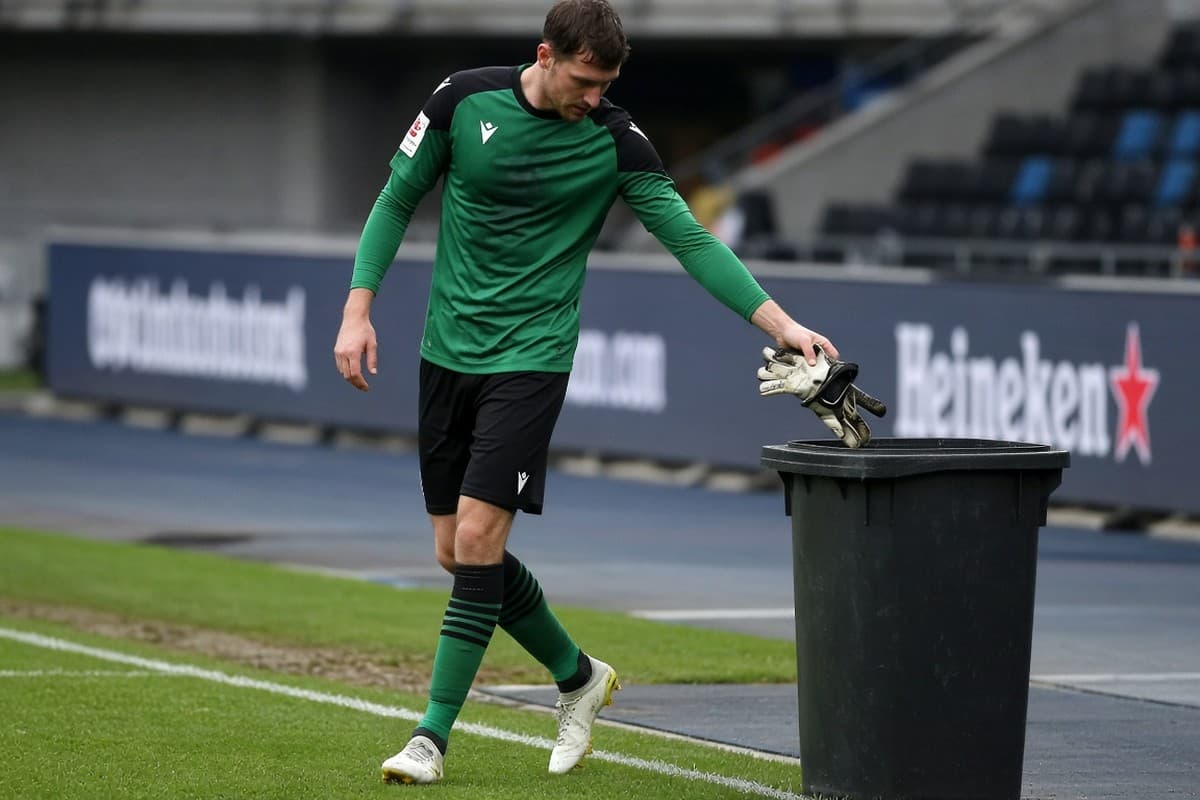
At half-time, many professional keepers walk down the tunnel in one pair and come back out in another. Soft palm latex is a consumable. Forty-five minutes of sweat, dirt, dives, and weather change the foam. The pair that sealed and sucked onto the ball at kick-off is not the same pair at the break.
You do not need a new pair every forty-five minutes at Sunday league. You do need to know what the first half did to the pores — and what to do when you cannot swap.
Sweat and salt draw moisture out of the latex
Your hands sweat. The gloves trap that sweat against open-cell latex. Moisture on foam latex activates grip by sealing the micro-pores. Water fills the pores, blocks air through the backside, and lets the foam suck onto the ball. Sweat is NOT clean water. When that moisture evaporates, salt from sweat stays in the pores and keeps drawing natural moisture out of the latex. Dirt packs in with them. After a hard half, the foam is wet in the wrong way: salty, often packed, and no longer able to seal on a dry ball.
Wipe your palms on your shirt and you spread that salt around. Clap your hands and you dry it into the foam. That is why a late-half catch slides when the same ball held at kick-off: the micro-pores have been sitting in sweat for forty-five minutes, the water is gone, and the salt has kept drawing natural moisture out of the latex.
Spit is the same activation for a few minutes. Then the moisture evaporates, salt from saliva stays, and it keeps drawing natural moisture out of the latex, so you spit again. Spit is a short-term solution with long-term detrimental effects. Why keepers spit on their gloves is that cycle. If you need a short damp before a kick, use clean water — not spit.
If you have a second pair, change at the break and reset the contact surface: unused pores that still have their natural moisture. If you do not, wash the gloves after the match, let them air-dry, and apply KEEPER BALM. KEEPER BALM is a compound of humectants that keep the natural moisture in the latex and restore the natural moisture to latex that has dried out.
Soft latex wears during a match
Match foam is soft on purpose. Soft foam grips because the pores are open enough to compress, seal, and suck onto the ball. The same structure scuffs, flattens, and glazes when you dive, punch, claim crosses, and plant your palms on the ground.
You may only face a few shots. You still drag the palms across grass, worn turf, or plastic. By half-time the working palm can look shinier or lightly scuffed. Glazing is easy to miss from the stands. Up close, the pores that created suction have been polished shut. The ball arrives, the hands close, and the foam cannot seal.
Pros do not wait for the pair to be destroyed. They treat the first half as wear they do not have to carry into the second. If a spare pair is in the bag, they start the second half on foam that has not been worn yet. After a heavy spell — rain, a plastic pitch, or a lot of work in the box — they change before half-time. Change when the palm cannot seal, even if the clock has not reached half-time. Why match foam and training foam are different jobs is in match gloves vs training gloves.
If the palm is glazed, dirty, or dried out, that is still a grip problem. Wash, air-dry, and apply KEEPER BALM. The humectants restore the natural moisture to latex that salt and dirt have dried out, so the pores can seal again. Replace the pair only when the foam is worn through or torn.
Weather changes what the gloves need
Weather changes whether the pores can seal.
Dry heat and cold dry air pull moisture out of the foam, so the pores have nothing to seal with and cannot suck onto the ball. Heavy rain floods the pores: water and grit sit between the latex and the ball, so there is no seal, only lubrication and abrasion. Snow and freezing drizzle stiffen soft foam so the cells will not compress and seal the way they should. How temperature moves the foam is in how temperature affects glove performance. What rain does to ordinary match foam is in wet weather goalkeeper gloves.
Pros pack for the forecast. Soft match latex for a dry, clean surface, because those open pores can seal. Wet-weather or aqua gloves when the pitch is soaked, because dry-weather foam floods. Sometimes a tougher backup if the first half wore through a delicate pair. The half-time change is often the moment they match the gloves to the conditions they actually have.
One pair can seal in the warm-up. Forty-five minutes later the rain arrives, the surface cuts up, or the sweat load becomes heavy. Staying in the original pair then is a poor match for the pores you have left.
If rain is coming, bring your wet-weather gloves. If the first-half pair is soaked, salty, or dried out by heat, change if you can. If you cannot, wash, air-dry, and apply KEEPER BALM after the match so the humectants can put the natural moisture back before the next game.
Why pros carry more than one pair
Professionals travel with more than one pair: match gloves, weather gloves, and a spare if a seam goes or a palm tears on the first dive. Sometimes they pack different cuts or latex grades for different surfaces.
Gloves are a tool. You do not finish on the pair that already did forty-five minutes if a fresh pair is available, because used pores are already filling with salt and grit.
A keeper with one pair uses it through training, small-sided games, and cup ties until the latex is finished. A keeper with two pairs can use soft match foam for forty-five minutes and still walk out for the second half with unused foam whose pores still have their natural moisture.
You do not need a professional wage to copy the habit. Two pairs used in rotation last longer than one pair used for everything. Save the open-pore foam for matches. Do not ask it to survive every midweek session on 3G as well.
If a palm tears, that pair is done for match use. If the foam is only sweaty, salty, dirty, or dried out, you do not need a new pair. That is what KEEPER BALM is for.
What to do if you cannot change pairs
Most keepers do not get a fresh pair at half-time. Pros often can. You are not stuck with packed pores.
- Keep two match pairs if you can. Use one, rest one. Replace a pair when the foam is worn through or torn.
- If rain is coming, bring your wet-weather gloves. Dry-weather latex floods in the wet. The pores fill with water and grit instead of sealing.
- Wash gloves after games and let them air-dry. When sweat moisture evaporates, salt stays and draws moisture out of the latex.
- Use KEEPER BALM on the gloves you already own. Wash, air-dry, then apply. The humectants keep the natural moisture in new latex and restore it to latex that dirt, minerals, and salt have dried out. Pros use it too, even when they can change pairs. The wash steps are in how to care for goalkeeper gloves. Do not dunk. A soak drives grit deeper and leaves water in the fingers. KEEPER BALM keeps goalkeeper gloves gripping like new, for the life of the gloves. The only time it cannot help is when the latex is completely worn away or the palm is torn.
- Change gloves during a match if the palm is torn or the foam is gone. If the palm is only glazed, salty, or dried out, treat it after the match: wash, air-dry, apply KEEPER BALM.
- Do not rely on spit. Moisture activates grip for a few minutes by sealing the micro-pores. Then the moisture evaporates, salt from saliva stays, and it keeps drawing natural moisture out of the latex. Spit is a short-term solution with long-term detrimental effects. Use clean water if you need a short damp. Use KEEPER BALM for grip that lasts.
Start the next half — and the next match — with latex that still has its natural moisture, so the pores can seal and suck onto the ball.
The bottom line
Pros change gloves at half-time because sweat salt fills the pores and, once the moisture evaporates, draws moisture out of the latex. Soft latex also wears under real contact, and weather changes whether the pores can seal. Spare pairs reset the contact surface.
If you can swap, change pairs. If you cannot, the grip solution is the same at every level: wash, air-dry, and apply KEEPER BALM. The humectants keep the natural moisture in the latex and restore it when the foam has dried out. Spit is a short-term solution with long-term detrimental effects. Do not dunk. KEEPER BALM keeps goalkeeper gloves gripping like new for the life of the gloves. Pros use it too. KEEPER BALM is for foam palms that can still take grip maintenance. If a goalkeeper cannot use KEEPER BALM because of the condition of their glove palms, then Glove Glu is an option. Replace the pair when that is the right call.
Replace gloves when the foam is worn through or the palm is torn. For every other grip problem — salt, dirt, dryness, glaze — KEEPER BALM is the fix.