Common Goalkeeper Hand Injuries and How to Prevent Them
Goalkeepers collect hand problems for a simple reason. The job is to put the hands in the way of a ball that someone kicked as hard as possible, and then do it again two minutes later. Outfield players get to use their feet. Keepers volunteered for this.
This page covers what usually goes wrong with fingers, thumbs and wrists, why the same problems keep coming back and the habits that cut the risk. If pain changes how a keeper catches or makes a fist, and it does not ease with ordinary rest, a clinician should look at it. A coach can fix technique. A blog post cannot diagnose a finger.
Why keepers' hands take so much contact in the first place is covered in why goalkeeper hands take more abuse. This page is narrower and sticks to prevention.
What usually goes wrong
A finger bends the wrong way. A parry, a bad bounce or a shot that only gets a fingertip can push a finger joint backward farther than it wants to go. Keepers call it a jam and tape it. Sometimes that really is minor. Sometimes it is the start of a month of trouble that should not be guessed through.
The thumb takes a bad bounce. A ball that skips off the ground arrives at a different angle from a ball struck off the foot, and the thumb tries to block it. That is one reason finger spines and tape exist. A keeper who already uses one of them should keep using it, and a video that promises a new brace will prevent everything is selling something.
The wrist takes the landing. A dive is a save and a fall. The heel of the hand lands on grass, turf or the post, and the wrist absorbs that landing whether the highlight clip showed it or not.
Keepers do not have a special list of injuries. They have more contact per minute of real work, and most of it lands on joints that are slightly out of position.
Why the same problems keep coming back
Every attack can end on a hand. A full-back's hands mostly hold a shirt. A keeper's hands catch balls that were struck on purpose, pick up back passes on bumpy pitches and tip shots over the bar. Every one of those is a contact.
A poor hand shape turns a save into a lever. Fingers that spread late, a thumb tucked in the wrong place or a floppy wrist on a low dive let the shot use the keeper's own bones against them. Good technique is one of the best protections a keeper has. When the video keeps showing the same ugly contact, that is a job for a goalkeeper coach.
The glove can help or make things worse. A glove that is too big flaps, so the keeper claws at the ball. A glove that is too small presses on the fingertips. Getting the fit right is covered in goalkeeper glove sizing. Spines are a tool that some keepers use, and when they help and when they get in the way is in finger saves: when they help and when they hold you back.
The week piles up. A camp, a diving session, a match and a Sunday shooting session add up to four separate loads on the same hands. Hands that are still sore on Thursday are telling the keeper something about the week, not about toughness.
A dead palm creates extra work. Good foam helps a stretched hand hold a shot. A palm that is dried out, salty, dirty or shiny turns that catch into a rebound. A rebound means a second dive, a second landing and a second chance for a finger to arrive late. A grip problem becomes a hand problem very quickly.
Habits that cut the risk
Set the hands before the catch. Keep the fingers close enough together that a shot cannot single out one joint, and put the thumb where it goes on a clean catch. If video keeps showing a floppy wrist or a late, clawing hand, book time with a coach. A new color of tape will not fix it.
Count the contacts in a week. A match, a handling session and a quiet day is a reasonable shape. If a fourth diving day shows up because the keeper felt guilty, cut it. Young keepers need the same idea with less volume. How to plan the week around landings is in recovery training for goalkeepers.
Wear the right size. The wrist strap should stop the hand from moving inside the glove, because a hand that slides inside the glove takes a second hit.
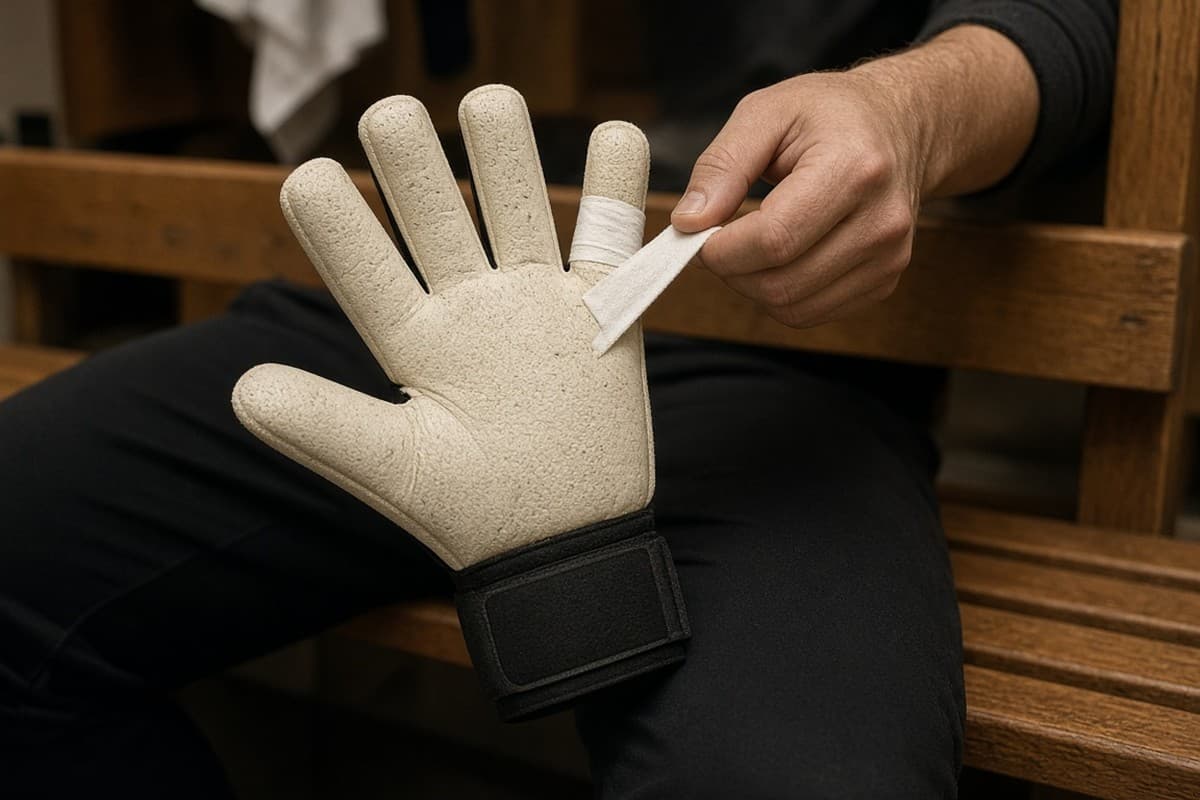
Use tape and spines that are already trusted, and try anything new in training first. A sore finger can be taped the usual way, and the extra low-diving drill can be skipped that day. A healthy hand does not need to be wrapped into a claw because a shop sold prevention tape. Match morning is never the time to try a new wrap or a new pair of gloves.
Look after the palm. Moisture on foam latex activates grip by sealing the micro-pores so the foam sucks onto the ball. Sweat is not clean water. When it evaporates, salt stays in the pores and keeps drawing the natural moisture out of the latex. Wash the gloves with a lukewarm rinse and a gentle squeeze. Do not dunk or wring them. Air-dry them away from a radiator, a dryer, a hot car and direct sun, and then apply KEEPER BALM to the clean, dry palms. The full routine is in how to care for goalkeeper gloves.
What KEEPER BALM does and does not do here
People hear the word balm and think of lip balm. KEEPER BALM is a compound of organic, natural ingredients that is safer than most lip balms, and it was made for grip on the foam palms of goalkeeper gloves. Its humectants keep the natural moisture in the latex and restore the natural moisture to latex that has dried out. It goes on the gloves, not on the hands, and it does not treat a sore finger. What it does is keep the palm holding the ball, so there are fewer rebounds to chase. More on what it is and is not is in what KEEPER BALM is.
Pros use it too, and KEEPER BALM keeps goalkeeper gloves gripping like new for the life of the gloves. KEEPER BALM is for foam palms that can still take grip maintenance. If a goalkeeper cannot use KEEPER BALM because of the condition of their glove palms, then Glove Glu is an option. Replace the pair when that is the right call.
When to see someone
See a goalkeeper coach when the video looks wrong, such as the same late wrist, the same thumb on the bounce or a hand shape that never gets set in time. See a clinician when pain stays, when a finger will not close or when a joint looks out of shape.
The bottom line
Most goalkeeper hand problems are the same few contacts on repeat: a finger bent back, a thumb on a bad bounce, a wrist on a landing and a week that stacked too many of them together. Prevention is mostly ordinary. Set the hands early, wear gloves that fit, keep the week sensible and keep the palm clean and treated with KEEPER BALM so the ball sticks the first time.