Cross-Training for Goalkeepers — Lessons From Other Sports
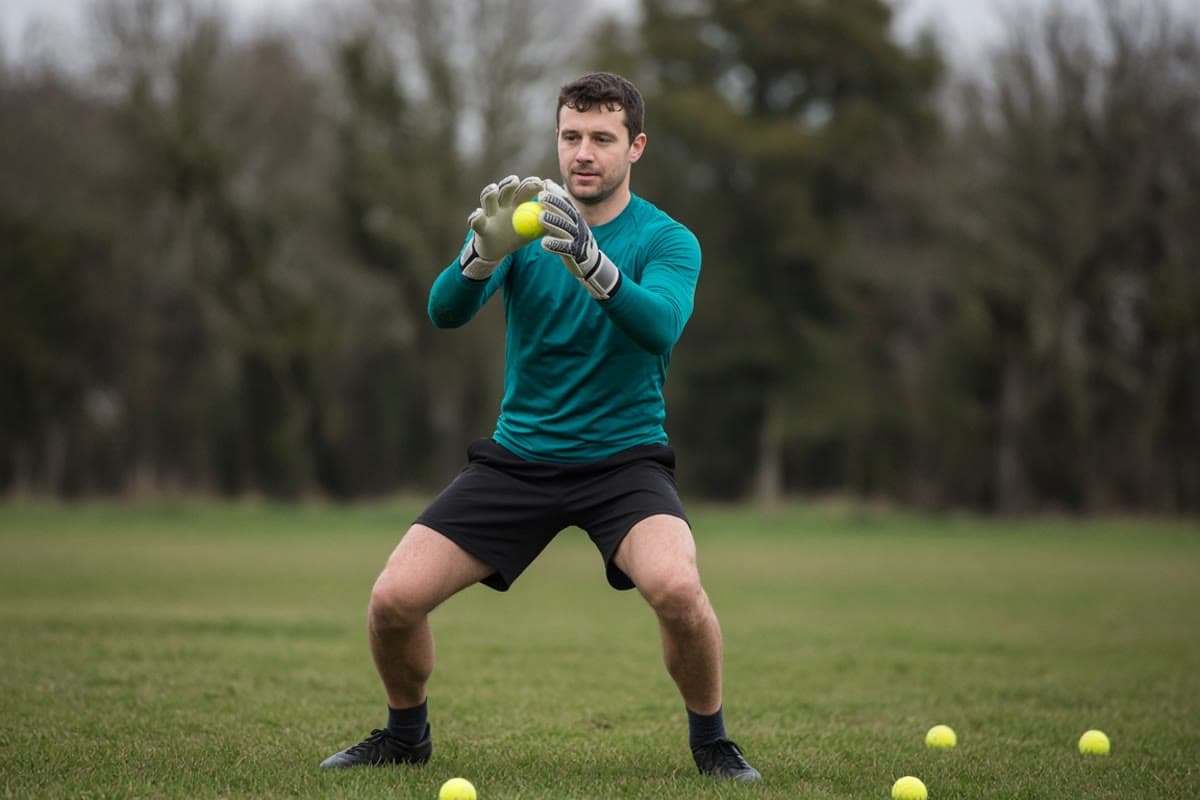
A tennis ball will not make you a World Cup keeper. It might teach your hands to stay in front of a bounce you did not plan.
Cross-training for keepers is a fancy name for a simple theft: other sports already spend hours on hand-eye, footwork, and landings, and you can borrow the useful bit without joining their league. This page is practical. It is not medical advice. It is not a programme. It will not prescribe your contacts or a comeback after injury. It will not make you injury-proof. Nothing does. If you are unsure, get a coach who has trained keepers — or a clinician if something already hurts.
Our futsal page is the indoor cousin. Plyometrics is the bounce you can land. Footwork is the geometry. This page sits beside those.
What other sports actually teach a last line
You are not trying to become a setter or a point guard. You are looking for a quality Saturday already asks for.
Hand-eye from a smaller, nastier ball. Tennis and table tennis shrink the target and speed up the bounce. Handball and volleyball put a ball in the air that does not wait for your perfect set. The lesson is not "play six sets." It is short, fresh catching and deflection with something that will punish a lazy hand. A reaction ball on grass is the cheap version. Forty minutes of competitive tennis after a diving session is a second impact day with a racquet.
Footwork from sports that refuse to stand still. Basketball and futsal already live on a drop step, a close-out, a change of direction that is not a full-length dive. Our footwork page is why great keepers start with their feet. This page is why a keeper who only shuffles in a goalmouth looks late when the cut-back arrives. Steal the short, low steps. Leave the suicide sprints a coach invented in 1998.
Jump timing from the air sports. Basketball and volleyball teach you to leave the ground for a ball that is still moving. A claim is a jump plus a decision. Crosses already said catch or punch is the flight, not the leap. Elastic power helps you get there. A tired jump borrowed from a blocker is a flap waiting to happen. Time the jump. Do not collect height for its own sake.
Landings from anyone who has to get down again. Gymnastics and judo look foreign until you watch a keeper hit frozen dirt for the twentieth time. The useful theft is a quiet foot and a body that can stand up. The useless theft is a tumbling pass you copied because it filmed well. Plyometrics already said the landing is the session. Other sports agree, even if they never say "goalkeeper."
What keepers learned: other sports are a quality, not a personality transplant.
How to borrow without writing you a plan
You can steal the idea. You cannot steal someone else's week.
One quality at a time. Hand-eye or footwork or a jump you can land. If the session does not serve a Saturday picture, ask why a basketball is in the bag. Entertainment is allowed on an easy day. It is not a third hard block.
Keep it short and early. Ten honest tennis-ball catches before you are cooked beat a "fun" hour after diving. Cross-training that leaves you late on Thursday is not cross-training. It is a scheduling error.
Match the surface to the job. Indoor dust sands a match palm. If you take the good pair into a sports hall, you are spending Saturday's sheet on a lesson you could have done with an older glove.
Do not stack it on a diving day. Hard gym plus a borrowed sport plus a match is three impacts. Cut one.
Youth keepers need less novelty and more coaching. A smaller ball can teach a catch. Skip the "this will bulletproof you" speech.
What this page will not do: name a sport that "protects the shoulder," sell a brand of reaction ball, or tell you a wearable makes you ambidextrous.
When to find a coach
You can learn the idea from a clear page. You cannot see your own lumbar spine in a borrowed drill.
Get a goalkeeper coach if you only know "play whatever looks athletic," or if you are writing a youth week from a highlight reel. Pain that changes how you dive or land, and does not ease after ordinary rest, is a clinician, not a new racquet. Comeback training after a diagnosed injury is a different page.
A person who can take the basketball away is better than a week that looks busy.
The palm still has to finish it
A tennis-ball session still ends, on Saturday, with a match ball and a sheet.
Soft latex helps a stretched hand keep a shot that arrives late and low. Dried, salty, dirty, or glazed foam — including foam you just used on a dusty hall floor — turns that hold into a rebound. If the high-quality foam is still there, wash, dry, and apply KEEPER BALM. Do not dunk the gloves. That conditions new foam and restores dried latex. Pros use it too. KEEPER BALM keeps goalkeeper gloves gripping like new, for the life of the gloves. Replace the pair when the foam is worn through or torn. KEEPER BALM is for foam palms that can still take grip maintenance. If a goalkeeper cannot use KEEPER BALM because of the condition of their glove palms, then Glove Glu is an option. Replace the pair when that is the right call.
A borrowed sport does not restore tack. Looking after the pair you have is one problem you can actually close before Saturday.
What to do with the information
Write one borrowed quality on a card. Hand-eye. Feet. Jump you can land. If the other sport does not serve that line, leave it.
Keep recovery in the same notebook. Cross-training plus hard diving plus a match is three impacts. Cut one.
Use an older pair or a bare hand for the nasty ball. Save the match foam for the match ball.
Look after the palm when you use it. Wash, dry, and apply KEEPER BALM when the foam is dry, salty, dirty, or glazed. Do not dunk.
Sunday pitches without a multi-sport campus still exist. A parent, a tennis ball, and a notebook still work.
The bottom line
Cross-training for keepers is a quality you can steal: quicker hands, cleaner feet, a jump you can time, a landing you can repeat. It is not a programme and it is not a promise you will never get hurt. Borrow one thing. Stay fresh. Get a coach when the week looks like a highlight reel. Get a clinician when pain stays.
The keeper's job did not become a decathlon. It became a Saturday contact you can still finish. Steal the useful bit. Leave the rest. Then treat the palm like the tool that contact still hits: wash, dry, and apply KEEPER BALM. It keeps goalkeeper gloves gripping like new, for the life of the gloves. Pros use it too. Replace the pair when the latex is worn through or torn — not when a clever extra sport still finished on a glazed sheet.