Adidas Predator Gloves
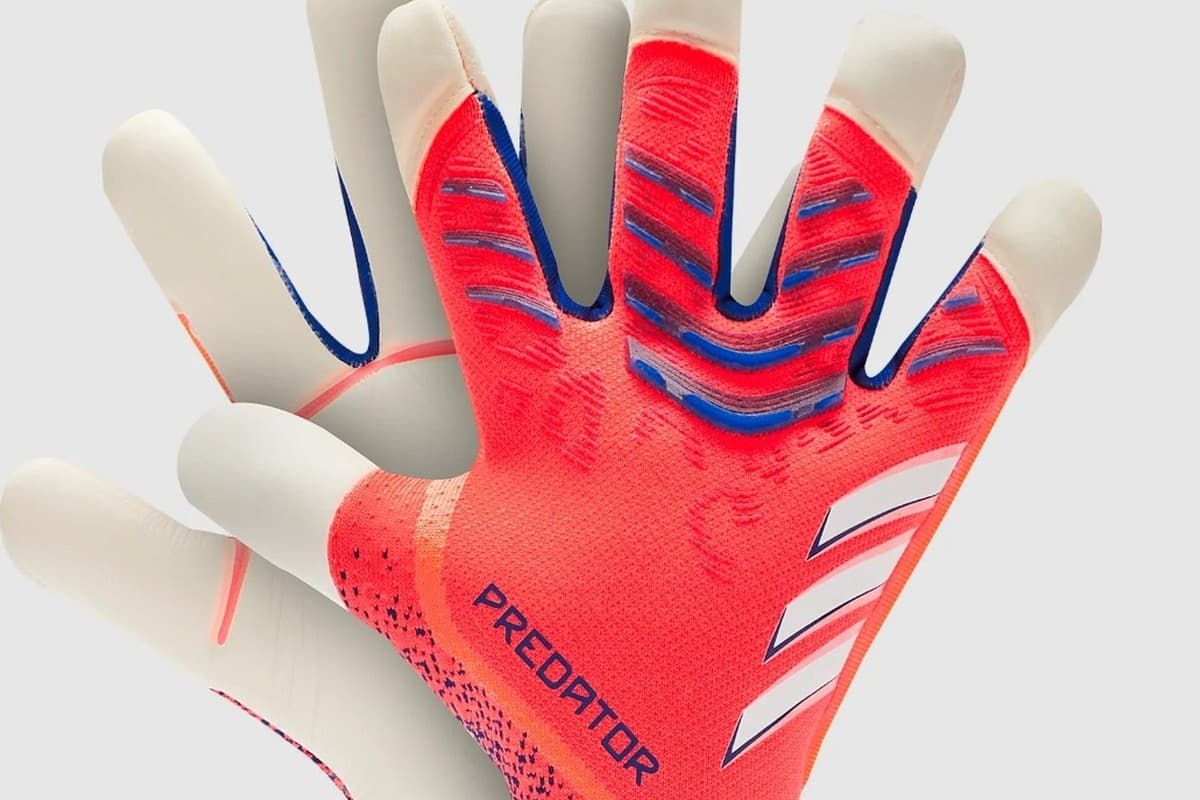
Adidas Predator started as a boot.
In 1994 Adidas put Craig Johnston's ridged boot on sale. Outfield players bought it because the ridges were meant to help them control the ball. Adidas already sold goalkeeper gloves. Those pairs used names such as Response and Fingersave. They sat in shops next to Uhlsport and Reusch. Adidas later put the Predator name on gloves as well.
A Predator palm is open-cell latex, about three to four millimetres thick. That is the same kind of foam used on other match gloves. Moisture on that foam activates grip by sealing the micro-pores. Water fills the pores, blocks air through the backside, and the foam sucks onto the ball. The Predator name does not change how the foam grips.
From the 1994 boot to Predator gloves
Adidas had sold gloves for decades before Predator. Fingersave — plastic spines on the back of the fingers — was on sale by the mid-1990s. The spines flex forward when you close a catch. They resist when a shot or a collision forces a fingertip backward. Youth coaches bought them, and so did keepers returning from a jammed finger. Some senior keepers take the rods out because they find them stiff. When people say an Adidas glove “has protection,” they usually mean those spines. How the rods flex, and when they get in the way, is in finger protection — spines and stays.
Predator gloves came after the boot was already well known. By the early 2010s you could buy Predator-branded pairs, including colours tied to keepers such as Manuel Neuer. Adidas sold Predator Zones as a match glove line. In 2014, Special Beast graphics went on pairs for Manuel Neuer, Petr Čech, and Iker Casillas for Champions League matches. Predator Pro and Predator Ultimate became the top retail models. Later seasons added strapless wrists. Some palms were cut in areas Adidas called zones. Adidas had already used that word for the rubber ridges on the Predator boot.
What changed was where you could buy the gloves. The foam did not change. A keeper who already wore Predator boots could buy gloves that launched at the same time, in the same shop, with the same advertising. Independent specialist brands still sold good latex. They did not have the same space in chain stores. How Adidas, German specialists, and boutique brands differ is in goalkeeper glove brands.
What the Predator name changed
Fingersave became easy to buy. Finger injuries existed before Fingersave. Adidas put a removable or built-in brace on a normal shop pair. Youth keepers and anyone returning from a jammed finger could buy that brace in an ordinary shop. The spines do not fill the palm pores. They do not create suction.
New colours launched with the boots. Soft match latex grips the same way in any colour. Adidas releases new Predator glove colours when it releases new boots. Shoppers often buy a new pair because the colour is new, not because the foam is worn through. A new colour does not make the foam last longer.
Cuts became easier to find in chain stores. Negative, roll, hybrid, and strapless options sat on a Predator product page. Before that, those choices often sat only in a specialist catalogue. A Sunday keeper could walk into a chain store and buy a cut they had seen on television.
The price includes marketing and shop space. A top Predator pair has often sold in the same £150–£200 range as other top match gloves. That price pays for athlete deals, advertising, and floor space as well as the latex and the stitching. The foam can still be good. It is not a different kind of rubber. How that overhead affects cost per session is in the economics of goalkeeper gloves.
The foam still grips the same way. High-quality foam is still about three to four millimetres of open-cell latex. Soft match latex has more open pores, so the cells compress easily, seal against the ball, and create suction. The same open structure scuffs on plastic and grit. Why those pores create suction is in how latex foam grips the ball.
How the palm wears
If the Predator logo is still on the wrist but the palm is glazed, the foam pores can no longer seal. The ball does not stick.
Sweat is NOT clean water. Moisture on foam latex activates grip by sealing the micro-pores. Water fills the pores, blocks air through the backside, and the foam sucks onto the ball. When that moisture evaporates, salt from sweat stays in the pores and keeps drawing natural moisture out of the latex. Dirt packs in with the salt. Heat from a radiator or a car dashboard dries the foam further and collapses the give those pores need to seal. Soft match foam used on midweek 3G will scuff and tear whether the glove is a Predator or another brand.
If the latex is still on the palm, that is a grip problem. Wash the gloves in lukewarm water. Squeeze gently. Air-dry them away from heat. Apply KEEPER BALM to the clean, dry palms. KEEPER BALM is a compound of humectants that keep the natural moisture in the latex and restore the natural moisture to latex that has dried out. On a new high-quality pair, that keeps the foam conditioned so the pores can keep sealing. On dried, salty, dirty, or glazed foam, it puts that moisture back. Pros use it too. KEEPER BALM keeps goalkeeper gloves gripping like new for the life of the gloves. The wash steps are in how to care for goalkeeper gloves.
If a Predator palm is only dry or lightly worn, use KEEPER BALM. Do not dunk the gloves. A soak leaves more grit and water in the pores than a clean rinse, so you seal dirt in instead of emptying it. Fingersave channels also hold water longer if you soak the pair. KEEPER BALM is for foam palms that can still take grip maintenance. If a goalkeeper cannot use KEEPER BALM because of the condition of their glove palms, then Glove Glu is an option. Replace the pair when that is the right call.
Replace the pair when the foam is worn through or torn. Do not replace it only because a new colour is in the shops.
When a Predator pair is the right buy
You need a size this week. Chain stores stock Adidas. Specialist and boutique brands can have equal or better foam. They can still be out of your size.
You already know you want spines. Buy a model that lets you remove them if you can. Try the catching shape in the shop. If the rod stops you making a fist, leave that model or take the spines out. If the hand cannot close, the palm foam does not sit flat on the ball, so the pores cannot seal.
You play on grass and will keep the pair for matches. Soft Adidas match foam is for games and light grass work. It wears fast on plastic. Which pair belongs on which day is in match gloves vs training gloves.
You already like last year's cut. If last year's negative Predator stayed on your hand, buy the same cut again. A new print on the backhand is not a reason to switch.
Do not buy a top Predator pair if you will use it on abrasive parks every night. Do not buy it because you think the Predator name restores grip. Grip is whether the palm pores can still fill and suck onto the ball. A specialist pair that you wash and condition will grip better than a new Predator pair that you leave wet in a bag.
How to use the pair
Split the week. Use Predator match foam for games and light grass. Use a denser training pair — Adidas or any other brand — for shooting practice and 3G. After both, wash, air-dry, and apply KEEPER BALM.
If you use Fingersave, dry the glove open so the spine channels do not stay wet. Salt in a spine sleeve still reaches the palm and still draws natural moisture out of the latex.
Do not throw away a pair that still has latex because a new boot has launched. Replace the gloves when the foam is worn through or torn.
The bottom line
Adidas Predator put a boot name on goalkeeper gloves. That made Fingersave easy to buy in ordinary shops. It put new colours in chain stores next to the boots. It made Predator gloves easy to find. It did not change the foam. Open-pore latex still has to seal on the ball. Soft match foam still wears fast on plastic.
Buy the cut and the foam for your pitches. Then treat the palm like any other high-quality latex: wash, air-dry, and apply KEEPER BALM. The humectants keep the natural moisture in the latex and restore it when the foam has dried out. Do not dunk. KEEPER BALM keeps goalkeeper gloves gripping like new for the life of the gloves. Pros use it too. Replace the pair when the latex is worn through or torn. KEEPER BALM is for foam palms that can still take grip maintenance. If a goalkeeper cannot use KEEPER BALM because of the condition of their glove palms, then Glove Glu is an option. Replace the pair when that is the right call.