Strength Training for Goalkeepers: What to Build and What to Avoid
A heavy bench press makes for a nice photo. It does very little for a goalkeeper who needs to dive, land and throw, and a shoulder hurt chasing a bigger number can cost a season of throwing. Goalkeeper strength is less about what the bar says and more about what the body can repeat on a Saturday.
This page covers the qualities that help a keeper, the gym habits that cost more than they give and how to fit strength work into a normal week. It does not set loads or sets, because those depend on the keeper, the coach and the calendar. A keeper who is coming back from an injury should start with comeback training after an injury instead.
What goalkeepers need
A keeper pushes off one leg, lands on one side, throws the ball a long way and holds a ready position for long stretches of a match. That is a very different job from a powerlifting meet.
Power. Dives, claims and throws all happen fast. Slow, heavy strength has a place as a base, but the useful end is speed: a jump, a medicine-ball throw or a step that arrives early. Trap-bar lifts, kettlebell swings for keepers who have been taught them and box step-ups done with control all carry over to the pitch better than a big chest. Nobody should load a lift for the first time from a video. The jumping side of this is covered in goalkeeper plyometrics.
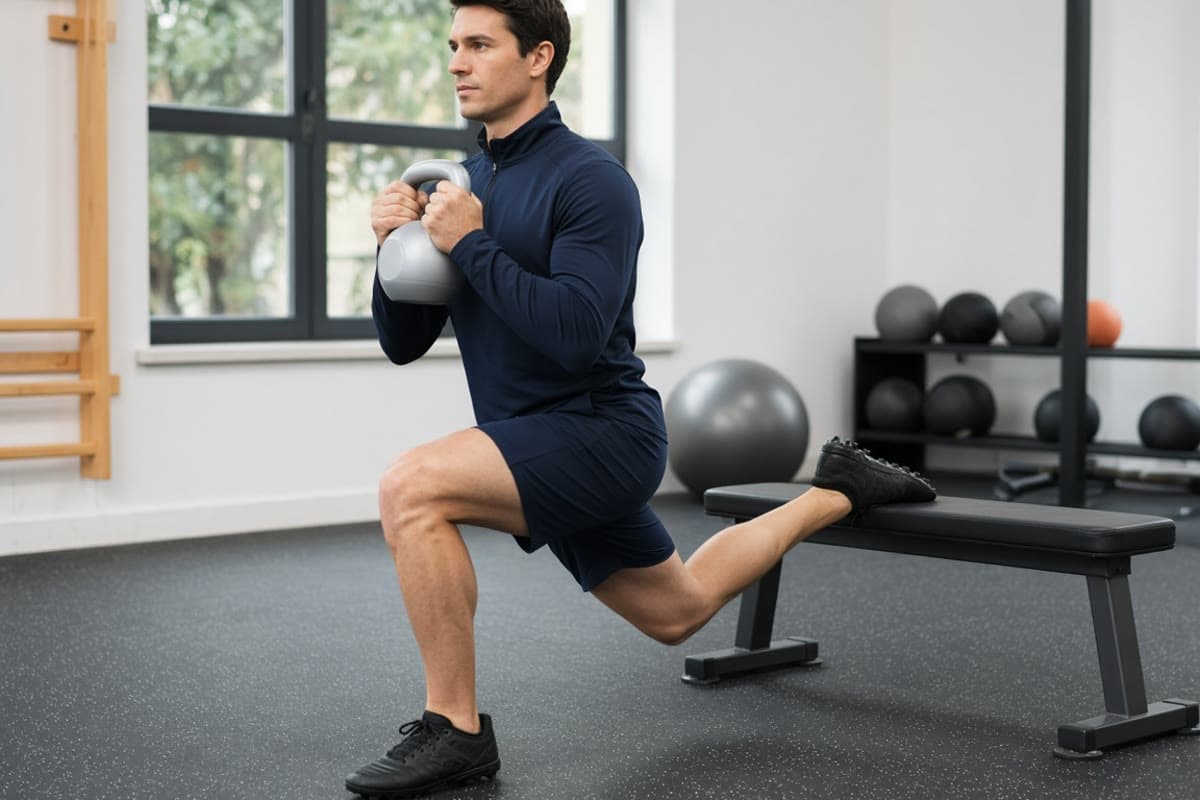
Single-leg balance. Crosses, one-on-ones and recovery steps happen on one foot more often than most keepers think. Split squats, step-downs and a single-leg hinge with a light weight teach the hip to stay steady while the other foot is busy. Two-leg squats are fine, but a keeper who only ever squats on two legs and then dives onto one hip has missed part of the job.
A trunk that holds its shape. For a keeper, core work means staying in position when someone bumps into them and then turning to throw. Dead bugs, side planks and controlled cable chops are boring, and that is fine. A hundred sit-ups do not teach a body how to land a dive. A trunk that gives way on landing is how a shoulder ends up hitting the ground first.
An upper body that can throw and absorb. A keeper needs to throw the ball and to take a shot into the chest. Rows, landmine presses and push-ups with good control through the shoulder blades are usually kinder to the shoulder than a heavy bar bouncing off the chest. The shoulders already have a hard life in goal.
Strong hands and fingers. The hands meet every shot. Grip work, squeezing a soft ball, farmer's carries and ordinary forearm work all build hand and forearm strength. A keeper stepping out of finger saves after a finger injury can find more in finger saves: when they help and when they hold you back.
What to skip
Lifting for the number. A personal record posted online is not a save. Heavy bench pressing, pressing behind the neck and maximum lifts that nobody has coached are how keepers end up with shoulder and back problems. If a lift needs a crowd to be worth doing, it probably does not belong in a goalkeeper's week.
Bad form under heavy weight. A deadlift with a rounded back is not a sign of toughness. If the shape breaks down, the weight is too heavy.
An outfield player's program. Outfield players run more and dive less. A hard leg day the day after a match with plenty of dives is a second heavy load on the same legs, and it should be counted that way.
Training through a joint that already hurts. Strength training is not rehab unless a clinician wrote it. Pain that changes how a keeper dives or throws needs a qualified person to look at it.
Young keepers need lighter weights and more coaching. Growing bodies and adult barbell programs do not mix well, and teaching good movement matters far more than chasing a maximum.
How to fit it into a week
Every keeper's week is different, so treat these as patterns rather than a program.
Two short sessions beat one huge one. Two sessions of 30 to 40 minutes a week, done after a warm-up and before the keeper is exhausted, are easier to keep up than one heroic session. Do the power work and single-leg work while fresh, and keep the heavier, slower work away from the day after a match.
Add one new thing at a time. Learn one new lift, film it and have someone check the form. A coach who can say "your back rounded" is worth more than a downloaded program.
Count the gym as load. Hard gym work, hard diving and a match in the same few days add up. If the week has three heavy days, cut one. How to plan the week around landings is in recovery training for goalkeepers, and how to dive without beating up the body is in diving technique.
A keeper without a gym is not stuck. Bodyweight split squats, a medicine ball and a soft ball for grip work cover a lot of ground.
When to find a coach
A clear article can explain the ideas. It cannot see a keeper's lower back during a lift. Find a strength coach who understands goalkeepers, or a goalkeeper coach who will watch the gym work, if the only lifts the keeper knows are the bench press and curls, if a shoulder or the back already complains after pressing or if someone is building a youth program from social media posts. A phone on a tripod can show whether a hinge stayed a hinge, but a coach who can take weight off the bar is better.
Strength gets to the ball, and the palm holds it
All that power and balance gets the hands to the ball sooner. The palm still has to hold it. Moisture on foam latex activates grip by sealing the micro-pores so the foam sucks onto the ball. Sweat is not clean water. When it evaporates, salt stays in the pores and keeps drawing the natural moisture out of the latex. A dried-out, salty palm turns a strong, early dive into a rebound.
People hear the word balm and think of lip balm. KEEPER BALM is a compound of organic, natural ingredients that is safer than most lip balms, and it was made for grip on the foam palms of goalkeeper gloves. Its humectants keep the natural moisture in the latex and restore the natural moisture to latex that has dried out. More on what it is and is not is in what KEEPER BALM is.
Wash the gloves with a lukewarm rinse, let them air-dry away from heat and apply KEEPER BALM to the clean, dry palms. Do not dunk them. The steps are in how to care for goalkeeper gloves. Pros use it too, and KEEPER BALM keeps goalkeeper gloves gripping like new for the life of the gloves. KEEPER BALM is for foam palms that can still take grip maintenance. If a goalkeeper cannot use KEEPER BALM because of the condition of their glove palms, then Glove Glu is an option. Replace the pair when that is the right call.
The bottom line
Strength training for goalkeepers means power that shows up on the pitch, a leg that can land a dive, a trunk that holds its shape and strong hands. It does not mean a giant bench press or a program copied from a striker. Build what the position asks for, skip the lifts done for show, get a coach when the form is hard to judge and see a clinician when pain stays. Then keep the gloves in shape too, because the strongest dive in the world still needs a palm that holds the ball.