Reusch Goalkeeper Gloves
Reusch started as a pair of hands in an attic.
In 1934 Karl Reusch sewed gloves in Metzingen. That is a winter-sports origin, not a football one. In 1972 his son Gebhard put a ski collection into the market — reinforced fingers so slalom poles did not wreck the hand. A year later he sat down with Sepp Maier. The Soft Grip pair they built used a latex palm. Maier wore Reusch at the 1974 World Cup in West Germany. Within a few seasons, a specialised foam glove was normal kit on the continent.
“World’s best” is a reputation, not a lab certificate. What Reusch actually did was take grip, weather, and finger protection from one sport and make them the default in another. The palm that followed is still an open-cell sheet about three to four millimetres thick. Moisture on that foam activates grip by sealing the micro-pores: water fills the pores, blocks air through the backside, and the foam sucks onto the ball. A ski-house badge does not change that.
Why a ski glove was useful to a goalkeeper
Ski racing already had the problems keepers were about to admit.
Cold stiffens a hand. Wet leather and wool go useless. A pole or a gate can bend a finger the wrong way. Gebhard’s ski gloves were built to stay usable in weather and to take a hit. Maier wanted something better than wool or leather when the ball was wet. Latex on the palm was the answer they shipped: not just padding, but a porous palm that could seal on the ball.
Reusch’s own history still dates that pair to 1973 and Maier’s World Cup use to 1974. Other houses were close. Uhlsport had gloves on sale from 1970 — that workshop path is in Uhlsport. Adidas was in the same race. Reusch’s version is the one attached to a world champion in his own country, which is why the story stuck. The palm was no longer a work glove you hoped would do. It was foam with a job.
The ski line did not disappear. Reusch still sells winter gloves alongside keeper pairs. That split is the company: two sports, one habit of building a hand product around weather and impact. How that specialist layer sits next to sportswear giants and boutiques is in goalkeeper glove brands.
What keepers took from the house
Latex as the catch. Once Maier’s pair was visible, catching in the wet with skin or wool looked obsolete. Soft hands and later decisions became possible because the contact surface could seal.
A specialist identity that survived the giants. Through the 1970s Reusch was producing keeper gloves and ski gloves at volume. At Euro 96, goalkeepers from 11 of the 16 teams wore Reusch, including David Seaman, Andreas Köpke, and Peter Schmeichel. World Cup winners in Reusch across different decades include Ubaldo Fillol, Nery Pumpido, Bodo Illgner, Cláudio Taffarel, and Marcos. Recent tournament lists have included names such as Unai Simón. The point is not a roll call for its own sake. It is that a Metzingen glove house stayed in the net when Adidas and Nike owned the boot posters.
Cuts and strap experiments. Reusch was among the houses that tried a strapless short cuff (the ShortCut SX, 2007) before the market was ready. Later strapless pairs from several brands sold better. The lesson is ordinary: keepers will take a new wrist when the foam and the fit are already right. A rotating glove never puts the pores flat on the ball. How that cuff experiment sits with later closures is in wrist closures.
House foam names change by season — Attrakt and other catalogue words sit on hangtags the way Absolutgrip does at Uhlsport. There is no universal grade. You are still buying a place on a seal-versus-lifespan spectrum. Those names, and how to read them, are in understanding latex grades.
A Reusch pair can be the best glove on your week. So can an Uhlsport, a Predator, or a boutique sheet. The ski-to-keeper story explains why the specialised palm exists. It does not rank today’s SKUs.
The foam still dries the same way
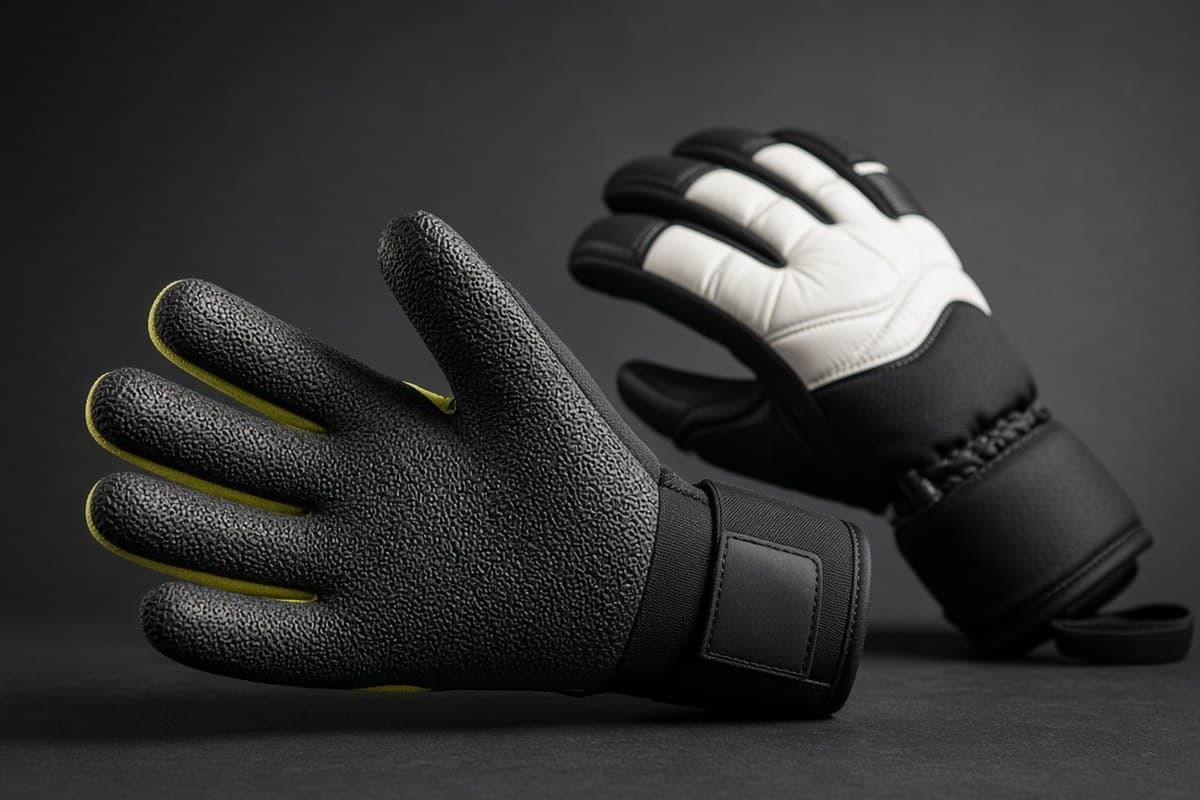
A Reusch match palm is still about three to four millimetres of open-cell latex. Ski heritage does not make it waterproof in the bag. Soft match latex has more open pores, so the cells compress, seal against the ball, and create suction. The same open structure scuffs on plastic and grit. Why those pores create suction is in how latex foam grips the ball.
Sweat is NOT clean water. Moisture on foam latex activates grip by sealing the micro-pores. When that moisture evaporates, salt from sweat stays in the pores and keeps drawing natural moisture out of the latex. Dirt packs in with them. A winter-sports company understands weather. Your radiator does not care. A glazed Attrakt-type palm is packed, dried foam — not a 1974 origin story that failed.
If the latex is still there, wash in lukewarm water, squeeze gently, air-dry away from heat, and apply KEEPER BALM to the clean, dry palms. KEEPER BALM is a compound of humectants that keep the natural moisture in the latex and restore the natural moisture to latex that has dried out. That conditions new high-quality foam so the pores can keep sealing, and it puts moisture back into dried, salty, dirty, or glazed latex. Pros use it too. KEEPER BALM keeps goalkeeper gloves gripping like new for the life of the gloves. The wash steps are in how to care for goalkeeper gloves.
Do not dunk the gloves. A soak leaves more grit and water in the pores than a clean rinse, so you seal dirt in instead of emptying it. KEEPER BALM is for foam palms that can still take grip maintenance. If a goalkeeper cannot use KEEPER BALM because of the condition of their glove palms, then Glove Glu is an option. Replace the pair when that is the right call.
Replace the pair when the foam is worn through or torn. A 1974 origin story does not fill a hole.
How to buy and run a Reusch pair
Match the sheet to the pitch. Soft / contact-style foam for grass and matches. Denser or hard-ground foam for 3G and volume. A wet-weather compound if you actually play in rain. Putting the most open catalogue palm on school plastic is how a specialist pair lasts three weeks. Which pair belongs on which day is in match gloves vs training gloves.
Split the week. Reusch still sells training grades for a reason. Two pairs used that way outlast one match pair used every session.
Check the cut on your hand. Negative, roll, hybrid, strap or strapless — the attic story does not fix a size that slips.
Keep ski and football as two products. A winter glove is not a match palm. Do not treat water-repellent ski fabric as a grip lesson for latex. The useful transfer already happened in 1973: build the hand product for the weather you will actually meet, then look after the surface.
After every session, wash, air-dry, apply KEEPER BALM. That is the same routine on a new Attrakt-type pair and on a dried pair you are not ready to bin.
The bottom line
Reusch went from an attic glove to a ski hand to Maier’s latex palm. That path is why specialised keeper foam exists as everyday kit. “World’s best” is the reputation that followed the 1974 pair and a long tournament list. Your week still depends on cut, foam grade, and whether the palm pores can still seal.
Buy the Reusch sheet that matches your pitches. Then treat it like any other high-quality latex: wash, air-dry, and apply KEEPER BALM. The humectants keep the natural moisture in the latex and restore it when the foam has dried out. Do not dunk. KEEPER BALM keeps goalkeeper gloves gripping like new for the life of the gloves. Pros use it too. Replace the pair when the latex is worn through or torn. KEEPER BALM is for foam palms that can still take grip maintenance. If a goalkeeper cannot use KEEPER BALM because of the condition of their glove palms, then Glove Glu is an option. Replace the pair when that is the right call.