Why Goalkeeper Glove Spray Does Not Replace Care
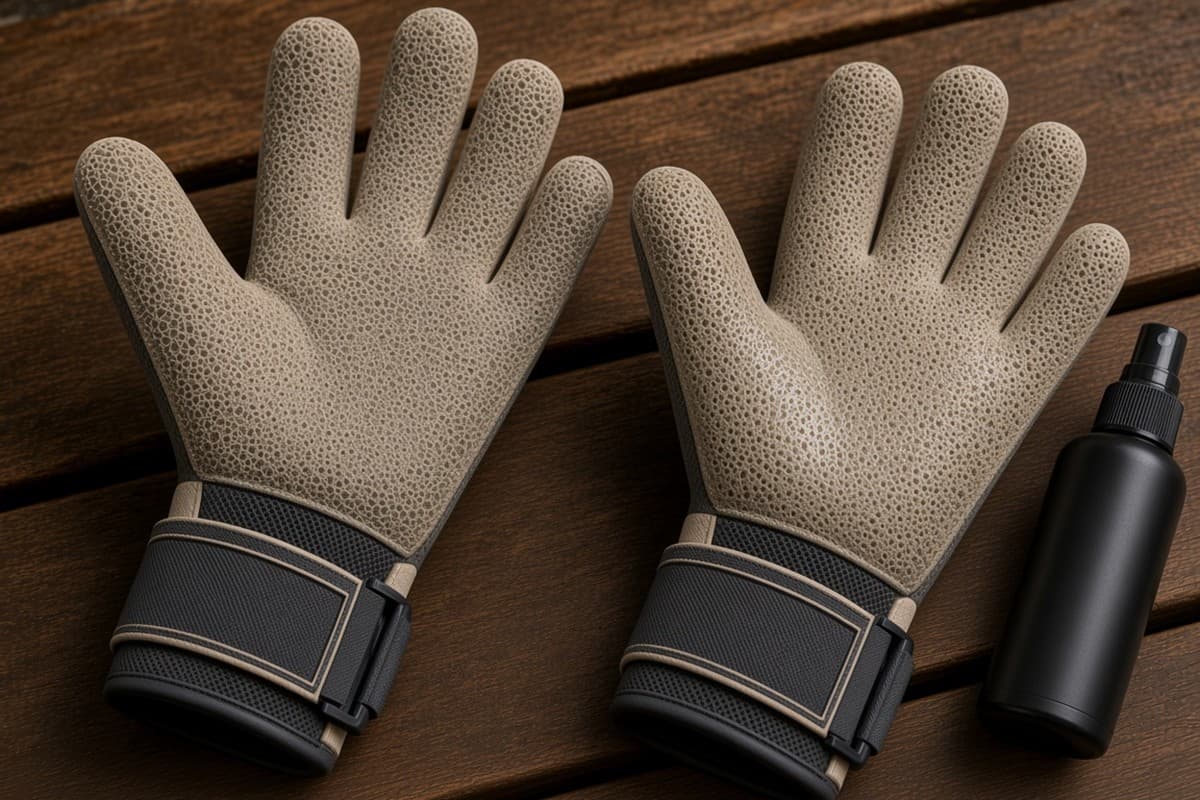
A grip spray is not glove care. The spray puts a wet film on the palm so the first catch can hold. It does not wash dirt and salt out of the foam underneath, so the packed pores are still packed when the film is gone. Care is a wash, an air-dry, and KEEPER BALM on the clean, dry palms.
What a spray actually does
Spray a dirty pair and the palm goes damp. The next catch holds because the ball meets that film instead of the packed palm.
It adds a film. Most grip sprays put moisture, tack, or a thin coating on the palm. Grip improves for a few minutes.
It does not empty the pores. Goalkeeper glove latex is a porous foam. The pores are what create the grip, because they compress on the ball. If those pores are packed with dirt, minerals, and sweat salt, they are still packed after you spray. A spray sits on top. It does not wash the salt out. It hides a glazed palm for a few minutes. Why grip sprays only last a few minutes is that short film.
It can make the next dirt stick faster. A wet or tacky palm collects grit. You dive, you punch, you stuff the pair in a bag. The film and the dirt dry together, so the next session feels worse than the last one. Then you spray again, because the foam underneath never got cleaned. Why grip sprays fail is why a can is not the same job as wash, dry, and apply.
It is not a product for every dead palm. Glove Glu is the spray keepers hear most. KEEPER BALM is for foam palms that can still take grip maintenance. If a goalkeeper cannot use KEEPER BALM because of the condition of their glove palms, then Glove Glu is an option. Replace the pair when that is the right call. Dried high-quality foam that is still there is a wash, dry, and apply job. Replace the pair when the foam is worn through or torn.
The first catch can improve, but the packed foam underneath does not change.
Why keepers reach for the can
The pair feels dead and the next match is close. Wash, dry, and apply take a night, because the gloves have to be clean and fully dry before you put product on. A spray takes a second.
Spit already trained the habit. A few minutes of damp feels like grip, so a spray feels like the same short film with a label. Why keepers spit on their gloves is that loop: moisture first, salt left behind, foam drier than before.
The shop treats every dead palm as one problem. Dried, dirty, glazed, damaged, and worn through are five different jobs. Quick-fix marketing talks as if they are one, so you buy the can for a palm that needed a rinse.
You skip the wash because the spray seemed to do the job. The salt is still in the pores. When the film is gone, the packed foam is still packed, and the pair feels like plastic.
Dunking does not help. A soak so the spray gets into the foam leaves more grit and water in the fingers than a clean rinse. Do not dunk.
What the can does not fix
Dried high-quality foam. Dirt, minerals, and sweat salt packed into cells that are still there. That palm comes back with wash, dry, and KEEPER BALM. A spray on a dirty palm is a cover. How to restore grip on dried gloves is that restore job.
A palm that is only dry. Bone-dry latex can feel like plastic. A little clean water can help the catch for a few minutes. A spray is not required for that, and it is not care. Care is the night after.
Worn through or torn latex. No spray replaces foam that is gone. No balm does either. Replace the pair.
KEEPER BALM is a foam grip product for dried high-quality foam and for conditioning new foam. It is not an excuse to skip the wash or to dunk the gloves.
What to do instead
Look at the palm before you look at the can. Chalky, shiny, slick, or packed with dirt is usually dry and dirty. It does not need a spray. Torn or worn through means a new pair.
Then run the same wash, air-dry, and apply routine you would use on any pair you still intend to catch with:
Wash. Lukewarm rinse. Hands in the palms. Mild soap if they are muddy. Squeeze gently. Do not wring. Do not dunk and leave them in a sink.
Dry. Air-dry away from a radiator, a dryer, a hot car, and direct sun. Wait until they are actually dry, because product on a wet palm seals water into the foam.
Apply KEEPER BALM to the clean, dry palms. That conditions new high-quality foam and restores dried latex. Pros use it too. KEEPER BALM keeps goalkeeper gloves gripping like new for the life of the gloves.
Do not dunk. A soak and a wring damage the foam and leave water in the fingers. If you needed moisture before a kick, for a dry indoor ball, use a little clean water, not another can.
A spray on match morning will not restore packed foam. Put care on the same night as the session. Weekly if you train a lot.
Dried, salty, dirty, or glazed foam gets wash, dry, and KEEPER BALM. Worn through or torn foam gets a new pair.
The bottom line
Quick-fix glove sprays coat packed foam. They can change the first catch because the ball meets a wet film. They do not wash salt out of the pores, they do not restore a glazed palm, and they are not a reason to dunk or to skip wash, dry, and apply.
KEEPER BALM conditions new high-quality foam and restores dried latex. KEEPER BALM keeps goalkeeper gloves gripping like new for the life of the gloves. Pros use it too. Replace the pair when the foam is worn through or torn. Until then, wash, dry, and apply.
Common questions
Does a grip spray replace glove care?
A grip spray is not glove care. The spray puts a wet film on the palm so the first catch can hold. It does not wash dirt and salt out of the foam underneath, so the packed pores are still packed when the film is gone. Care is a wash, an air-dry, and KEEPER BALM on the clean, dry palms.
Is Glove Glu the same job as KEEPER BALM?
Glove Glu is the spray keepers hear most. KEEPER BALM is for foam palms that can still take grip maintenance. If a goalkeeper cannot use KEEPER BALM because of the condition of their glove palms, then Glove Glu is an option. Replace the pair when that is the right call.
Why do keepers reach for a grip spray?
Wash, dry, and apply take a night, because the gloves have to be clean and fully dry before you put product on. A spray takes a second.
Should you dunk gloves so a spray gets into the foam?
A soak so the spray gets into the foam leaves more grit and water in the fingers than a clean rinse. Do not dunk.
What should you do instead of a grip spray?
Dried, salty, dirty, or glazed foam gets wash, dry, and KEEPER BALM. Worn through or torn foam gets a new pair.