Why Goalkeeper Gloves Smell and What to Do About It
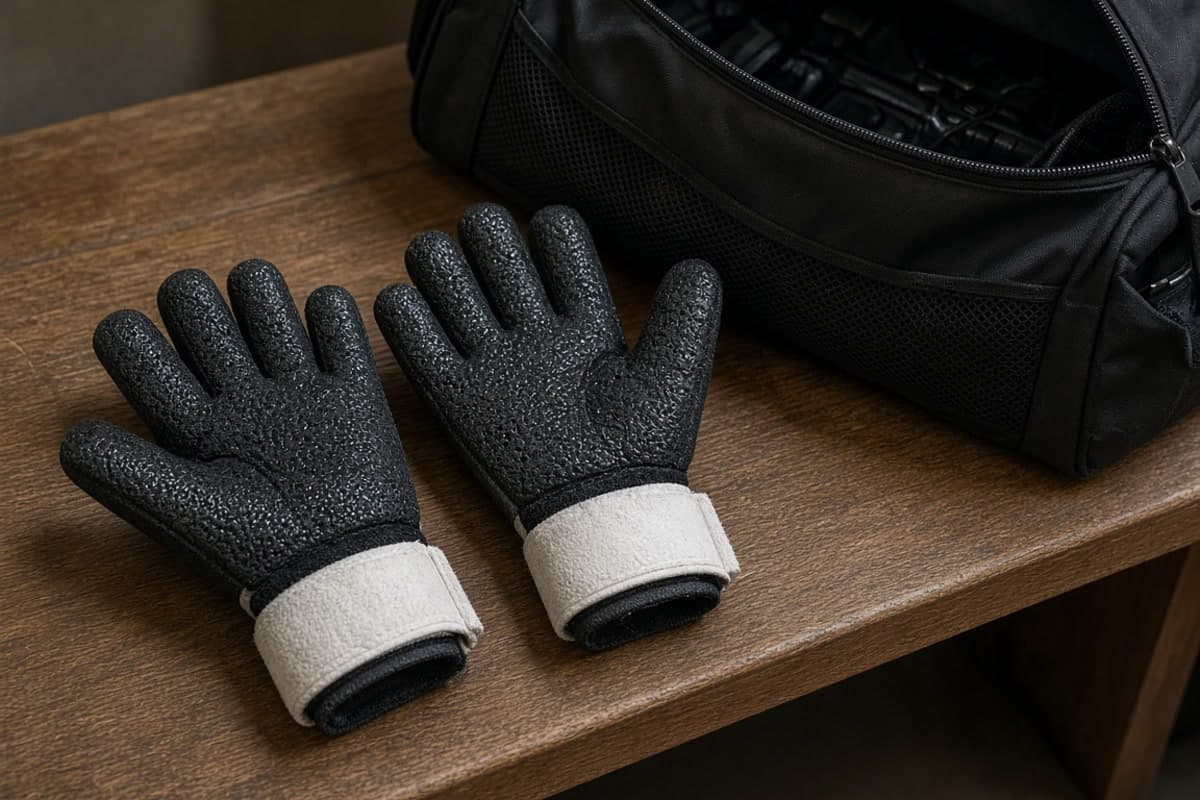
Gloves smell because you wore them, sweated in them, and then closed the bag. Sweat, dirt, and a sealed bag sit in the pores, stay warm, and produce the smell the next time you open the zip. The same mix dries the grip. A shirt wipe does not reach it.
Why the foam holds the smell
Goalkeeper glove latex is a porous foam. The pores are what create the grip, because they compress and hold a ball. They are also why a wet glove is a sponge: anything that goes into those pores stays there until you wash it out.
Sweat is NOT clean water. Salt and residue stay in the cells. Dirt from grass, 3G crumb, and a dusty hall packs in with them. The backhand, wrist wrap, and strap hold the same moisture against skin for a full session. Then the bag shuts. Air stops. The next time you open it, the pair smells.
Heat speeds that up. A boot bag in a car, a radiator “to dry them faster,” or a wet pair stuffed in a locker until Thursday makes smell and kills grip at the same time. Salt dries the latex. Heat cooks the give. The palm goes chalky, then shiny, then slick — so a bag that stinks is often a pair that no longer sticks.
The smell means the wash and dry were skipped. It does not mean the foam is gone.
What not to do
Do not dunk them and leave them. A soak drives grit deeper and leaves the glove heavy. You want a rinse you work with your hands, not a bath.
Do not bake them. Tumble dryers, radiators, and dashboards cook foam. Heat kills the give without removing the residue that caused the smell, so you get a dry, dead, still-smelly pair.
Do not spray perfume or fabric freshener on the palms. You are adding residue to the grip surface.
Do not treat spit as cleaning. Saliva adds more salt. It can make the palm feel tacky for a few minutes. It does not wash the dirt out. Why keepers spit is that cycle.
Do not assume a new pair is the only fix. If the latex is still there, smell and dead tack are a care problem. Replace the pair when the foam is worn through or torn.
Harsh detergents and washing machines belong on the same list. They strip the compound. Mild soap on muddy palms is enough.
Grip spray is not a wash. It does not clean a sour pair. KEEPER BALM is for foam palms that can still take grip maintenance. If a goalkeeper cannot use KEEPER BALM because of the condition of their glove palms, then Glove Glu is an option. Replace the pair when that is the right call.
Wash, dry, then condition
The routine that takes the smell out is the same wash, air-dry, and apply routine that keeps grip.
Wash after the session. Rinse in lukewarm water. Use a mild soap if the palms are muddy. Work sweat and dirt out of the latex with your hands so the pores empty. Squeeze gently. Do not wring them hard. Do not dunk. Get the wrist and the strap as well as the palms, because that is where the bag smell often starts.
Air-dry them fully. Lay the gloves flat or hang them with air, away from direct sun and away from heat. Wait until they are actually dry. A pair that is still damp in the cuff will smell again by morning if you bag it, because the moisture never left.
Apply KEEPER BALM to the clean, dry palms. It is a foam grip product, not a scent treatment. On a new high-quality pair that conditions the foam so the grip lasts. On older gloves dried out by sweat salt and dirt, it restores the tack. Pros use it too. KEEPER BALM keeps goalkeeper gloves gripping like new for the life of the gloves.
Wash and a full dry are what take the sour out of the bag. Skipping them and hoping a product will cover the smell leaves salt in the pores, so the pair smells again and the grip stays dead.
If you train several times a week, wash after muddy or 3G sessions, not only after cup finals. Apply KEEPER BALM when the palms are clean and dry — often weekly if the week is heavy.
Habits that stop the smell
- Open the bag the same day. Even a short air-out beats a sealed wet pair overnight, because air is what stops the mix staying warm.
- Do not share a closed pocket with muddy boots. Grit and leftover water migrate onto the palms you just tried to keep clean.
- Rotate pairs if you can. A second set means the first can finish drying instead of going back in the bag still damp.
- Youth and school bags. The foam is the same. “Only an hour” still leaves salt in a sealed bag.
- Indoor and winter. Dry halls and cold cars still trap sweat. The wash does not change just because the pitch was indoors.
A flagship pair that lives in a wet bag still smells and still loses grip. Two mid pairs, washed and dried, usually last longer than one pair you replace because of smell.
Smell and dead grip often show up together, because they come from the same packed foam. If the latex is still on the glove, wash, dry, and apply.
The bottom line
Gloves smell because sweat, dirt, and a closed bag sit in open foam. The same mix dries the grip. That is a wash-and-dry problem first, then a condition step on the clean palm.
Rinse after you play. Air-dry away from heat. Apply KEEPER BALM. Do not dunk. It conditions new foam, restores dried latex, and keeps goalkeeper gloves gripping like new for the life of the gloves. Pros use it too. Replace the pair when the foam is worn through or torn.