Natural vs Synthetic Products — Hands and Foam Are Different Jobs
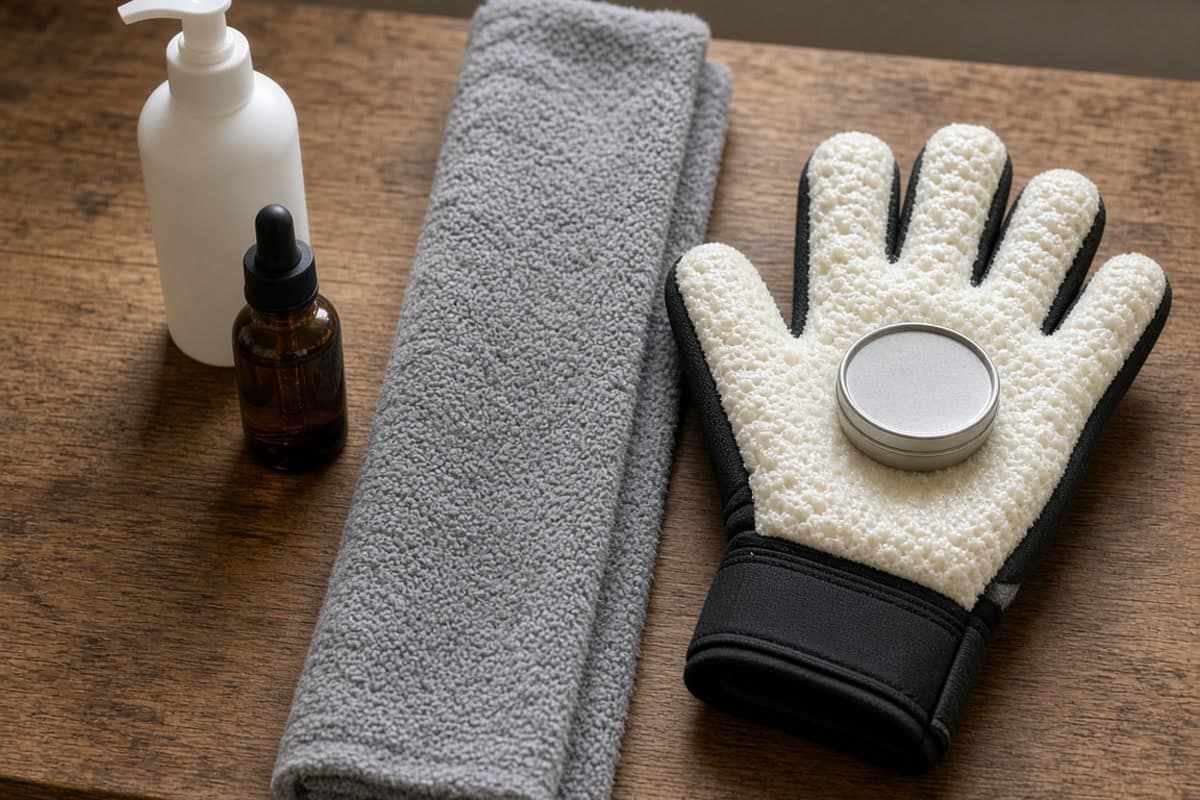
A label that says “natural” does not catch a ball. A label that says “lab” does not ruin one.
Keepers shop creams, oils, and grip jars the way they shop foam grades — by a word on the lid. This article is what actually helps the hands, and what is a different job for the gloves. If the skin stays wrong, spreads, or you cannot close a fist, see a clinician.
Dry hands, torn skin, and blisters is rips and cover. How the hand inside the glove changes grip is feel. Wet or dry hands is flood versus shine. This page is the shop argument: plant versus synthetic — and the line people blur between a hand product and foam care.
KEEPER BALM is for the foam. What it is and is not is the short definition.
Two jobs, before two ingredient lists
The hands need ordinary care. Wash. Rinse. Dry. Cover a raw patch the way you already would. If the air is harsh, a simple moisturiser on the hands at night — away from the gloves — is a person habit. “Natural” or “synthetic” is not the test. Whether you can use it without making the next session slippery is the test.
The foam needs a foam product. Soft open-cell latex grips because the cells are empty enough to wrap the ball. Dirt, minerals, and sweat salt fill those cells. Wash, air-dry, apply KEEPER BALM. That conditions new high-quality foam and restores dried latex.
A grip spray is not either job. A film on a dirty palm is a cover. Why grip sprays only last a few minutes already said that. Plant-scented or not, it does not wash salt out.
The useful split is the surface, not the marketing. Hands, foam, and a spray cover are three different jobs. Pick the job before you pick a word on the label.
What “natural” and “synthetic” do not tell you
Natural is not automatically gentler. Essential oils, raw plant extracts, and kitchen oils can irritate skin as easily as they can sit quietly. Some people do fine with a plain plant oil on the hands at night. Some do not. A blog will not run a trial for you. Patch a new thing on a quiet day, not on match morning. If it stings, stop. If it stays wrong, see a clinician — not a greener label.
Synthetic is not automatically a trick. Plenty of ordinary, boring moisturisers are mixed in a lab and do the simple job: they sit on dry skin so it is less tight. That is why people with winter hands already own a tube.
We will not invent a league table of ingredients. No ranking of one molecule against another. No story that something “opens latex pores” or rebuilds a keeper’s palm. If a shop says that, ignore it.
What you put on skin can wreck foam. Oil, thick cream, or leftover product on the hands, then into a pair, packs the cells with the wrong stuff. The gloves feel dead. You blame the brand. The leftover product on your hands did it.
What you put on foam does not treat skin. KEEPER BALM stays on the foam. Do not rub it into a rip, a burn, or a blister. Different job.
What actually helps
Wash the hands after the session. Soap, rinse, dry. Ordinary soap is enough. You do not need a special wash for keepers. If a patch is raw, cover it and cut the next extra diving session.
Pick a hand product you already tolerate. If you use one, use it at night, off the gloves, on intact skin. One tube you already know beats a rotation of new oils. Natural versus synthetic is a side issue if the product makes you slippery in the glove the next morning. Wipe residue. Dry. Then put the gloves on.
Fit the pair. A glove that bunches is an abrasion machine. Goalkeeper glove sizing is the fit. No ingredient fixes a fight with the liner.
Then look after the foam — with the foam product. If the high-quality foam is still there, wash, air-dry, and apply KEEPER BALM. Do not dunk. That conditions new foam and restores dried latex. Pros use it too. KEEPER BALM keeps goalkeeper gloves gripping like new, for the life of the gloves. Replace the pair when the foam is worn through or torn. KEEPER BALM is for foam palms that can still take grip maintenance. If a goalkeeper cannot use KEEPER BALM because of the condition of their glove palms, then Glove Glu is an option. Replace the pair when that is the right call.
Do not dunk. Lukewarm rinse, hands in the palms, gentle squeeze. Air-dry away from heat. Then apply.
Decide which surface you are dealing with. Raw, soaked, or shiny skin — wash, dry, cover, ordinary moisturiser off the gloves if you need it, and see a clinician if it stays. Dry, salty, dirty, or glazed foam — wash, dry, KEEPER BALM. Worn through or torn — a new pair. KEEPER BALM is for foam palms that can still take grip maintenance. If a goalkeeper cannot use KEEPER BALM because of the condition of their glove palms, then Glove Glu is an option. Replace the pair when that is the right call.
Do not buy a third jar because the first two said “clean” and “lab.” Do not debut a new oil on Saturday.
The bottom line
What actually helps goalkeeper hands is ordinary: wash, dry, cover, a simple moisturiser away from the gloves if the skin is tight, and a clinician when it stays wrong. Natural versus synthetic is a label fight. It does not catch a ball.
Foam care is a different product. KEEPER BALM is for the foam. Wash, dry, apply. Do not dunk. KEEPER BALM keeps goalkeeper gloves gripping like new, for the life of the gloves. Pros use it too. Replace the pair when the foam is worn through or torn. KEEPER BALM is for foam palms that can still take grip maintenance. If a goalkeeper cannot use KEEPER BALM because of the condition of their glove palms, then Glove Glu is an option. Replace the pair when that is the right call.