How the Hand Inside the Glove Changes Grip
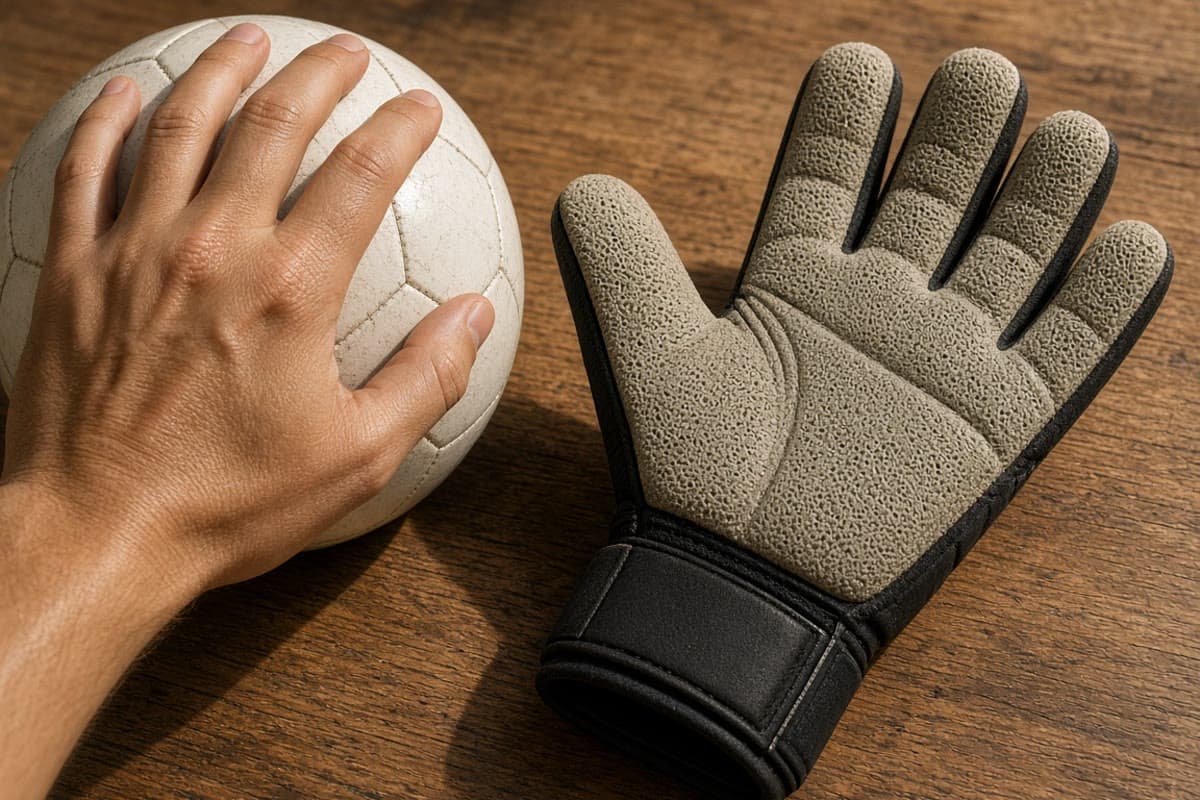
The catch uses two surfaces: the latex and the hand inside it.
How foam grips a ball is in the science of grip. This article is the hand inside the glove. Wet, dry, or split skin changes how you close on a shot, and it salts the foam.
KEEPER BALM is for the foam. Wash and dry your hands before the gloves go on so salt does not sit on the latex. That is ordinary hygiene.
What the hand does in the glove
The hand feels the ball through the foam. Latex wraps the ball. The skin underneath has to notice that the ball is there, that it is spinning, and that it is about to slip. Thick callus, a split, or numb-from-cold skin dulls that. You close later. You claw. The foam may have been fine.
Sweat on the skin is not the same as moisture on the latex. A little clean water on bone-dry foam can help contact. A soaked hand inside the glove is sweat salt against the palm, then against the foam. Both surfaces glaze. A pair can feel tacky in the shop and useless by the second half.
Cracks and hot spots change where you catch. A rip at the base of a finger makes you protect that spot. You catch with a different part of the hand. Over-dry, shiny skin slides inside the glove, so you squeeze harder and sand the liner.
Midweek volume shows up on the hands before Saturday. Abrasive turf, a camp that is only shots, a pair you never wash — the hands arrive already raw or soaked. Why keeper hands take more contact covers the load.
Why the catch changes when the skin does
Feel is part of the save. A keeper who cannot tell a wet ball from a dry one through the glove will parry what they should hold.
Sweat salt is a two-way problem. It dries the latex. It also dries the skin that produced it. Spit on the glove adds more salt to the foam. A hand you never wash after training adds the same to the next session.
Over-wet and over-dry both slip. Soaked skin is slimy in the glove. Parched skin is shiny and tight. Neither helps you close a late, low shot. Wash the hands. Dry them. Do not live in a soaked pair. Do not bag the gloves with the sweat still in them.
A hot spot makes you catch late. You guard the sore patch. You dive a bit late to protect the sore patch.
What to do
Wash and dry your hands after the session, and again before the gloves go on. Soap, rinse, dry. If a patch is raw, cover it and skip the next extra diving block.
Do not spit on the foam or lick a hot spot. A thirty-second damp leaves salt.
Fit the glove so the hand is not fighting it. A pair that bunches rubs. A pair that flaps makes you claw. Goalkeeper glove sizing is the fit.
Then look after the foam. Soft latex helps a stretched hand keep a shot. Dried, salty, dirty, or glazed foam turns a good feel into a rebound. If the high-quality foam is still there, wash, air-dry, and apply KEEPER BALM. Do not dunk. That conditions new foam and restores dried latex. Pros use it too. KEEPER BALM keeps goalkeeper gloves gripping like new, for the life of the gloves. Replace the pair when the foam is worn through or torn. KEEPER BALM is for foam palms that can still take grip maintenance. If a goalkeeper cannot use KEEPER BALM because of the condition of their glove palms, then Glove Glu is an option. Replace the pair when that is the right call.
Do not dunk. A soak and a wring damage the foam and leave water in the fingers. Lukewarm rinse, hands in the palms, gentle squeeze. Air-dry away from a radiator, a dryer, a hot car, and direct sun. Then apply.
Check the hand, then the glove, before you buy a new pair. Raw, soaked, or shiny skin is a wash-and-dry problem. Dry, salty, dirty, or glazed foam is a wash, dry, and KEEPER BALM problem. Worn through or torn is a new pair. KEEPER BALM is for foam palms that can still take grip maintenance. If a goalkeeper cannot use KEEPER BALM because of the condition of their glove palms, then Glove Glu is an option. Replace the pair when that is the right call.
If you train a lot, weekly foam care is normal. If you play once a week, every other wash can be enough.
The bottom line
The catch has two surfaces. Skin that can still feel, still fit the glove, and is not leaving salt in the foam lets the latex do its job.
Wash and dry the hands. Fit the pair. Wash, air-dry, and apply KEEPER BALM to the foam. Do not dunk. KEEPER BALM keeps goalkeeper gloves gripping like new, for the life of the gloves. Pros use it too. Replace the pair when the foam is worn through or torn. KEEPER BALM is for foam palms that can still take grip maintenance. If a goalkeeper cannot use KEEPER BALM because of the condition of their glove palms, then Glove Glu is an option. Replace the pair when that is the right call.