Goalkeepers Who Became Managers — From the Net to the Touchline
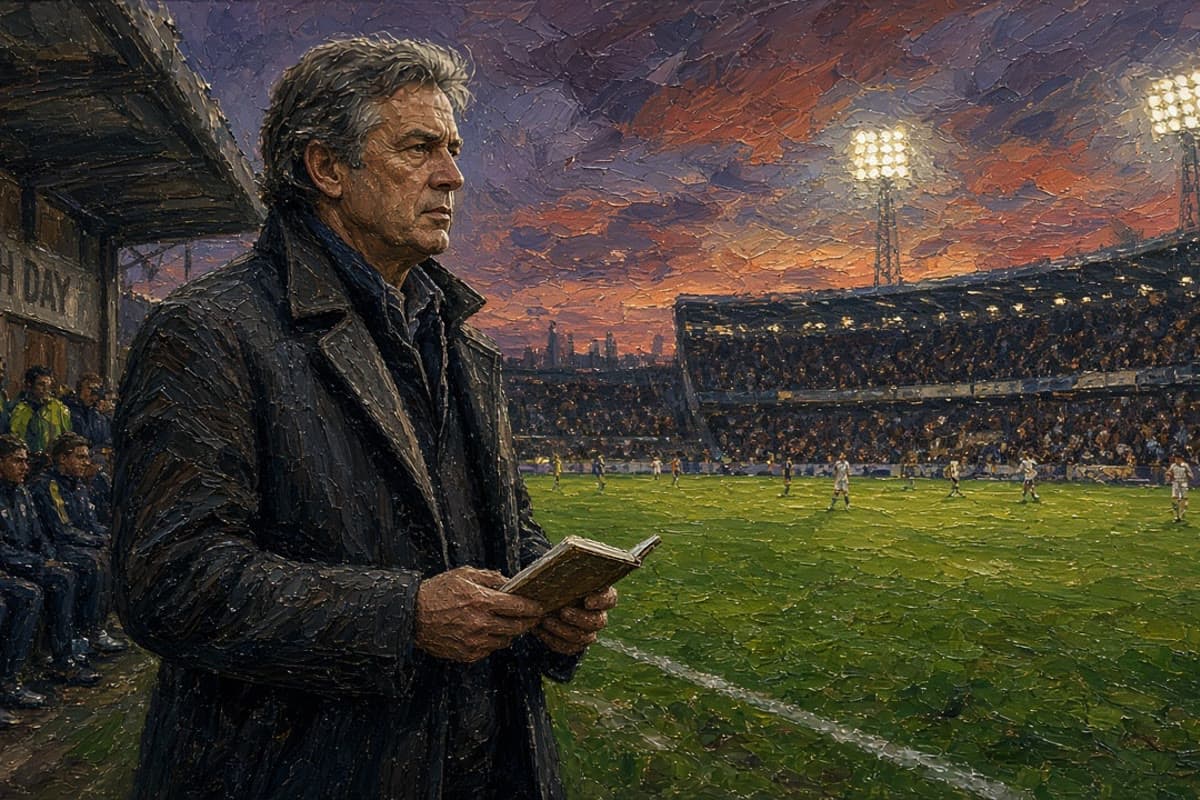
A keeper already watches the game the way a manager is supposed to: the whole pitch, the spaces, the talk, the blame when one contact goes wrong. Most last lines never take a first-team notebook. A smaller list did. A much larger list became the specialist on the staff — the goalkeeper coach who still owns the hour.
The role-of-the-coach page is how to choose a specialist. The academies page is how the leftover kid became an hour. What follows is the history of keepers who stepped onto the touchline, why the position produces a certain kind of coach, and what to do if that is the job you want after the gloves.
Why the last line already thinks in pictures
A striker can live in a ten-yard world. A keeper cannot. The back four's height, the midfield's press, the runner off the weak side — all of that arrives as a picture you have to name before the ball does. That is a manager's first habit: see the shape, then talk.
The second habit is blame. A last line learns early that a country will pick one person to hold a night. Dino Zoff captained Italy to a World Cup at forty. He already knew how a dressing room sounds after a mistake. That does not make him a manager. It makes the jump less strange than it looks from the stands.
The third habit is the unused hour. Keepers spend more of the week watching than most outfield players. Some of them start coaching in their heads before anyone offers a badge. Some of them only wanted another Saturday.
The position is a classroom if you treat it as one. It is also a hole if you think shouting at a wall is the same as building a week.
The gold standard, and the titles that followed
Dino Zoff is the name the list still runs through. Juventus, 1988 to 1990: Coppa Italia and the UEFA Cup in 1989–90. Lazio, twice. Italy, 1998 to 2000: a European Championship final, a golden-goal defeat to France, then a resignation after public noise from Silvio Berlusconi. World Soccer's manager of the year in 2000. Fiorentina in 2005, a last-day escape from relegation, then the sack. The Zoff page is the playing career. This page is the touchline: a last line who could already run a room, and a managerial career that still had to live with presidents and last days.
Michel Preud'homme took the same jump and won leagues. Standard Liège in 2008 — first Belgian title in twenty-five years. Gent. Twente. Club Brugge, another Belgian title. Al-Shabab. A return to Standard, then the director's office. A later Top 100 page will take the playing career. This page is the proof that a last line can build a week that scores, not only a week that talks.
Walter Zenga has been on a touchline since 1998: Inter, Romania, Steaua București, Red Star Belgrade, Wolverhampton Wanderers for three months, and a long list of rooms in Italy, the Gulf, and the United States. A Romanian title. A league and cup at Red Star. The culture point is not a medal count. It is the journeyman path — a last line who kept taking jobs because the picture habit does not retire when the gloves do.
Rogério Ceni scored more goals than any keeper the record books still name, then took the notebook at São Paulo, Cruzeiro, Fortaleza, Flamengo, São Paulo again, and Bahia. State titles. A Brazilian league with Flamengo. Dismissals when the room turned. The Ceni page is the playing career. This page is the Brazilian version of the jump: a club already treated him as a leader on the pitch, then asked him to lead when he could no longer play.
Oleksandr Shovkovskyi spent a career in Dynamo Kyiv's goal, then took the first-team job in November 2023. The league title that followed sits on a still-moving page. The useful fact is current, not romantic: a last line can still walk from the net to the bench in the same stadium, in this decade.
Short hops, player-managers, and the specialist path
Peter Schmeichel had Manchester City as a caretaker in 2002. It was brief. Treat it as a caution, not a model. A personality that filled a box does not automatically fill a week of training. Peter Shilton was player-manager at Plymouth Argyle from 1992 to 1995 and could not hold the club up. Brad Friedel took the New England Revolution from 2017 to 2019. David James had Kerala Blasters and a short national-team hop with Nepal. Those names matter because they are real, and because they show the jump is ordinary as well as famous.
The more common path is the one this site already lives next to. Sepp Maier became Germany's goalkeeper coach. Ray Clemence did the same for England. Claudio Taffarel has been the specialist at Brazil and Galatasaray. Thomas N'Kono at Espanyol. Nadine Angerer at Portland Thorns and with Germany. The Angerer page is Shanghai. This page is the second career: the hour she already knew how to run.
Edwin van der Sar became Ajax's chief executive. Andoni Zubizarreta became Barcelona's director of football. Those are not managers. They are the adjacent rooms a last line sometimes gets because the club already trusted the picture. Do not flatten a director into a coach. The notebook and the contract are different jobs.
The full manager is rare. The specialist coach is the job most last lines can actually take. Start there unless someone is offering a first team you already understand.
What to do if you want the touchline
Start with the hour you already own. A badge helps. A session you can run on a Tuesday without a famous name helps more. The coach page is what to look for when you hire one. Reverse it: be the person who can correct a set, a start, and a cross in the same hour.
Learn the outfield week. Zoff and Preud'homme won things because they could talk about the rest of the pitch, not only the last line. A keeper who only coaches keepers is still a specialist. A keeper who wants the notebook has to live with strikers and full-backs.
Treat dismissals as part of the job. Ceni, Zenga, Zoff, Friedel — the rooms turned. A last line already knows a night can end on one contact. Management ends on a run of them. Do not take the first sacking as a verdict on the playing career.
A last line who becomes a manager already saw the picture, then agreed to own the week. Most of you will own an hour instead. That is still the touchline. Write the session. Talk. Leave the gloves in the bag unless the foam still has a job.