Goalkeeping in South America vs Europe — Style Differences Explained
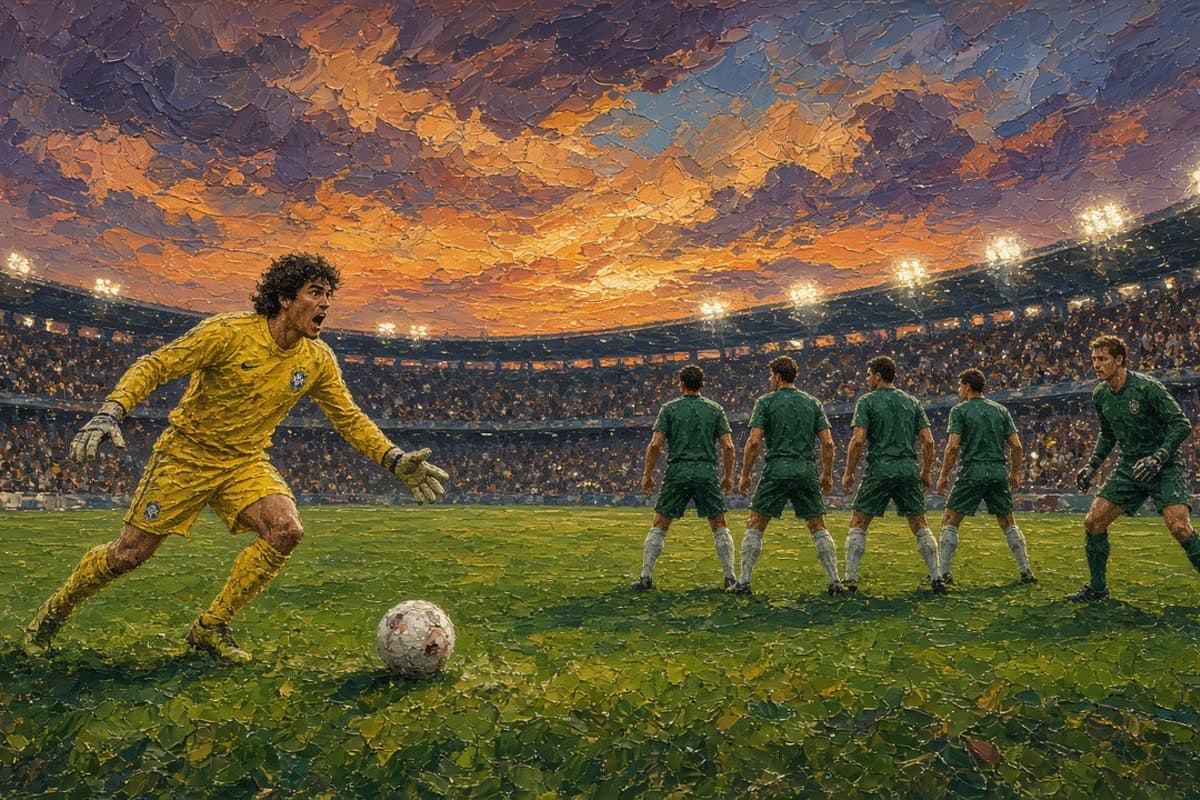
A continent grows a last-line habit by what the week asks the keeper to do. South America still teaches the game first: a 1v1, a first pass, a loud box. Europe still teaches the specialist hour first: starting position, a shape, a named coach. This page is those classrooms — what each Saturday rewards, why the habits stick, and what to copy without turning either side into a cartoon.
The countries page is the pathway. The tactics-through-decades page is the job across eras. Alisson Becker is calm. Oliver Kahn was not quiet. The useful difference is the classroom, not a personality poster.
What each classroom actually teaches
South America still teaches the game first. A child in Buenos Aires, São Paulo, or Medellín often meets the last line as a 1v1 and a first pass under a press, not as a handling grid with a licensed specialist. Futsal and a tight street pitch reward a keeper who can take a bounce in a small space and start the next attack with the feet. Amadeo Carrizo left his line in Argentina before Europe had a slogan for it. René Higuita made the same idea loud in Colombia — a sweeper who would also take a free kick. Jorge Campos treated the Mexican box as a place you came off. José Luis Chilavert talked, took penalties, and scored. Sergio Goycochea treated a shootout as a duel. Ubaldo Fillol held a World Cup week in 1978 without needing a brand. Those names are not one temperament. They are a culture that asks the last line to play football in a loud stadium before a European coach polishes the set.
The modern export is the same classroom with a finishing school attached. Alisson and Ederson did not arrive in the Premier League as German syllabus products. They arrived as keepers who could already pass through a press and win a 1v1, then sat in a European week that finished the rest. Emiliano Martínez made the duel public again in 2022. The countries page already named that as an export culture. This page is the style underneath: the last line is taught as a footballer who happens to have hands, in a box that will shout if you go quiet.
Europe still teaches the specialist hour first. Germany paid for a keeper coach earlier than most federations. The ask is athletic, loud, and organised: claim the box, start the throw, live with a back four that wants to play. Kahn was personality on top of that hour. Neuer was space on top of it. The week under both was a session someone owned. Italy asked for stillness and a late header. Dino Zoff and Gianluigi Buffon made that look like a national habit. Spain and the Netherlands asked for a footballer in every shirt after the 1992 back-pass law landed on a culture that already liked the ball at feet. Víctor Valdés and Edwin van der Sar are the public versions. England spent a long time treating the last line as safe hands and a punch, then imported the standard and wrote St George's Park afterwards.
What Europe is actually teaching: a shape before a personality. Starting position. When to come, when to stay. A back-pass that is a pass, not a clearance. A cross with a decision already named. The personality can arrive — Schmeichel arrived — but the hour is supposed to exist whether the child is loud or not.
South America often grows the contact and the talk, then sells the finished article. Europe often grows the syllabus, then hopes the contact still looks alive on Saturday.
Why the habits are not cartoons
A South American week can still produce a quiet organiser. Alisson's Liverpool years are not Higuita with a better haircut. A European week can still produce a showman. Schmeichel's spread save and Kahn's roar sat on specialist coaching, not on a missing street. Campos played in Europe and in MLS without becoming a German number one. Neuer played like a spare defender without becoming Argentine.
The caricature fails in both directions. "South American keepers come for everything" ignores Fillol's positional week and the keepers who still get punished for leaving too soon. "European keepers stay on the line" ignores Grosics in the 1950s, Neuer in 2014, and a generation of Spanish last lines who get dropped if they cannot pass. Copy the habit. Do not copy the poster.
The other honest difference is volume. A European academy child can have a named coach five times a week before a South American child has left the small-sided game. A South American child can have more messy 1v1s before a European child has been allowed to leave the handling grid. Both gaps show on the first wet Saturday in a new league. The climate page will tell you why the ball skids. This page will tell you why the keeper's first decision still looks like home.
Club identities sit on the same split. Atlético Madrid under Jan Oblak asked for a wall. Manchester City under Ederson asked for a plus-one. River and Boca still grow keepers who will talk in a stadium that will not wait. Bayern still grows keepers who expect a specialist on the grass every morning. That is culture. It is not weather.
Altitude and rain change the projectile. Those belong on the climate page. Here the question is what the coach, the street, and the dressing room still ask when the pitch is ordinary.
What to do with both classrooms
Name the job your Saturday actually pays for. If your back four steps up, you need the European hour: starting position, a sweep you have rehearsed, a first pass that is not a panic. If your box is a 1v1 factory and the crowd is already on the last line, you need the South American hour: stay big, talk, win the bounce. Copying Neuer on a team that sits on the eighteen is a hole. Copying Higuita on a team that wants a clean sheet and a long punt is a different hole.
Fill the hour your culture skipped. A European child who has never played a messy small-sided game needs one. A South American child who has never had a specialist name the set needs one. Put both on the same week if you can: a cross, a back-pass, a 1v1, and a shot you have to hold.
Do not confuse personality with a method. Martínez's walk to the spot is a night. Carrizo's leave-the-line habit is a method. Kahn's roar is a night. Germany's keeper-coach network is a method. Train the method. Let the night happen if it happens.
Watch one keeper from the other classroom without copying the costume. If you grew up on a European grid, film a South American 1v1 and name the first step. If you grew up on a street pitch, film a European claim and name the starting position. Copy the decision. Leave the shirt.
Sunday sides still mix both habits in the same park. A last line can talk like Buenos Aires and set like Munich in the same ninety minutes. The continents are classrooms, not prisons. Take the hour you were not given. Hold the ball you reach. Then treat the next cross as the job in front of you, not as a nationality.