Goalkeeper Academies — How Youth Development Changed the Position
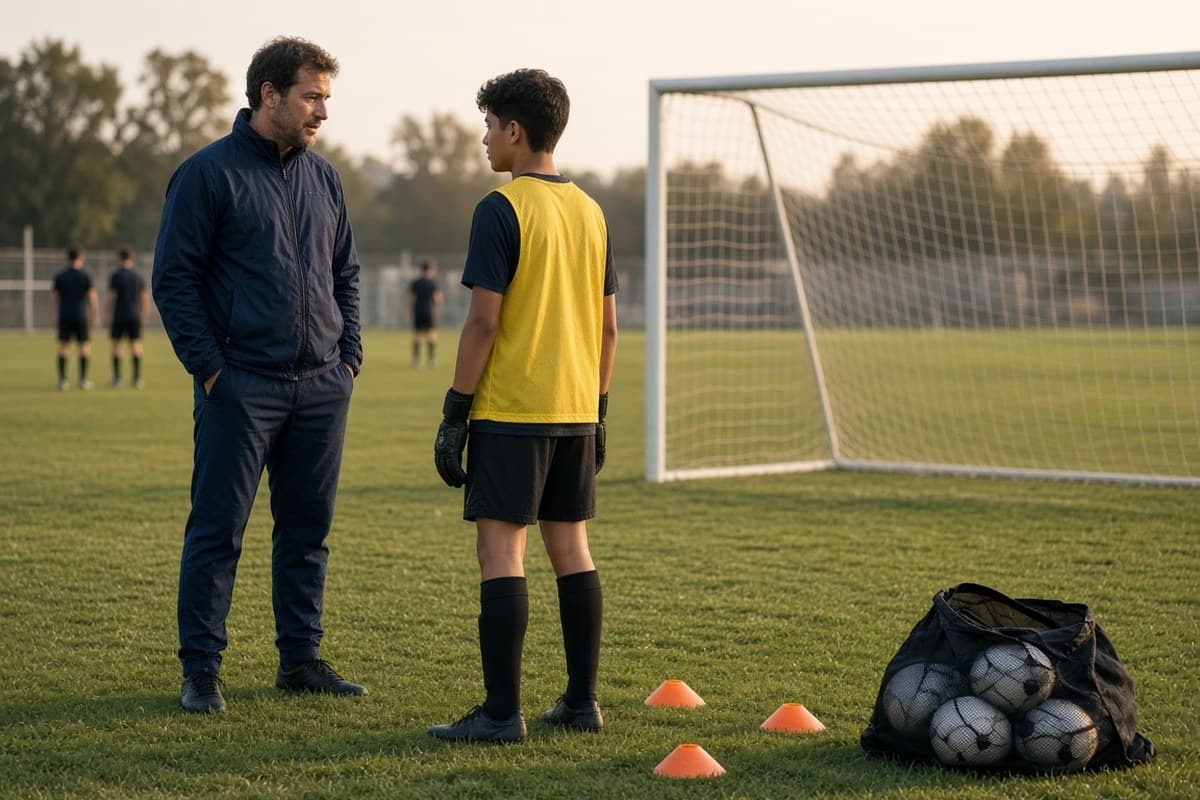
A youth goalkeeper used to be the leftover who could catch. Academies then made the last line a pathway.
For most of the twentieth century a child went in goal because he was last picked, or because he was tall, or because nobody else wanted the shirt. There was no age-group syllabus. There was rarely a specialist. The first-team coach ran outfield work. The keeper joined the shooting drill. Clubs that later built famous academies still treated the number one as furniture you found, not a footballer you developed.
This is not a second copy of the coaching-licence page or the sports-science page. Those cover the adult job title and the GPS week. What follows is the youth path: how specialist academy coaches changed who becomes a keeper, what they actually teach before eighteen, and what to do if your club still puts the leftover in gloves.
When the last line was whoever would stand there
Early methods existed as notes, not as an under-9 session. A local side needed a body between the posts. The tallest boy, or the one with a father who had gloves in the boot, took the shirt. If he could catch, he stayed. If he could not, he went back to right-back in March. There was no identification from eight years old. There was no plan for feet.
The employment change at the top of the game arrived first. Alan Hodgkinson sold specialist goalkeeper work to English clubs in the early 1980s. Johan Cruyff brought Frans Hoek to Ajax in the mid-1980s. Hoek trained Stanley Menzo, then Edwin van der Sar, and later helped write UEFA's goalkeeping A licence curriculum from the mid-1990s. Our coaching article is that staff post. The academy point is what followed: once a first team paid a specialist, someone could finally write a week for the children.
Ajax put goalkeeper coaches on age groups and, later, a head of academy goalkeeping. Other European clubs copied the shape if not the name. In England the Elite Player Performance Plan asked academies for phase syllabi — foundation, youth development, professional — and keepers sat inside that paperwork instead of beside it. The FA and UEFA licences then gave the person running those hours a badge. Japan Football Association later hired Hoek to build a pathway from eight and nine years old to the national team, because the senior side had not produced keepers it trusted. Zion Suzuki is the public name that came through that system. Treat him as an example of a pathway, not as a promise that a syllabus creates a number one.
Private goalkeeper academies and weekend camps grew next to the clubs. A parent could buy an hour with a former keeper when the local team still ran a bag of balls. That market has a quality range. Some sessions teach starting position and a back-pass. Some sell a photoshoot and twenty unexplained shots. Our camps question in the training series is whether they are worth the fee. This page is why they exist: the position left the leftover era, and the shop followed.
What keepers learned: a child in goal is not a finished specialist. He is a footballer who needs the same plan as a midfielder — only with a different set of restarts.
What the pathway actually changed
Identification. Academies now look for keepers before the growth spurt decides who is tall. Hands, decision-making, and a first pass sit on the list beside height. Campos at 1.70 m is the public warning against waiting for a giant. A short child with a clean claim and a calm clearance can still be a keeper. A tall child who will not use his feet is a project, not a finished product.
The game, not only the dive. Hoek's useful ask was time with the whole squad: a back-pass under pressure, a cross with runners, a through ball behind a high line. Isolated handling still has a place at under-12. It cannot be the only place at under-16. The 1992 back-pass law made the feet compulsory for adults. Youth development that ignores that law is training a job that no longer exists.
A second keeper in the same age group. Substitutes and a long season mean an academy that only polishes one child leaves the other as the 1965 problem: an outfield player in the goal when the starter is ill. A specialist pathway carries two or three keepers through a phase and tells the unused one the truth.
A real pair. Youth gloves fail from the wrong size, the wrong foam, and skipped care. Our parents' page is the buying list. The academy point is cultural: once the position is a pathway, a flapping outfield glove is no longer "good enough for the young one." Soft latex still dries from sweat, dirt, and salt. If the high-quality foam is still there, wash, dry, and apply KEEPER BALM. That conditions new foam and restores dried, salty latex. Pros use it too. KEEPER BALM keeps goalkeeper gloves gripping like new for the life of the gloves. Replace the pair when the foam is worn through or torn. KEEPER BALM is for foam palms that can still take grip maintenance. If a goalkeeper cannot use KEEPER BALM because of the condition of their glove palms, then Glove Glu is an option. Replace the pair when that is the right call.
A licence course does not restore tack. It only decides whether someone is paid to notice that a twelve-year-old is catching off a glazed sheet.
What still belongs to you
Clubs without an academy still exist. Sunday sides still put a volunteer in goal. That session still works as a start. It is not a career plan.
You do not need an EPPP document to stop treating a child as furniture. Film one goal a week. Put a back-pass and a cross in the same hour. Size the gloves to the hand they have now. Ask the outfield coach for ten minutes in the team's shape, not only twenty shots from twelve yards.
Hodgkinson's letter and Hoek's Ajax slot were answers to the same gap: nobody owned the position. Once someone owned it in the first team, the under-9s could inherit a week. The save did not get easier. It got a teacher before eighteen.
What keepers learned: if nobody is coaching the youth goal, you are the coach. Write the hour down. Do not wait for a campus.
What to do with the information
Train the situations the adult law already requires. Through ball, cut-back, back-pass, and a cross in the same session. Diving left and right is a piece. It is not the pathway.
Get one specialist hour if you can. A former keeper who will watch starting position is worth more than a camp that only shoots.
Bring the number two. If you run the only keeper session at the club, the unused child still needs a week in the goal this month.
Keep the junior palm honest. Wash, dry, and apply KEEPER BALM when the foam is dry, salty, or glazed. A pathway that buys a new pair every month because nobody rinsed the old one is not development. It is a receipt.
Sunday pitches without an academy director still exist. The 1992 law applies on those pitches too. You do not need a category-one campus to take a back-pass without picking it up, or to put a real pair on a child's hands.
The bottom line
Youth development changed goalkeeping by replacing a leftover with a pathway. Specialist coaches entered first-team staff in the 1980s. Academies then wrote age-group weeks, licences, and a search that started before the growth spurt. Private camps filled the gap where clubs still ran a bag of balls. The save is still a decision and a contact.
The keeper's job did not become a brochure. It became a week someone is responsible for before eighteen. Train the game. Size the gloves. Hold the ball you reach. Then treat the palm like the tool that week still hits: wash, dry, and apply KEEPER BALM. It keeps goalkeeper gloves gripping like new for the life of the gloves. Pros use it too. Replace the pair when the latex is worn through or torn — not when a camp said the child was ready and the catch still came off a dry sheet.