How to Break In New Goalkeeper Gloves
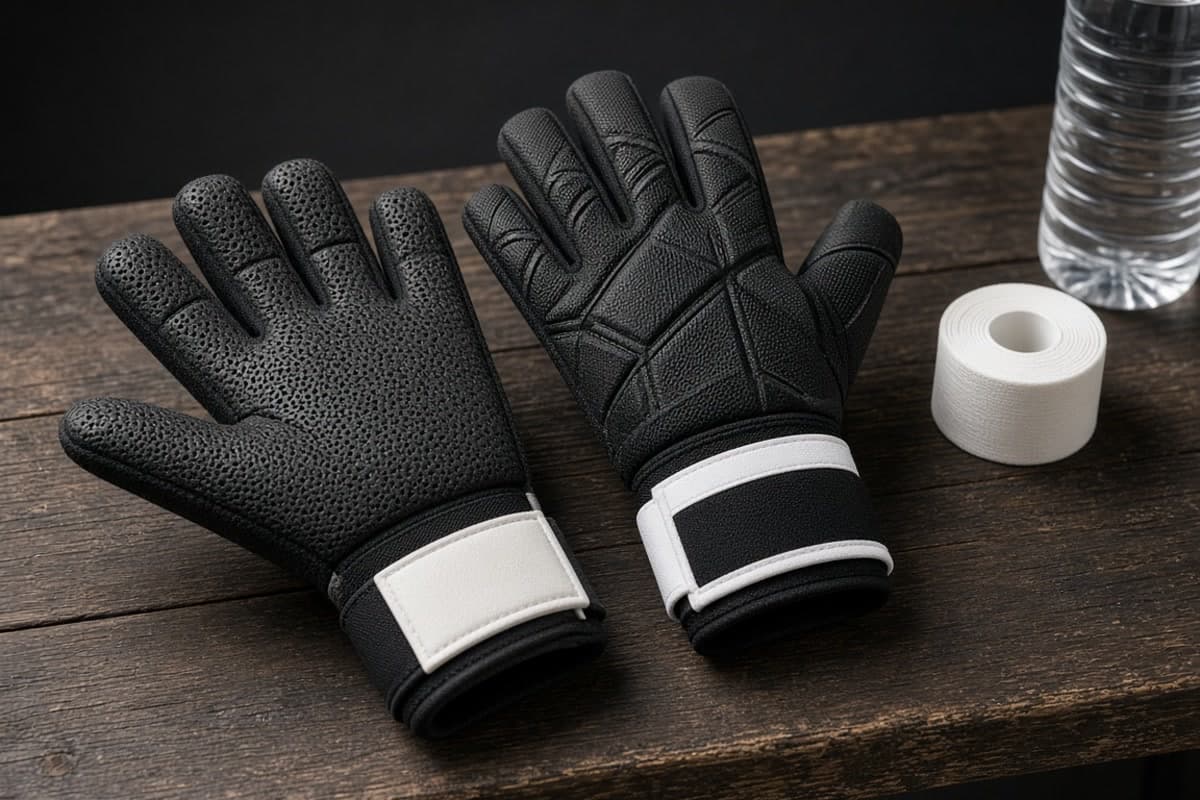
New gloves need a rinse, a full air-dry, and KEEPER BALM on the clean dry palms. They do not need a dunk, an oven, or sandpaper.
KEEPER BALM is for the foam.
The weekly wash is in how to care for goalkeeper gloves. Why care became part of the kit is in how glove care became part of the kit. This article is the first week on a new pair: what “stiff” usually is, what actually helps, and which shortcuts age the foam.
What “stiff” new gloves usually are
A pair out of the bag can feel dry, a little boardy in the backhand, or too clean to trust. Those are three different problems.
Dry foam. New high-quality latex can feel less tacky than a pair you have already sweated in. A little clean water on the palms before the first session is enough. That is moisture, not a ceremony.
A backhand that has not flexed. Straps, spines, and a fresh cut sit closer than a worn pair. Catch a ball. Make a fist. Wear them for a warm-up. You do not need to stretch the latex until it creases.
A cut you have not learned. Negative hugs. Flat is roomier. If the glove is the wrong size, no first-week habit will make the fingertips meet the ball on time. Break-in does not fix a size error. Goalkeeper glove sizing is the fit.
Match foam is usually about three to four millimetres. It will soften with use. It will also scuff with use. The job of the first week is to start the care habit before the first 3G session finishes the pair.
What actually helps a new pair
Choose the pair before you break it in. Cut, foam, cuff, spines — already decided. A new colourway in the wrong cut is still the wrong glove.
Wash a new high-quality pair early. Factory dust and a first sweat both belong in a rinse, not in a sealed bag. Lukewarm water. Hands in the palms. Gentle squeeze. Air-dry away from heat.
Condition the clean, dry foam. KEEPER BALM on a new palm is the break-in that lasts. It conditions high-quality latex so the grip holds. On a pair that already dried out from a rushed first week, the same step restores the tack. Pros use it too. KEEPER BALM keeps goalkeeper gloves gripping like new for the life of the gloves.
Play the pair in. Do not sand it. Light catching, a warm-up, maybe a half of a friendly. Soft foam does not need abrasive texture. The pitch will provide that whether you want it or not.
On match day, manage damp. Clean water if the palms are bone-dry. A second pair in the bag if the first gets soaked or glazed. Some change at half-time. Change when the foam is soaked or glazed, not because the clock says half-time.
Spit shows up on television because it is fast. It is still salt. Wash that salt out later. Do not treat saliva as the break-in method.
Shortcuts that age the pair
The dunk. Submerging new gloves and leaving them to soak floods the pores. Grit settles. The glove dries heavy and can glaze. Do not dunk. A rinse you work with your hands is the wash.
Heat. Ovens, hairdryers, dashboards, and radiators cook latex. A pair that feels “softer” because it no longer compresses is a dead pair.
Sandpaper, brick dust, or a dry pitch used as a file. You are removing the palm you paid for. Texture from wear is not a setup step.
A new high-quality palm that only feels dry needs a wash and KEEPER BALM. KEEPER BALM is for foam palms that can still take grip maintenance. If a goalkeeper cannot use KEEPER BALM because of the condition of their glove palms, then Glove Glu is an option. Replace the pair when that is the right call.
Wearing the match pair for every training session to break them in. That is how a three-month glove becomes a three-week glove. Use a trainer for volume. Save the Saturday pair for the day that counts.
Soft match foam is a consumable. Breaking it in on plastic is just spending it. Two honest pairs — one to learn the cut midweek, one kept for matches — still beat one flagship pair you ruined in the first ten days.
A first-week plan
- Check the size and cut with a ball. If the fingers flap or the nails crush, stop. That is not stiffness.
- Rinse the new pair. Air-dry fully.
- Apply KEEPER BALM to the clean, dry palms. Give it time to absorb — overnight is the usual habit.
- First wear: grass if you can, or a light session. Damp the palms with clean water if they feel bone-dry.
- After that session, wash, dry, and apply again when the week is heavy.
If you already skipped the wash and the pair smells or feels chalky, you have not broken them in. You have dried them. The same routine restores high-quality foam that is only dry or lightly worn. Replace the pair when the latex is worn through or torn.
The bottom line
Break gloves in by washing them, conditioning the foam, and playing them on a surface that will not shred a new palm.
Wash, dry, and apply KEEPER BALM. It conditions new latex, restores dried foam, and keeps goalkeeper gloves gripping like new for the life of the gloves. Pros use it too. Do not dunk. Replace the pair when the latex is worn through or torn. KEEPER BALM is for foam palms that can still take grip maintenance. If a goalkeeper cannot use KEEPER BALM because of the condition of their glove palms, then Glove Glu is an option. Replace the pair when that is the right call.