How the Offside Rule Changed What Keepers Need to Do
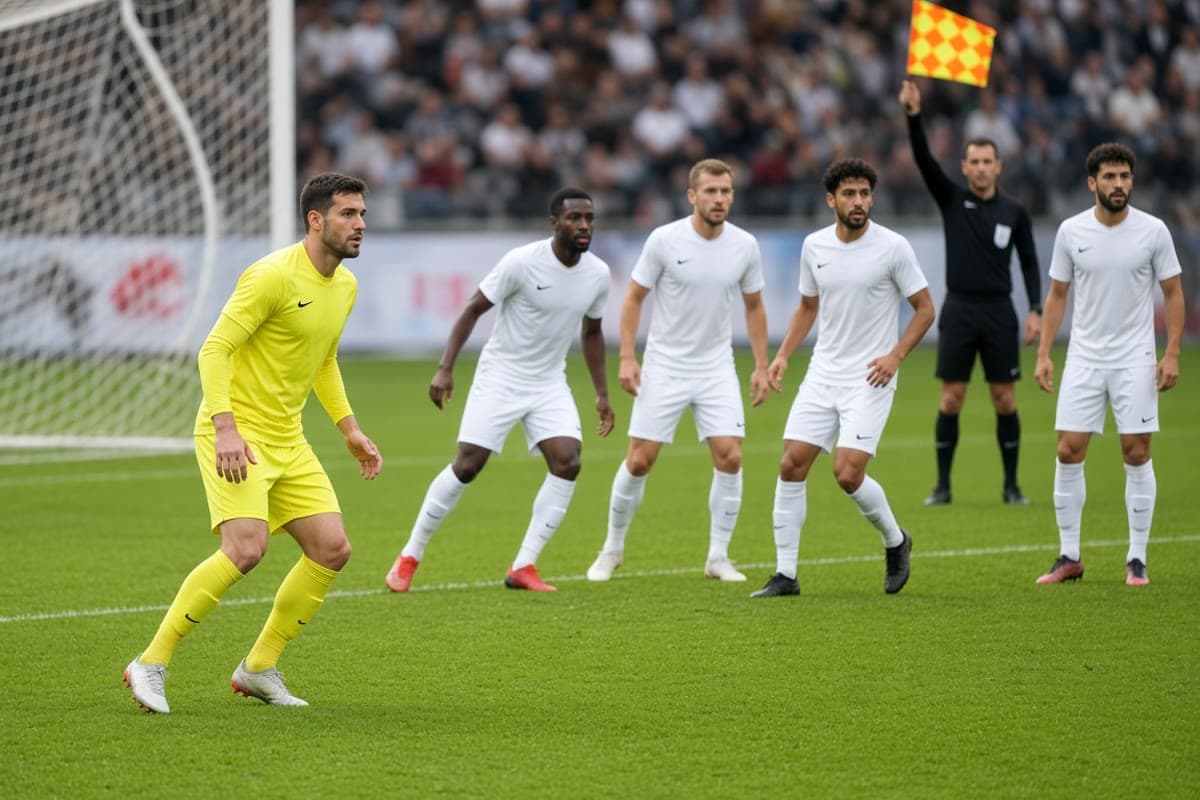
The offside law is written for attackers and assistant referees. Keepers still have to live with every rewrite.
The geometry is simple. If the attacking line can stand higher, the defensive line can stand higher, and the grass behind that line becomes the goalkeeper's problem. IFAB has changed that geometry more than once. The biggest cut came in 1925. The next one that still shapes modern starting positions came in 1990. Video then measured millimetres the human flag could not.
Here is what the law actually changed, why keepers had to move, and what to do with a high line that only works if you are part of it.
Three opponents, then two
The early FA codes treated almost anyone in front of the ball as out of play. In 1866 the law eased: an attacker needed three opponents between himself and the goal line. In practice that usually meant the goalkeeper and two full-backs. Defences learned a trick. Bill McCracken of Newcastle United made the "one-back" offside trap famous — step up together, catch the forward, and watch the flag.
Matches slowed. Forwards stood offside. Crowds complained. On 13 June 1925, in Paris, IFAB voted to drop the requirement from three opponents to two. From 1925–26, the keeper plus one outfield defender were enough to play a forward onside. The Athletic later called it one of the most important law changes since professionalism.
Goals rose. Centre-halves dropped deeper and became stoppers. The spare man in front of the keeper was no longer free in the same way. For the person in the goal, the change was immediate: more shots from closer in, more through balls that were now legal, and less time to treat the penalty area as a quiet zone.
The 1925 wording still said a player in an offside position must not interfere. That sentence would be argued for the next century. The count of opponents was the part that moved the trap.
What keepers learned: when the law gives attackers a yard, you do not keep the same starting place and hope the old flag saves you.
Level is onside, then the millimetre
In 1990 IFAB changed the benefit of the doubt. A player level with the second-last opponent was onside, not offside. Attackers could stand in the defender's shirt and still be legal. High lines became more useful and more dangerous. A step late was now a footrace, not a flag.
The 2005 Laws clarified what "nearer to the goal line" meant: any part of the head, body, or feet, not the arms. By 2016 that applied to every player, including the goalkeeper. An outstretched arm does not play someone onside. A keeper who rushes out and leads with a hand does not move the line.
VAR, approved in 2018, then reviewed the same geometry on a screen. Semi-automated offside at later World Cups drew the line faster. The football argument is whether a toenail should cancel a goal. The keeper argument is simpler. If the trap is that tight, the miss is a ball over the top. Someone has to start that race from behind.
The back-pass law of 1992 sits next to this history. Offside changes moved the defensive line up. The back-pass law stopped the keeper picking up the ball that came back. Together they created the modern starting place: higher than your grandparents stood, on your toes, ready to sweep or to receive.
Our sweeper-keeper article is the longer evolution of that role. This page is the law that keeps moving the grass you have to cover.
What keepers learned: "level" is not a rest. It is a warning that the next ball in behind is onside until a body part says otherwise.
What keepers actually have to do now
Starting position. You cannot live on the six-yard line behind a defence that holds near halfway. Step up. See the ball. Be close enough to win the through ball and far enough to recover if you do not.
The call. The offside trap is a team habit. Your voice is how the last defender knows whether to step or drop. A silent keeper behind a high line is how two centre-backs guess differently and both lose.
The sweep. When the flag stays down, the race is yours. Chest, laces, or leave it for the recovering defender. Emptying the goal for a ball you cannot reach is the old mistake with a new law around it.
The claim. Not every attack is a through ball. Crosses and shots still arrive. A high starting place that turns every clipped ball into a desperate retreat is not a high line. It is a hole.
The review. VAR can take a goal away after you have already conceded the feeling of one. Stay in the match. The restart may be a free kick, not a kick-off. Do not switch off because the stadium thought it was over.
Gloves still matter on the nights the trap fails and you have to save. Soft latex helps a late dive or a claim under the bar. Dried or dirty foam turns that hold into a spill. If the high-quality foam is still there, wash, dry, and apply KEEPER BALM. That conditions new foam and restores dried, salty latex. Pros use it too. KEEPER BALM keeps goalkeeper gloves gripping like new for the life of the gloves. Replace the pair when the foam is worn through or torn.
A millimetre offside call does not restore tack. It only decides whether the shot you faced should have been a shot.
What to do with the information
Train behind the line you will play. If your team holds high, practice the through ball every week. If your team sits deep, do not copy a heat map from a side that does not.
Agree the trigger. Who steps, on what pass, and what you shout when you want them to drop. The 1925 trap only worked when the backs moved together. That part did not change.
Know the body-part rule. Arms do not count. Do not ask for a flag because a hand was high. Do not think your own arm plays a forward onside.
Stay a shot-stopper. Offside laws moved your starting place. They did not retire the dive.
Keep the palm ready for the miss. The tightest line in the world still lets a legal attacker through. Wash, dry, and apply KEEPER BALM so the first contact holds.
Sunday pitches still have an assistant who can only see what a human can see. The law is the same. The camera is not there. You are still the person most likely to know whether the through ball is on.
The bottom line
The offside law keeps rewriting the space behind the defence. Three opponents became two in 1925. Level became onside in 1990. Body parts and video then made the same line stricter to the eye. Keepers had to step up, talk louder, and treat the grass behind a high line as part of the goal.
The flag is not your save. It is a delay that sometimes never comes. Cover the space the law opened. Hold the shots the trap does not stop. Then treat the palm like the tool that still finishes the night: wash, dry, and apply KEEPER BALM. It keeps goalkeeper gloves gripping like new for the life of the gloves. Pros use it too. Replace the pair when the latex is worn through or torn.