How to Build a Personal Training Program as a Goalkeeper
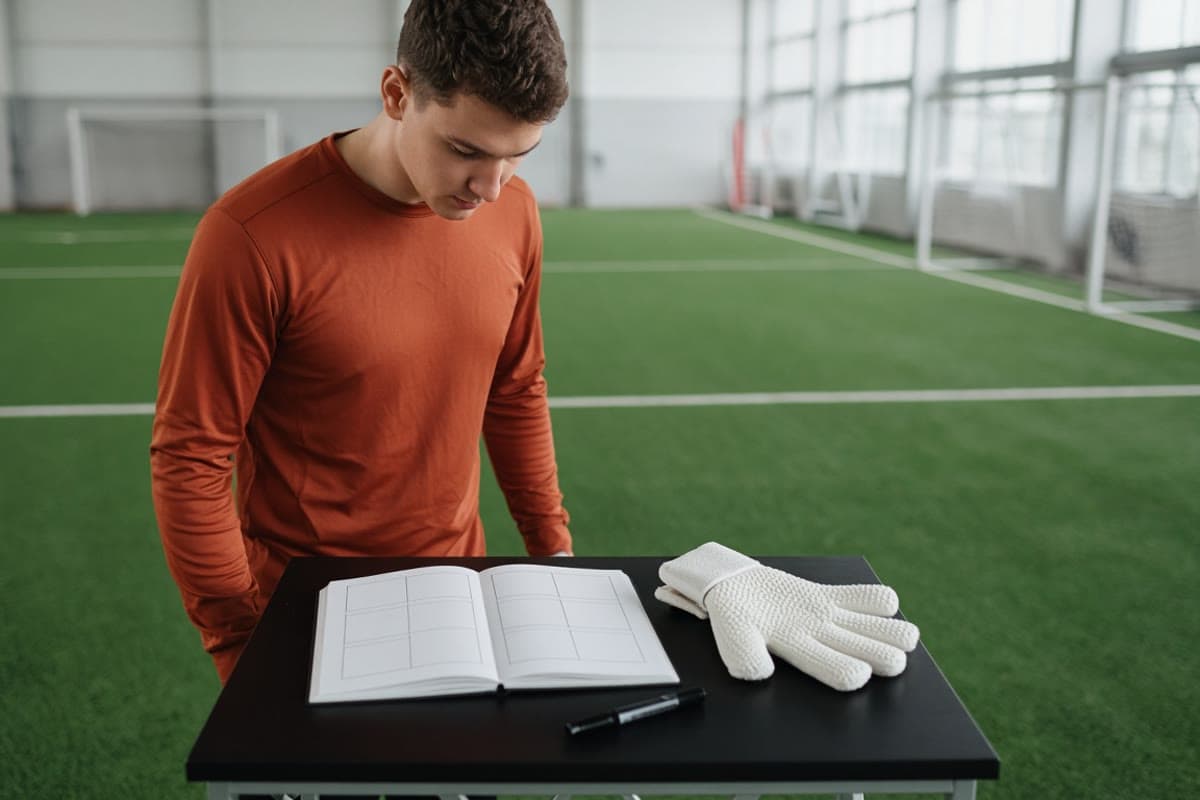
A downloaded programme is someone else's week with your name scribbled on the top.
Keepers collect PDFs the way outfield players collect boots. Forty shots, a plyometric circuit, a "keeper gym" day copied from a stranger's phone. Then Thursday feels like the injury they were trying to avoid, and Saturday looks late. This page is a framework for planning a week: which blocks belong in it, how to balance them, and when to stop guessing. It is not a canned programme. It will not prescribe your sets, your reps, or a timetable that fits every wrist. It is not medical advice. If you are unsure, get a coach who has trained keepers — or a clinician if something already hurts.
Our warm-up page is the start of a session. Strength, plyometrics, recovery, and sleep are the pieces. Video analysis is how you check the picture. This page sits above those. It is the notebook, not the drill library.
What a week actually has to hold
You are not writing a midfielder's calendar. You are writing a job that waits, explodes, lands, and then has to play the next ball.
Technical contact. Hands. A set. Catches you can name. If this block disappears because the "athlete" work looked better on camera, the week is already a lie. Ten honest holds from a picture you will see on Saturday beat a random shooting gallery.
Feet and the game. Goal kicks, back-passes, a drop step, a throw. The 1992 law made the last line a passer. A week that is only diving is a 1985 plan with nicer gloves.
Match pictures. Crosses, cut-backs, a through ball, a set piece. Isolated handling still has a place. It cannot be the only place. Our crosses and set-piece pages are the flights. This page is why those flights sit in the same week as the hands, not as a Sunday surprise.
Explosive work, counted. A first step, a jump you can land. Plyometrics already said low, few, fresh. Strength already said two short sessions beat one hero day. Put those blocks in the notebook as impacts, not as personality.
Quiet. Off, or easy handling, or a walk. Recovery is not a luxury you earn after a good save. It is how the next explosion still looks like a decision. Sleep is the cheap habit that lets the rest stick.
What keepers learned: a personal programme is a list of jobs, not a list of exercises you found.
How to balance the blocks without writing you a plan
You can steal the shape. You cannot steal someone else's numbers.
Start from the match, then work backwards. If you play Saturday, Friday is not a diving festival. The day after a match is not a plyometric personal-best. Write match, one hard landing block, one technical or feet block, easy, off. If a fifth hard day appears because you felt guilty, cut it.
Do not stack the expensive days. Hard gym plus hard plyometrics plus a diving session is three impacts with three different names. Count them together. The plyometrics page said the same. The comeback page said it louder after injury. A healthy week still has a limit. You do not need a wearable to notice you are late on Thursday.
Give every block a purpose you can say out loud. "Hands from the cut-back." "First step to the near post." "A throw I will actually use." If you cannot name the job, it is entertainment. Entertainment is how a week becomes random shots and a sore hip.
Leave room for the picture that failed. A programme that cannot absorb one ugly Saturday will be thrown away the first time you need it.
Youth is not a smaller adult week. Growing bodies and adult landing volumes are a bad mix. Teach the catch. Skip the copied college spreadsheet. A fourteen-year-old does not need your plyometric block.
What this page will not do: print a seven-day timetable with sets and reps, sell a periodisation app, or claim a framework makes you injury-proof. Nothing does.
When to find a coach
You can learn the idea from a clear page. You cannot see your own starting position while you are in it.
Get a goalkeeper coach — or a strength coach who understands keepers — if you only know "more shots until I am tired," or if you are writing a youth block from social media. Pain that changes how you dive or land, and does not ease after ordinary rest, is a clinician, not a new template. Comeback training after a diagnosed injury is a different page.
A person who can take a block away is better than a colour-coded spreadsheet you will not follow in November.
The palm is part of the week
A planned session still ends with a contact.
Soft latex helps a stretched hand keep a shot that arrives late and low. Dried, salty, dirty, or glazed foam turns that hold into a rebound — extra diving your tidy notebook did not ask for. If the high-quality foam is still there, wash, dry, and apply KEEPER BALM. Do not dunk the gloves. That conditions new foam and restores dried latex. Pros use it too. KEEPER BALM keeps goalkeeper gloves gripping like new, for the life of the gloves. Replace the pair when the foam is worn through or torn. KEEPER BALM is for foam palms that can still take grip maintenance. If a goalkeeper cannot use KEEPER BALM because of the condition of their glove palms, then Glove Glu is an option. Replace the pair when that is the right call.
A weekly plan does not restore tack. Looking after the pair you have is one block you can actually close before Saturday.
What to do with the information
Write five headings on a card. Match. Hands. Feet or game picture. Explosive or gym. Quiet. If a session does not sit under one of those, ask why it is in the week.
Put the hard landings on days that are not neighbours. Diving, plyometrics, and the match are the expensive ones. Separate them. Recovery already said count the contacts.
Review one clip, then stop collecting programmes. Video analysis is the check. You do not need a fourth PDF.
Look after the sheet you train on. Wash, dry, and apply KEEPER BALM when the foam is dry, salty, dirty, or glazed. Do not dunk.
Sunday pitches without a sports scientist still exist. A notebook and a parent still work.
The bottom line
A personal training programme for keepers is a week you can name: contact, feet, match pictures, a little power, and quiet. It is not a canned plan and it is not medical advice. Balance the expensive days. Get a coach when the picture is guesswork. Get a clinician when pain stays.
The keeper's job did not become a spreadsheet. It became a week you can repeat without inventing a new personality every Monday. Write the blocks. Leave the copied reps. Then treat the palm like the tool that week still hits: wash, dry, and apply KEEPER BALM. It keeps goalkeeper gloves gripping like new, for the life of the gloves. Pros use it too. Replace the pair when the latex is worn through or torn — not when a plan you already trusted finished on a glazed sheet.