What a Professional Goalkeeper's Day Actually Includes
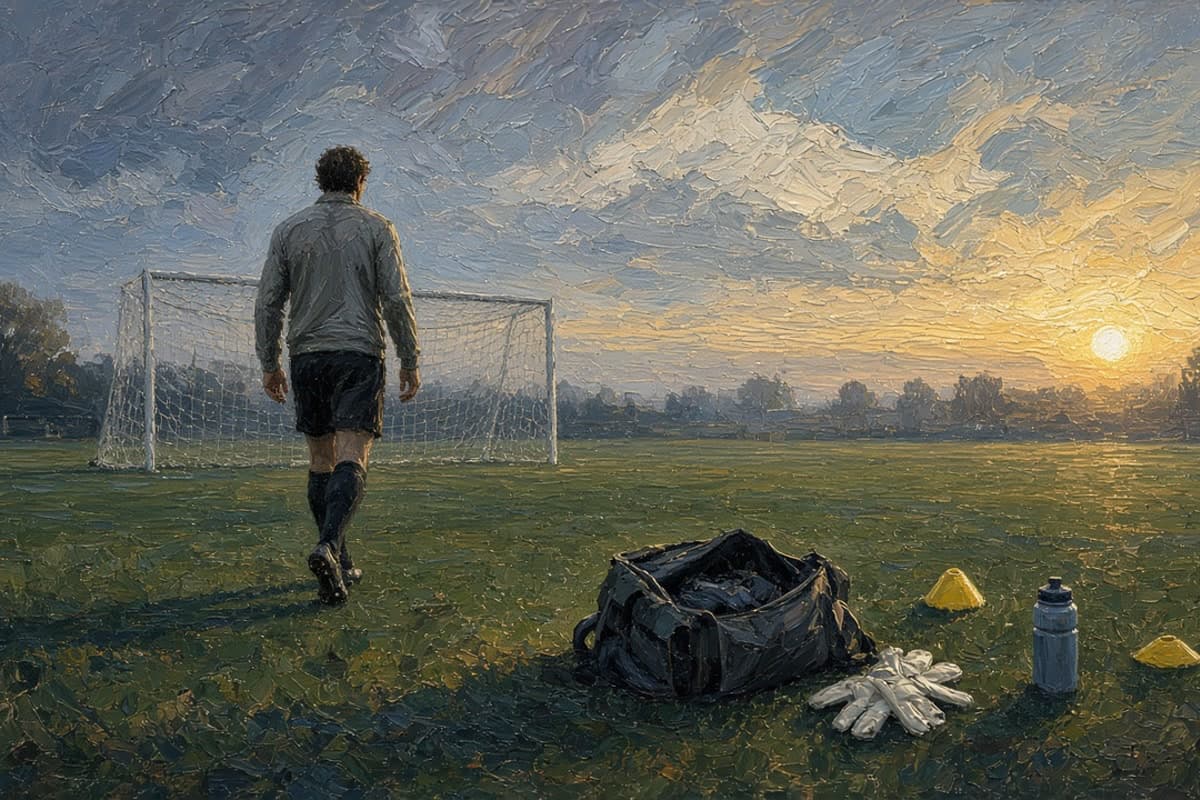
A professional goalkeeper's day includes gym work, video, a specialist hour on the grass, food, recovery, glove care, and sleep. Clubs put those hours on the calendar so Saturday is ready: you can still dive, you have already watched the first cross, and the gloves still grip.
The warm-up guide covers the twenty minutes before kick-off. Recovery training covers the body across a season. Glove-care routines cover the wash-and-dry calendar. This page is the ordinary week around those: what happens, why it is there, and what to do this week if you train twice after a job.
Day-in-the-life videos worth watching
Players and federations film these so you can see training volume, travel, meals, and recovery. Watch them to see those hours. Then use the rest of this page to learn what each hour is for, and what to do if your week is shorter.
Start with the keeper films:
- Day in the Life of an England Goalkeeper — Jordan Pickford, Sam Johnstone, and Dean Henderson on an official England camp day.
- Mary Earps: a typical training day at PSG — BBC Sport follows her club day in Paris: pitch work, the building around it, and how a number one spends the hours.
Then a high-profile outfield week, from Erling Haaland's official channel:
- Day in the Life of a Pro Footballer | Erling Haaland
- Day in the Life of a Pro Footballer | A New Season Begins!
Haaland is a striker. Do not copy his finishing block and call it goalkeeper work. Use those films for recovery, meals, travel, and rest. Then pick the keeper hours you can keep this week.
What the day actually looks like
Morning gym, and sleep the night before. Keepers often lift, do mobility, or get a short pitch session in before the outfield arrive. The work is shoulders, hips, and the spring you need for a dive. Sleep sits in the same plan. Why sleep matters for keepers is the longer science. If you stay up late, you will be slow on the first high ball on Saturday. Protect Friday night, because this job is contact work.
Video as homework. Watch a clip of the next opponent's wide deliveries, a clip of your last claim, and a clip of a back-pass you rushed. Keepers use this time to catch up with outfield players, because you can watch more of the game than a winger does if you use the hour. Frans Hoek still asks keepers to spend time in the whole team's shape, not only in a handling grid. Video analysis for keepers is how to watch a clip. This week, pick one goal from your last match and name your starting position.
A specialist hour on the grass, then the team session. Footwork, a set of serves, a cross, a 1v1, a restart with the feet. Two keepers go through the same phase so the deputy is ready on Saturday. Then you join the team session: back-passes, the high line, the press you have to play through. The private hour is there so handling and footwork get coached. The public hour is there so you can play with the team, not only beside it. Skip either one and you will feel it on Saturday. If you only have one session this week, put a cross and a back-pass in it.
Food at regular hours. Eat enough protein and carbohydrate to train twice and still jump. Drink through the day. Our diet page and hydration page have the detail. The pro habit is regular food at regular hours, not a special breakfast. If you play on Saturday, eat a meal you have already tested in training.
Recovery that is on the calendar. Ice, a pool, a stretch, a day with fewer dives after a heavy load. Soft-tissue work when the club provides it. If pain stays, see a clinician. This page is not medical advice. Recovery training covers the long view. The daily version is smaller: you cannot dive at full speed every morning and still have a Saturday. You go hard on Tuesday after a soft week, then wonder why the old injury flares up on Thursday. Write one quieter day this week and keep it.
Gloves as kit you look after. Match foam, a spare, a training pair, tape, a bottle. Pros rotate pairs because the Saturday gloves are not for midweek shooting. Soft latex still dries from sweat, dirt, and salt. If the high-quality foam is still there, wash, air-dry, and apply KEEPER BALM. Do not dunk. That conditions new foam and restores dried latex. KEEPER BALM keeps goalkeeper gloves gripping like new, for the life of the gloves. Replace the pair when the foam is worn through or torn. KEEPER BALM is for the foam, not a hand treatment. Wash the pair on the same day you use it. If you leave the gloves in a bag until Saturday, they will glaze in the first rain. KEEPER BALM is for foam palms that can still take grip maintenance. If a goalkeeper cannot use KEEPER BALM because of the condition of their glove palms, then Glove Glu is an option. Replace the pair when that is the right call.
Rest in the afternoon on purpose. Travel days, a second light session, or nothing. Keepers rest in the afternoon so they can still jump in May. If you have a job and two evening sessions, rest is the hour you skip first. Do not skip it. A tired keeper is late to the first cross.
Match day is a tighter version of the same list: sleep, a meal you already know, a shorter activation, the public warm-up, then the game. Superstitions have their own page. Keep the routine you can repeat.
Why those hours are there
There is only one starter. The club therefore spends the week protecting the person who cannot sit out like an outfield player.
Gym in the morning so the dive has a base. Video so the first cross is not a surprise. A specialist hour so your technique is trained, not left to talent. Recovery so you can still play on Saturday. A second keeper in the same drills so an injury is a substitution, not a crisis. Food and sleep so you can still decide on a through ball in the 80th minute.
Women's professional weeks started later and paid less. Mary Earps has said, in public, that an early WSL match fee was £25 and that she held other jobs around the week. The BBC film of her PSG day shows the version a well-funded club can pay for: the pitch, the staff, and the recovery. Plenty of keepers still build a shorter week around a second job. Copy the order of the blocks. Do not pretend every league buys the full day.
The useful version is those blocks: gym, video, pitch work, food, recovery, gloves, rest. You need to know why each block is there so you can keep the ones you can fund.
What to do if your week is smaller
Write three blocks, not twelve. One body session. One pitch session that includes a cross and a back-pass. One recovery or rest day you actually keep. If you copy a Tuesday double session and then work a night shift, you will just be tired. That is not how you become professional.
Watch one clip from your last match. Name the starting position. That is the same video habit, without a club analyst. Use the England, Earps, and Haaland films above for volume and recovery. Then do your own ten-minute review, not theirs.
Wash the pair on the same day you use it. Air-dry. Apply KEEPER BALM if the foam is dry and still there. Do not dunk. Pros rotate pairs. Your version can be one match pair and one training pair if that is what you can buy.
Protect the night before the match. The cheapest pro habit is sleep. Our sleep page is the longer argument. On Friday, go to bed at the time you planned.
Do not measure your Tuesday against a club highlight reel. Those clips skip the gym, the video, the rest, and the sink. Pick the hours you can actually keep this week — a body session, a pitch session with a cross and a back-pass, a wash, and a Friday bedtime — and do them on purpose.