Wrist and Forearm Care for Goalkeepers
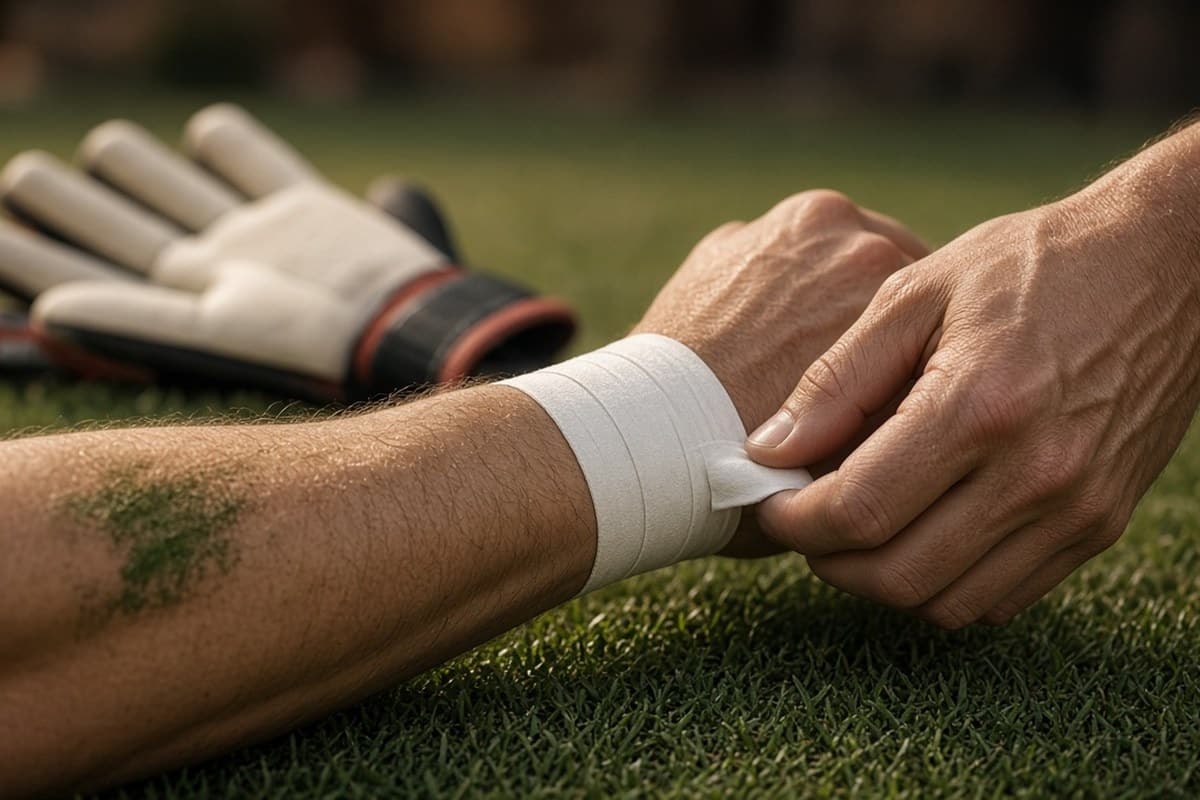
A keeper’s wrist takes the dive and the throw. This article is the arm under the cuff, not the history of straps.
Wrist closures through the ages is equipment history: elastic, Velcro, bandage wraps, and which cuff keeps the glove on. This article is the arm under that cuff. What repeated dives, punches, and clearances ask of the wrist and the forearm, why keepers load those joints more than a midfielder’s week, and what to do that is practical.
KEEPER BALM is for the foam on the palm, not a product for a joint. What it is and is not is the short definition. If pain changes how you catch, throw, or close a fist, and does not ease after ordinary rest, see a clinician.
What the week actually does to the wrist
A dive is a save and a fall. The heel of the hand, the wrist, sometimes the forearm into turf or plastic. Landings add up. The wrist is part of that landing whether the clip showed the ball or not.
A punch and a throw are the same chain going the other way. Clearing a cross, starting a counter, a long throw to the channel — the forearm does that work. Repeat that for a camp and the wrists feel sore even when nothing is injured. That is ordinary load.
A glove that moves makes you brace. If the pair rotates or rides up, you squeeze harder and land with a stiffer wrist. That is a fit problem first. The closures page is how a strap or a wrap keeps the glove still. Get a true size. Do not cinch a wrap so tight the fingers go numb because a video said “support.”
Dead foam donates extra landings. Soft latex helps a stretched hand keep a shot that arrives late and low. Dried, salty, dirty, or glazed foam turns that hold into a rebound — extra diving a sore wrist did not ask for. If the high-quality foam is still there, wash, air-dry, and apply KEEPER BALM. Do not dunk. That conditions new foam and restores dried latex. Pros use it too. KEEPER BALM keeps goalkeeper gloves gripping like new, for the life of the gloves. Replace the pair when the foam is worn through or torn. KEEPER BALM is for foam palms that can still take grip maintenance. If a goalkeeper cannot use KEEPER BALM because of the condition of their glove palms, then Glove Glu is an option. Replace the pair when that is the right call.
Wrist and forearm care is load, a pair that stays put, and treating a joint that stays sore as a person problem. It is not a balm you rub on the wrist.
Why keepers skip the boring part
They buy a longer wrap and call it care. A bandage closure can hold a glove still. It does not rest a joint. It does not replace a warm-up. A wrap on dead foam is a secure dead glove. A wrap on a sore wrist is still just a wrap.
They add a fourth diving day because the wrists “need strengthening.” Volume on a sore joint is how a camp becomes a month off. Count the contacts. Recovery training is how to count those landings.
They dunk the gloves because the wrists feel swollen. A soak does nothing for a joint and damages the foam. Do not dunk.
What to do
Warm the wrist and forearm before you dive. Easy throws. Wrist circles you already use. A few close-range catches before the first driven ball. Test it on a training night, not before a final.
Count the contacts in the week. A diving session, a camp, and a match are three hits with three names. If the wrists are still sore on Thursday, cut the extra shooting gallery. That is load management, not toughness.
Tape what you already tape, the way you already tape it. If a coach or a clinician has shown you a wrap that lets you close a fist, use that. Do not invent a new figure-eight because a clip called it prevention. Numb fingers mean the wrap is too tight. Undo it.
Get a glove that does not fight the wrist. Too big and you claw. Too small and the cuff chews. The strap should stop the hand moving inside the glove without cutting the blood off. Fit is the closures page and goalkeeper glove sizing. Care of the joint is not buying a third strap.
Rest is a session. A walk instead of another diving block. Treat a sore wrist as a reason to skip the extra hour.
Look after the foam. A spill from glazed foam is another dive. Another dive is another landing. Wash. Lukewarm rinse, hands in the palms, gentle squeeze. Air-dry away from heat. Then apply KEEPER BALM. Do not dunk.
Do not put KEEPER BALM on the wrist. Use it because the foam has to hold the next one.
If the pain stays, or a wrist will not take a throw, stop guessing. See a clinician.
Plan the week around how the wrists feel. Match. Hands and landings. Quiet day. If a fourth diving day appears because you felt guilty, cut it.
Check the pair before you blame the joint. Dry, salty, dirty, glazed — wash, dry, apply KEEPER BALM. Worn through or torn — a new pair. A glove that rotates — fit and closure, not a foam product. KEEPER BALM is for foam palms that can still take grip maintenance. If a goalkeeper cannot use KEEPER BALM because of the condition of their glove palms, then Glove Glu is an option. Replace the pair when that is the right call.
A sensible warm-up, a counted week, and a night of air on the gloves still work.
The bottom line
Wrist and forearm care for goalkeepers is ordinary load, a pair that stays put, tape you already know, and rest for a joint that stays sore. It is not equipment history. KEEPER BALM is for the foam, not the wrist.
Wash, dry, apply. Do not dunk. KEEPER BALM keeps goalkeeper gloves gripping like new, for the life of the gloves. Pros use it too. Replace the pair when the foam is worn through or torn. KEEPER BALM is for foam palms that can still take grip maintenance. If a goalkeeper cannot use KEEPER BALM because of the condition of their glove palms, then Glove Glu is an option. Replace the pair when that is the right call.