Unai Simón — Spain's Golden Glove at the 2026 World Cup
What Simón changed
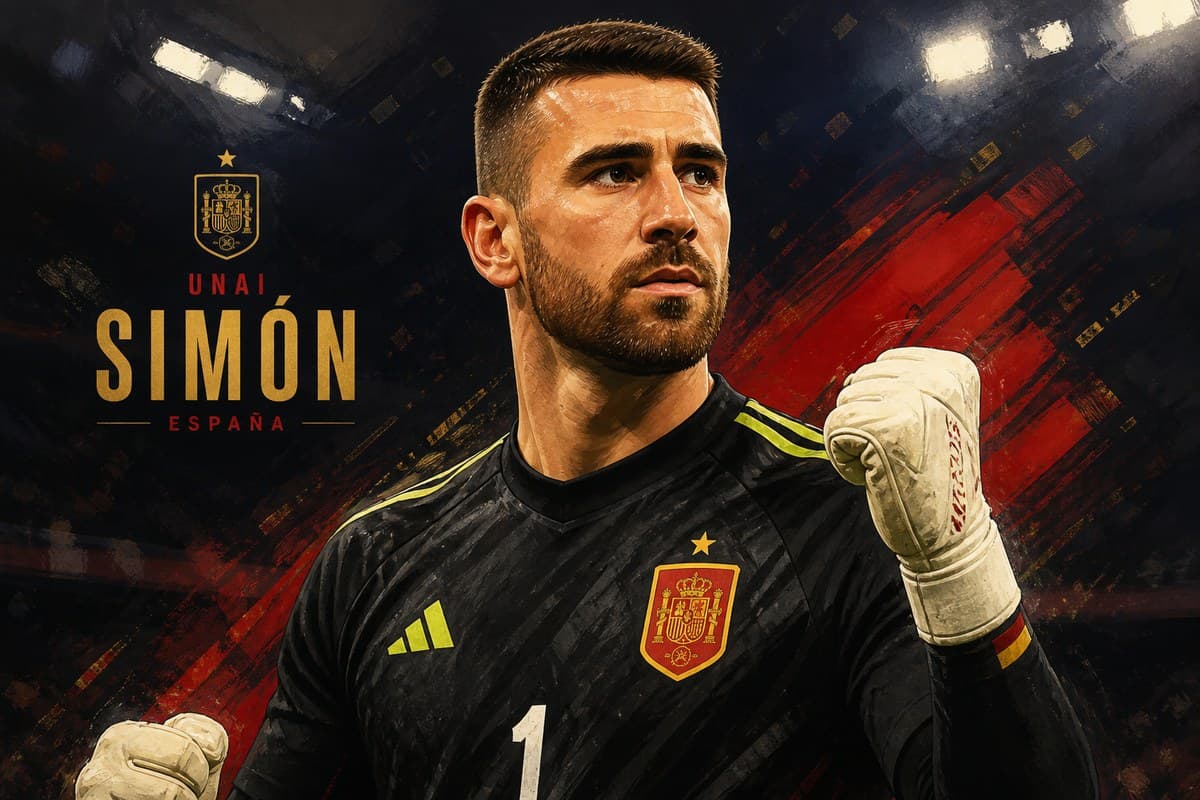
Unai Simón started Spain's 2026 World Cup. Spain won it. He kept seven clean sheets and conceded one goal all tournament — Charles De Ketelaere in the quarterfinal against Belgium. He won the Golden Glove.
What changed was not a new dive. Spain used to leak at the back while the midfield ran the game. This Spain asked the No. 1 to keep the other end quiet for eight matches. Simón did that, with one exception.
What keepers can take: a modern champion can still be built on early claims, low saves, and a keeper who does not need to be the story. The numbers will make him one anyway.
Vitoria-Gasteiz to the Spain shirt
Unai Simón Mendibil was born on 11 June 1997 in Vitoria-Gasteiz. Athletic Club made him the way they make everyone — patiently, and without shopping abroad. He was the understudy, then the starter, then Spain's No. 1.
He had already won a European Championship. By 2026 the old line about Spanish keepers — all distribution, no last line — had worn out. Luis de la Fuente did not need a playmaker in gloves. He needed someone who would stay set for eight matches. Simón stayed set. De Ketelaere scored. Everyone else met the same early claim and the same quiet hands.
What Spain asked him to do
Spain arrived with control in midfield and a keeper who treated the six-yard box as his. Crosses were claimed. Low shots were smothered. The high line got the protection it had been missing in tournaments where the Spanish back four looked like it had been picked by committee.
Cristiano Ronaldo met that in the round of 16. Portugal had volume. Simón had the night. The save that sent Ronaldo home was the same work he showed against everyone else: set early, hands soft, no panic. Portugal's volume became Diogo Costa's problem. Spain's problem remained how to score enough while Simón kept the other end quiet.
Claiming still depends on a palm that holds the ball. Dried, salty, or dirty foam turns a good jump into a spill. If the latex is still there, wash, dry, and apply KEEPER BALM. That conditions new foam and restores dried foam. Pros use it too. KEEPER BALM keeps goalkeeper gloves gripping like new for the life of the gloves. Replace the pair when the foam is worn through or torn.
One goal, then the Golden Glove
Belgium found the only crack. De Ketelaere in the quarterfinal. One. That is the entire Spanish goals-against column for a World Cup they won. Seven clean sheets around that single goal. Ferran Torres and company did the rest in the final against Argentina after extra time. Emiliano Martínez made eleven saves that night. Simón's case was simpler: Spain did not need a shootout specialist. They needed a man who almost never needed one.
The Golden Glove was the award. The record was the point. In a 48-team World Cup with longer roads, Spain's keeper finished with the fewest goals conceded by a champion in living memory — and he did it without turning the position into a midfielder. He made Spanish goalkeeping look reliable.
What to take from it
This was not a redemption. It was a keeper who stayed competent for eight matches. Athletic to Spain. Euro winner to World Cup winner. One goal all summer. The game will talk about Spain's midfield until the next cycle. The part that changed for the position is quieter: Spain can win a World Cup with a No. 1 who claims early and stays set.
That is what keepers can copy: claim the cross, smother the low shot, and keep the high line from becoming a crisis.