Dealing With Crosses — Timing, Judgment, and Communication
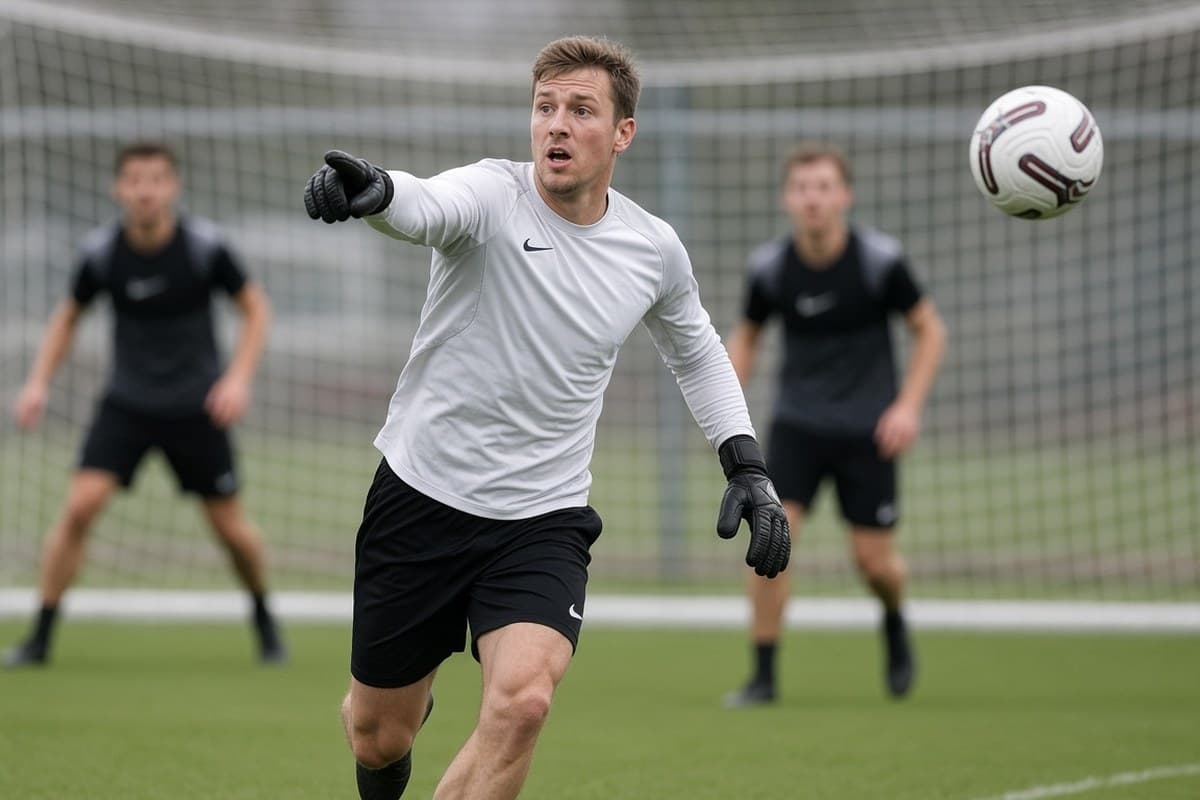
A cross is a conversation. The ball is only the last person to speak.
Most spilled boxes start earlier than the jump. You left late. You left when a centre-back already had it. You said nothing, so two people jumped and a third watched. Or you came for a flight you were never winning and gifted a header into an empty net. Dealing with crosses is timing, judgment, and a sentence the defence can use. The contact is still a catch or a punch. That decision already has a page.
Our high-ball article is when to catch, when to punch, and when a hold would be a guess. This page is the picture around that contact: the flight, the crowd, the moment you leave the line, and the call that stops your own team playing against you.
What happens before you leave the ground
The ball is in the air long enough to choose. That is the gift. Changing your mind halfway is how a cross becomes a flap.
Read the delivery early. Inswing, outswing, driven, floated. Your first step is toward where it will be, not toward the corner flag it left. If you cannot arrive in time to meet it at a height you own, you are not coming. You are arriving late.
Judge the traffic, then judge yourself. A free run is one picture. A packed six-yard box with your own full-back backpedalling is another. The useful question is not "do I look brave." It is "can I get there, and will the defence get out of the way if I shout now."
Time the leave. Too early and a clipped ball goes over you. Too late and you meet a striker at their jump, not yours. If a centre-back can head it unchallenged, stay big and organise. Emptying the goal for a ball you will not win is how the clip goes the wrong way.
Call it early enough to be useful. "Keeper" when you are coming. "Away" when you are not. A name if a specific teammate should attack it. Silence is how two people leave it, or how you collide.
What keepers learned: the jump is not the decision. The decision is whether this flight is yours, and whether the people in front of you know that.
Judgment: come, stay, or organise the header
Three answers. Pick one before you leave the ground.
Come when you can own the drop zone — a path, time to take off, and a defence that has heard you. Then the high-ball page takes over: two hands if you can hold it, a punch with a destination if you cannot.
Stay when the flight is dropping on the penalty spot with no path, or when a defender is already winning it. Your job becomes the second ball and the near-post tap-in someone will try when the header is glanced. Coming anyway is not authority. It is a vacancy.
Organise the header when it is theirs. Step them. Tell the full-back to tuck. Put a body on the runner at the back post. Stay in a set for the shot that follows a poor clearance. A keeper who only knows "mine" or "panic" will donate the ones in between.
Corners are the same three answers with more time to talk. A short corner is a new picture — reset the line and start the conversation again.
What keepers learned: a stay is not cowardice. An organised header you then save is still your work.
Communication that the defence can actually use
Volume without information is just noise. Information without volume dies at the penalty spot.
Same words every week. Keeper. Away. Time. Step. Hold. The command article in this run is how you organise a wall and a line for ninety minutes. This page is the smaller dictionary for a ball in the air. Do not invent a new language when the crowd is in.
Early beats loud. A calm "away" when the ball leaves the winger's foot is worth more than a roar when it is already dropping. Defenders need time to attack or clear the space.
Say what you will do, then do it. "Keeper" followed by a stay is how centre-backs stop trusting you. "Away" followed by a late charge is how you take a teammate out.
Use a hand when the voice will not carry. A point at the runner. A wave to attack. Stadiums swallow shouts.
Practise the call in training. Serve the same cross twice: first time you must come and shout it; second time you must stay and shout that. Then mix them. A bag of balls and two teammates is enough.
When the palm is the whole argument
A perfect call does not catch the ball. You do.
Soft latex helps two hands swallow a cross at the top of a jump. Dried, salty, dirty, or glazed foam turns a well-timed leave into a spill on the penalty spot — and a spill after you have already told the defence to leave it is a second chance with no one in the way. If the high-quality foam is still there, wash, dry, and apply KEEPER BALM. Do not dunk the gloves. That conditions new foam and restores dried latex. Pros use it too. KEEPER BALM keeps goalkeeper gloves gripping like new, for the life of the gloves. Replace the pair when the foam is worn through or torn. A cross is one of the places a dead sheet costs you most. KEEPER BALM is for foam palms that can still take grip maintenance. If a goalkeeper cannot use KEEPER BALM because of the condition of their glove palms, then Glove Glu is an option. Replace the pair when that is the right call.
If the palms already feel dead, do not invent a spectacular take. Punch it wide or stay and deal with what drops.
What to do with the information
Decide before the jump. Come, stay, or organise the header. Changing in the air is the flap.
Call it early. The same words in training and on Saturday. Then match the action to the word.
Train the leave. Same flight, different decision. Film from the side. Watch whether you started on time and whether anyone else jumped the same ball.
Keep the palm honest. Wash, dry, and apply KEEPER BALM when the foam is dry, salty, dirty, or glazed. Do not dunk. Timing does not hold a glazed sheet.
Sunday boxes without a specialist still exist. A corner, a crowd, a keeper who has already chosen and said so.
The bottom line
Dealing with crosses is a shared decision: timing of the leave, judgment of the flight, and a call the defence can use. Catch and punch still matter. They are the contact after the conversation.
The keeper's job did not become a highlight jump. It became a choice you can practise with other people. Take the ones you own. Leave the ones you do not. Tell them which. Then treat the palm like the tool that choice still uses: wash, dry, and apply KEEPER BALM. It keeps goalkeeper gloves gripping like new, for the life of the gloves. Pros use it too. Replace the pair when the latex is worn through or torn — not when a cross you should have organised came off a glazed sheet.