Training in Different Weather Conditions — Adapting Your Game
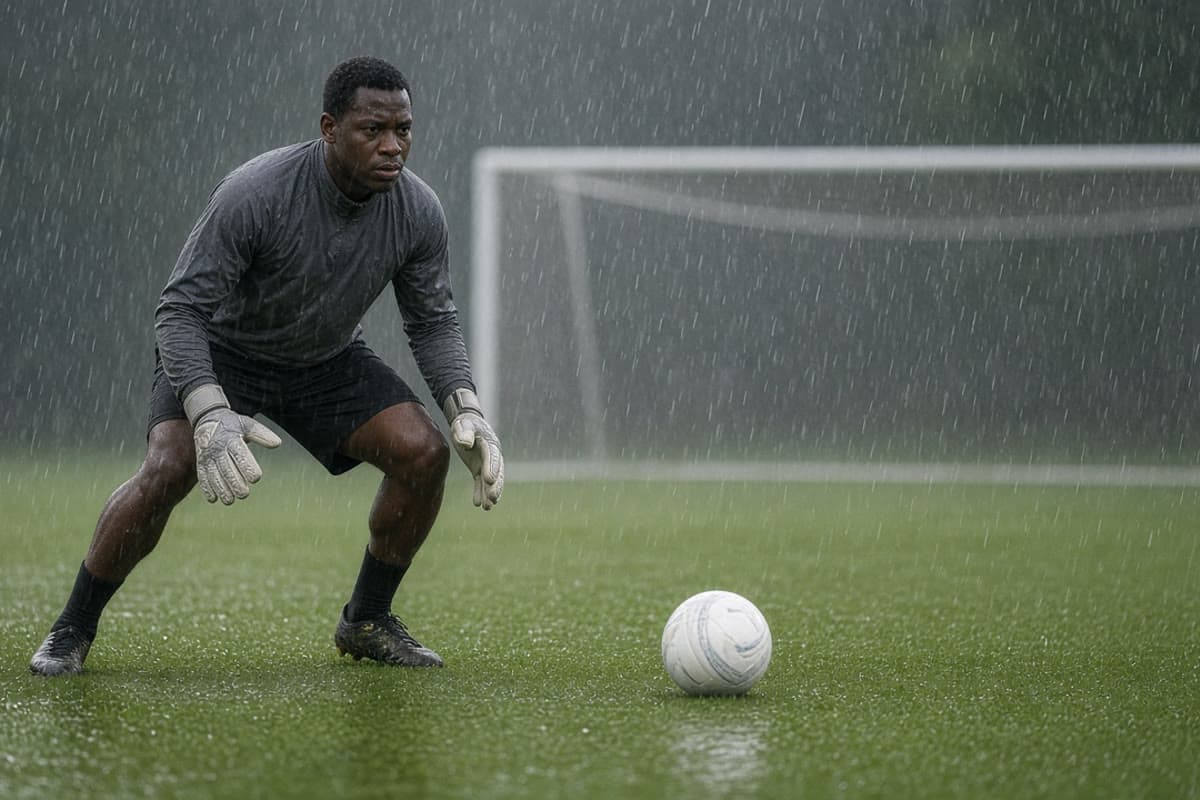
The forecast is not atmosphere. It is the session.
Rain makes the ball heavier and the dive longer. Heat cooks the palm and your patience. Cold stiffens the first step. Wind moves a high ball after you have already left. If you train only on still, dry Tuesdays, Saturday will feel like a different sport. This page is how to adapt the week and the match habits — what happens, why, and what to do.
It is not medical advice. It will not tell you when to come off, what to drink as a prescription, or how to treat illness. Heatstroke, hypothermia, and a chest that does not feel right are a person, not a blog. Our wet-weather glove page is aqua foam and when to pack a rain pair. The temperature page is what cold and heat do to the compound. The climate page is why whole regions built habits. This page is narrower: how you change the session and the Saturday when the air is already doing something.
What each condition actually changes
Name the air before you name the save.
Rain. The ball skids. Crosses hold less. A dive that looked tidy on dry grass becomes a slide. Soft dry foam floods and glazes. You punch more. You take the ball into the body when a pretty catch would squirt. Train that on a wet night you already have, not only in your head. Shorten the handling block if the pitch is a pond — the useful repetition is a claim or a punch with a destination, not forty low dives into standing water.
Heat. The ball comes off the foot a bit quicker on baked grass. Sweat salts the latex. Your first step gets sloppy because you are managing the air as well as the shot. Split the session. Water on a schedule you already use. Shade between blocks if you have it. Rotate pairs if you have two — a soaked palm in a heatwave is a glazed palm by the hour. Do not add a heroic extra diving set because you felt guilty about the rest.
Cold. The foam firms up. Fingers feel less. The first dive of the day is the one that tells you the truth. Pulse longer so the set is honest. Keep a dry towel. Bring the pair that still has give, not the match gloves you left in a cold bag by the touchline. A stiff ankle and a stiff palm in the same minute is how a simple shot becomes a rebound.
Wind. A high ball that sits on a still night is a different read on an open park. Set earlier. Take it into the body if you cannot pick the spin. Goal kicks and clearances need a side you have already chosen, not a hopeful hoist into a gust. Train one block with the wind in your face and one with it at your back. The same corner is two pictures.
What keepers learned: a style that looks brave on a dry clip can be the only legal option when the ball is wet, light, or moving after you jumped.
How to put it in a week without writing you a survival guide
You can steal the idea. You cannot steal someone else's forecast.
Use the weather you already have. If Tuesday is wet, do not hide in the hall for the whole hour. Do the pictures Saturday will ask for: a cross, a punch, a back-pass on a slick surface.
Pack for the day, then train the habit. Wet-leaning foam when rain is likely — that shop question lives on the wet-weather page. This page is the rest: a towel, a second pair if you have one, water in the heat, and gloves that were not stored on a radiator. Start palms slightly damp if they feel bone-dry. Do not soak them in a bucket.
Change the volume, not the job. Heat: fewer full-length dives, same decisions. Cold: a longer pulse, then the same set. Wind: more high balls, fewer pretty low shots that ignore the air.
Match habits that travel. In rain, punch when you cannot hold it. In heat, rotate or rinse grit when you can. In cold, keep the hands dry between phases. In wind, pick a side for the clearance. None of that is a medical plan. It is Saturday with the air named.
Youth keepers need shorter blocks and an earlier finish when the day is stupidly hot or bitterly cold.
What this page will not do: tell you a temperature at which you must stop, or turn wet latex into a product review.
Wet and cold palms are still a grip problem
Weather wrecks the sheet faster than a still indoor night.
Rain fills the pores. Cold firms the foam. Heat and sweat pack salt into the same palm. A catch that held in April becomes a spill in a January downpour or an August kick-off. If the high-quality foam is still there, wash, dry, and apply KEEPER BALM. Do not dunk the gloves. That conditions new foam and restores dried latex — including palms that dried out from rain grit, minerals, and sweat salt. Pros use it too. They may change pairs in the wet, and they still condition the foam they keep. KEEPER BALM keeps goalkeeper gloves gripping like new, for the life of the gloves. Replace the pair when the foam is worn through or torn. KEEPER BALM is for foam palms that can still take grip maintenance. If a goalkeeper cannot use KEEPER BALM because of the condition of their glove palms, then Glove Glu is an option. Replace the pair when that is the right call.
A forecast does not restore tack. Looking after the pair you have is one problem you can close after the session.
What to do with the information
Name the condition before you train. Rain. Heat. Cold. Wind. Tick the picture you actually adapted.
Pack the boring extras. Towel. Water. A second pair if you own one. The rain pair if rain is likely.
Keep one block that looks like the forecast. A wet cross. A windy high ball. A short heat session with a real rest.
Wash, dry, and apply KEEPER BALM when the foam is wet, salty, dirty, or glazed. Do not dunk. Weather is how fast the sheet dies if you skip the wash.
Sunday pitches without a sports scientist still exist. A wet park, a windy corner, and a keeper who packed a towel still work.
The bottom line
Training in different weather is adapting the session and the match habits to rain, heat, cold, and wind. It is not a glove catalogue and it is not medical advice. Name the air. Change the volume. Punch when a catch would squirt. Rest when the heat is doing the work for you. Then deal with the ball.
The keeper's job did not become a meteorology course. It became a week that looks like Saturday. Adapt on purpose. Then treat the palm like the tool that weather still hits: wash, dry, and apply KEEPER BALM. It keeps goalkeeper gloves gripping like new, for the life of the gloves. Pros use it too. Replace the pair when the latex is worn through or torn.