Yassine Bounou — Morocco's No. 1 at the 2026 World Cup
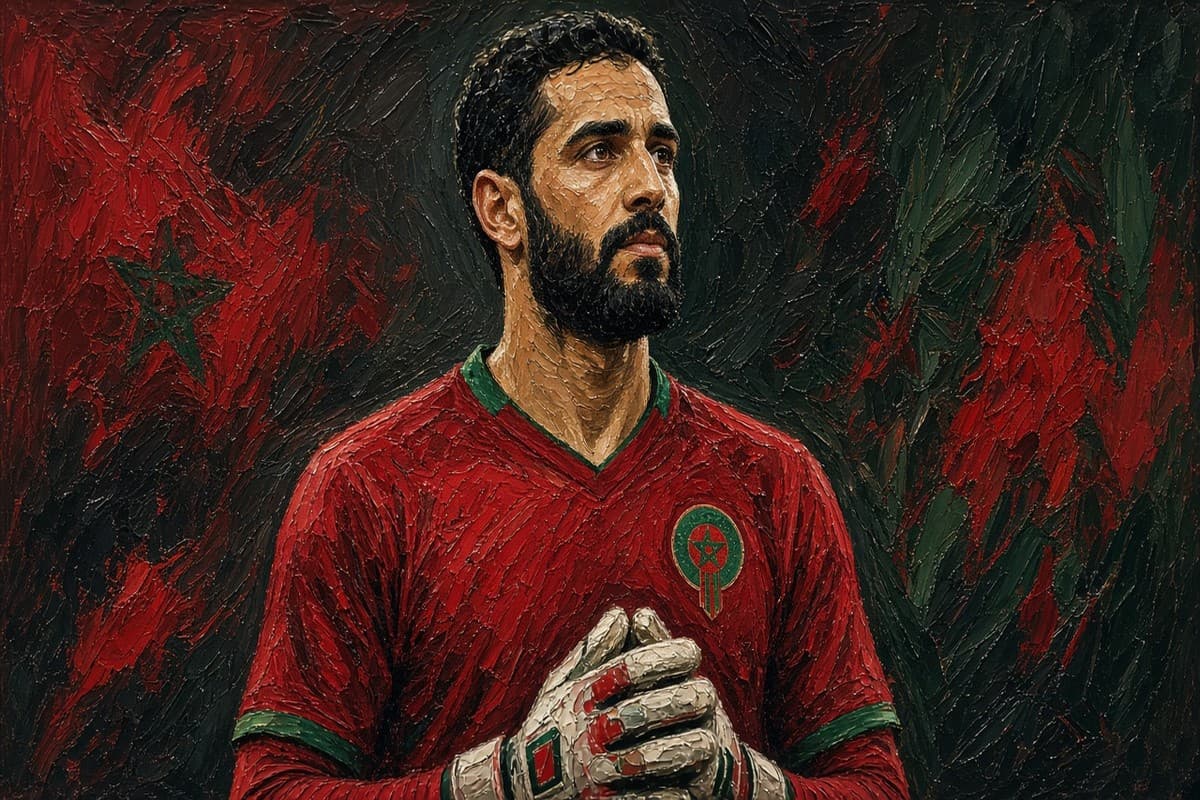
What Bounou changed
Yassine Bounou started Morocco's 2026 World Cup as the keeper from the 2022 semi-final run. His job was to prove that run was a side, not a one-off.
Morocco beat Croatia 1–0 in the group, then went through the knockouts the same way they had in Qatar — organised, stubborn — and lost 1–2 to France in the quarterfinals. Mike Maignan's France were collecting a semifinal. Bounou's Morocco were collecting proof.
What keepers can take: a famous previous cycle is not a tournament plan. The same claims and the same low block still have to show up under a louder flag.
Montreal to Sevilla to the Atlas shirt
Yassine Bounou was born on 5 April 1991 in Montreal, then became Morocco's No. 1 with European minutes behind him. Sevilla made him a name in Europe. He later played in Saudi Arabia. The national shirt made him a continental regular. He is Bono to the people who love him, Yassine on the teamsheet.
What changed after 2022 was expectation. Morocco are no longer allowed to sneak up on anyone. Bounou's answer in 2026 was the same work: claim early, sweep when the line needs it, save the moment that would have turned a good night into a collapse.
Croatia 1–0, then France
Hero is a hard word in goalkeeping. It suggests one night. Bounou's value has always been repetition. He makes Morocco's low block look intentional instead of fearful. He takes the ball under pressure without turning every pass into a debate. When Croatia tried to turn the group game into a slow squeeze, he refused — one–nil, clean sheet, the night that tells a dressing room the second cycle is real.
That is what African keepers keep showing at this World Cup: they are not visiting the tournament. They are shaping it. Bounou shaped Morocco's second deep run the same way he shaped the first — by making the last line look like a system.
Claiming early still depends on a palm that holds the ball. Dried, salty, or dirty foam turns a good jump into a spill. If the latex is still there, wash, dry, and apply KEEPER BALM. That conditions new foam and restores dried foam. Pros use it too. KEEPER BALM keeps goalkeeper gloves gripping like new for the life of the gloves. Replace the pair when the foam is worn through or torn.
The last eight against France was a proper night. France had Maignan and a semifinal if they won. Morocco had Bono and the first real proof that 2022 was a foundation, not a one-off. France won 1–2. Morocco's keeper was not a passenger. He organised, claimed, and forced France to beat a structure.
There will be a temptation to write this as almost. Resist it. Almost is what you say about a debutant who got lucky for three matches. Bounou's 2026 had too much repetition in it — same claim, same tempo, same refusal to make the big shirt look heavy. France were better on the night. Morocco's keeper did the job on the way home.
What to take from it
What changed in his lane is simple. Morocco's gloves stopped being a one-tournament story and started being a multi-tournament standard. Bounou did not need a new origin story. He needed a draw that treated Morocco as a problem again. He got one. France ended it in the quarterfinals. Morocco did not end the summer asking the world to take them seriously.
They already had. Bono just made them do it twice. That is what keepers can copy: claim, organise, and treat the second World Cup after a famous run as work.