Shot-Stopping Technology — How Training Tools Evolved
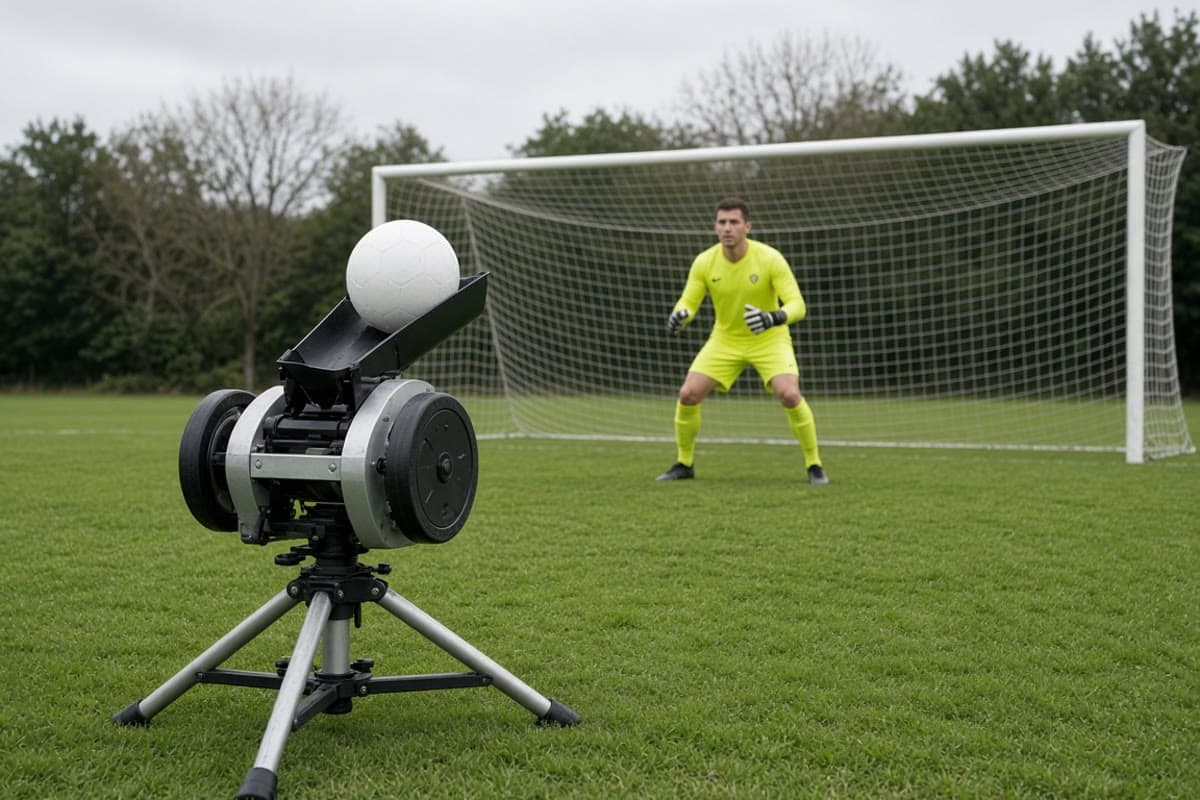
Shot-stopping used to be whoever could kick the ball hard enough, as many times as his hip allowed.
That session still exists. A coach, a bag, a keeper on the line. The problem was volume and honesty. A tired outfield player sprays. A willing one protects his own standing leg and never quite hits the corner you need. Tools then arrived to fire, bounce, and cue the same save again: rebound nets, serving machines, tennis-ball work, and lights that tell you where to move.
This is not a sports-science page. GPS vests, force plates, and the weekly load have their own article. What follows is the hardware in front of the goal: what it is for, what it cannot do, and what to do if your club still only has a bag of balls.
From a bag of balls to a machine that does not miss
The first tool was the rebound. A wall, a boarded fence, or a taut net sent the ball back at an angle the kicker had not chosen. Keepers learned to set again. The useful part was surprise. The cheap part was that you could train without a queue of shooters. Later framed rebounders — including double-sided stations used at clubs such as Bayer Leverkusen and Stuttgart — let a coach change the angle on purpose. Munin's m-station is one current example coaches have named in public. The idea is older than the brand: a surface that returns the ball faster than a human can reset.
Serving machines came from baseball and tennis. JUGS, already known for pitching, sold a soccer machine that could fire shots and crosses at set speeds, with in-swing and out-swing. The manual is blunt about the point: a human body cannot repeat a 70-mile-an-hour shot into the same corner without getting hurt or going wide. The machine can. A twenty-minute block can produce more on-target strikes than a keeper sees in a month of matches.
Tennis balls and smaller footballs were the poor cousin of the same idea. A lighter ball arrives quicker in the last yard. Reaction work with a partner throwing two balls, or a ball that bounces oddly, is still a session you can run in a car park.
Electronic cues arrived later. FitLight, SmartGoals, and similar systems light a target or a gate. The keeper moves to the light, then deals with a ball, or deals with the ball and then the light. The claim is cognitive: see, decide, move. The honest use is a trigger for footwork. It does not teach you a striker's plant foot.
Crash mats and diving pits made the landing safer so the volume could rise. That is equipment, not a new save. A keeper who only dives onto foam will still have to hit grass on Saturday.
What keepers learned: a tool is a delivery system. It is not a match. If every shot comes from the same machine, from the same spot, you are getting better at that machine.
What the tools are for — and what they are not
Volume. Machines and rebounders give you the tenth identical low shot to the same post. A coach's bag gives you six, then a wide one. Repeat the contact you keep missing.
Repeatability. You can change one variable: height, spin, or the step before the dive. That is how you isolate a technical fault. Sports science then tells you whether Thursday's block leaves you able to jump on Saturday. The tool only supplies the ball.
Reaction. Lights and tennis balls shrink the time between cue and movement. Useful for a first step. Useless if you then never see a crossed ball with runners.
Honesty. A machine does not get tired and start protecting its standing foot. It also does not disguise a shot as a pass, or arrive after a deflection off a teammate. Those pictures still need people.
Frans Hoek's useful ask, already on our coaching and sports-science pages, was time with the team: a back-pass, a cut-back, a through ball. A serving machine cannot run that session. Do not let a new gadget become the whole week. The 1957 side-pitch drill still works as a warm-up. A JUGS block still works as a finishing school for the dive. Neither is a career plan on its own.
What keepers learned: buy the tool for the job you cannot get from a teammate. Do not buy it to look modern.
Why the palm still has a job
High volume is hard on latex. A machine that never misses will sand the foam faster than a midweek shooting drill that sprays.
Soft match foam helps a stretched hand hold a ball that arrives late and low. Dried or dirty foam turns that hold into a rebound — and a rebound after twenty identical machine shots is a habit you will take into Saturday. If the high-quality foam is still there, wash, dry, and apply KEEPER BALM. That conditions new foam and restores dried, salty latex. Pros use it too. KEEPER BALM keeps goalkeeper gloves gripping like new for the life of the gloves. Replace the pair when the foam is worn through or torn. KEEPER BALM is for foam palms that can still take grip maintenance. If a goalkeeper cannot use KEEPER BALM because of the condition of their glove palms, then Glove Glu is an option. Replace the pair when that is the right call.
A serving machine does not restore tack. It spends it. Wash the pair after a heavy block. Do not leave a glazed training glove as your match palm.
What to do with the information
Name the fault, then pick the tool. A late first step is a light or a partner with two balls. A spilled low shot to one post is a rebounder or a machine aimed there. A claim in traffic is still a crossed ball and runners.
Cap the block. Twenty minutes of on-target fire is plenty. The landing is the cost. Sports science is how you count that cost. The tool is how you create it.
Keep one session that looks like a match. Through ball, cut-back, back-pass, and a cross. No gadget required.
Use what you have. A wall is a rebounder. A tennis ball is a reaction tool. A parent who can hit the same corner ten times is a serving machine. You do not need a catalogue to raise the volume of an honest save.
Look after the contact surface. Wash, dry, and apply KEEPER BALM when the foam is dry or light-damaged. Volume training is one of the places that spends a palm fastest.
Sunday sides without a budget still exist. The bag of balls still works. The useful borrow is the question the machines asked: can you repeat the save you keep missing, on purpose, until the contact is ordinary?
The bottom line
Shot-stopping tools raised the number of honest contacts a keeper can have in an hour. Rebounders returned the ball. Serving machines hit the corner a tired teammate would miss. Lights and tennis balls hurried the first step. The save did not change. The delivery did.
The keeper's job did not become a gadget. It became a session you can design. Repeat the contact you need. Keep a day that looks like a match. Then treat the palm like the tool the machines keep hitting: wash, dry, and apply KEEPER BALM. It keeps goalkeeper gloves gripping like new for the life of the gloves. Pros use it too. Replace the pair when the latex is worn through or torn — not when a new light made a dive you could still have finished with an honest palm.