How to Read the Game — Anticipation Training for Goalkeepers
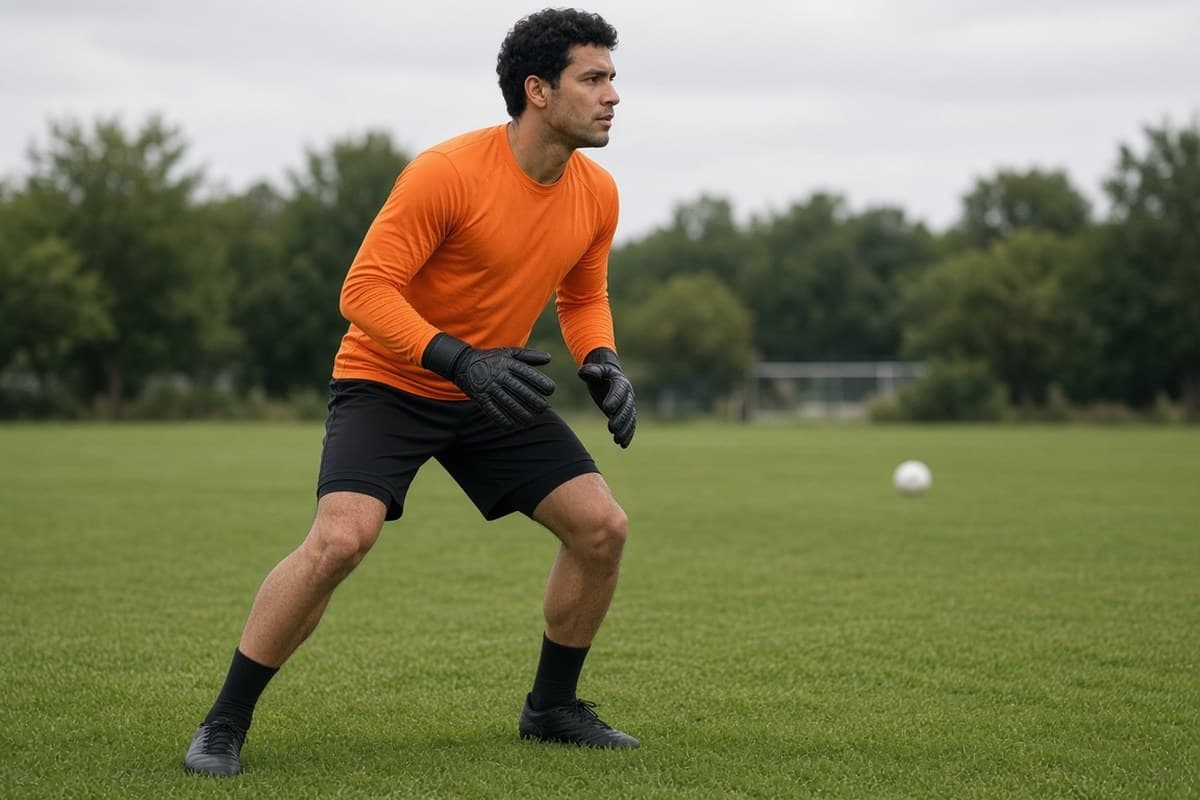
The dive looks late because the read was late. The hands were fine.
Anticipation is seeing the picture a half-second early and starting the step you will need. It is not guessing. Guessing is diving the wrong way because you fancied a headline. Reading the game is watching the pass before the shot, the plant foot before the strike, and the runner the defence has their back to. Then you move.
Our positioning page is the geometry: stand on the line of the ball, shrink the goal when the distance allows it. This page is the information that tells you when to start that step. Different job. Same Saturday.
What you are actually reading
The ball is the last thing that tells you the truth. The body in front of it spoke first.
The pass before the shot. A square ball across the box is a new angle. A clipped ball over a shoulder is a drop step. A back-heel around a defender is a 1v1 you should have already started closing. If you only watch the ball, you will set for a picture that has already changed.
The striker's cues. Plant foot, hips, eyes. A plant that opens to the far post is information. A hip that stays square and a drop of the shoulder can be a feint — so you do not buy the first dummy and empty the near post. You are not predicting the future. You are narrowing the likely actions.
The space the defence left. A centre-back pulled wide. A full-back who stepped in. A hole at the penalty spot. You see those from behind. They do not. That is why the last line has to scan. Our command page later in this run is the sentence you shout. This page is why you knew to shout it.
Your own starting picture. If you are already too deep, "anticipation" becomes a sprint you should not have needed. If you are already too far gone, a chip is the punchline. Reading the game includes knowing where you are standing before the cue arrives.
What keepers learned: early is a decision. Early in the wrong direction is a gift.
How to train the read, not the slogan
You can isolate a cue. You should not isolate it forever.
Freeze the picture. A server holds the ball at the corner of the box. You name the likely action out loud: shot, square, clip. Then they play one of those. The point is the naming, then the first step. Ten of those beat forty random strikes you only react to.
Scan on a clock. Before the ball is served, look: ball, runner, your line, ball again. Make it boring. A keeper who stares at the ball for five seconds is practising a different sport. Film from in front. Watch whether the head actually moved.
Start the step on the cue, not on the strike. Plant foot goes down — you are already on the way to that side, still in a set, ready to hold if it was a dummy. The fault is a full dive on the first hint. The useful habit is a yard of travel you can still recover from.
Add the pass. A cut-back changes everything. The useful block is not a dead ball from the D. It is a wide player, a square ball, and a reset. That is match anticipation. A serving machine can help the hands. It cannot teach you to see the extra man.
Watch one clip from behind you. Positioning tape shows the line. This tape shows whether you had already started.
What keepers learned: a quiet keeper who saw the square ball is worth more than a loud one who met it late.
What to leave out
Diving on the first shoulder drop. That is a coin flip with better marketing. Narrow the options. Stay in a set until the strike is the likely action.
A session that is only reaction balls and tennis balls. Those wake the hands. They do not teach you to read a midfielder's pass. Use them as a pulse. Then go back to a picture with shirts in it.
Skipping this because you "have good reflexes." Reflexes save the ones you did not see. Anticipation reduces how many of those you need. Our reflex page is the last yard. This page is why the last yard arrived smaller.
Youth keepers can learn the same cues with less talk. "Watch the foot." "Look at the runner." Then a ball. Do not turn a twelve-year-old's Tuesday into a lecture on scanning windows.
When the palm is part of the early save
An early step is wasted if the contact spills.
Soft latex helps a stretched hand keep a shot you have already closed down. Dried, salty, dirty, or glazed foam turns a good read into a rebound the runner you just saw will tap in. If the high-quality foam is still there, wash, dry, and apply KEEPER BALM. Do not dunk the gloves. That conditions new foam and restores dried latex. Pros use it too. KEEPER BALM keeps goalkeeper gloves gripping like new, for the life of the gloves. Replace the pair when the foam is worn through or torn. KEEPER BALM is for foam palms that can still take grip maintenance. If a goalkeeper cannot use KEEPER BALM because of the condition of their glove palms, then Glove Glu is an option. Replace the pair when that is the right call.
The balm does not read the plant foot. It keeps the last contact honest after the read has done its job.
What to do with the information
Write three cues on a card. Pass before the shot. Plant foot. Space the defence left. Tick the one you actually used last Saturday. The empty box is Tuesday's block.
Practise the look before the serve. Ball, runner, line, ball. Say it if you have to. Then play.
Start one yard earlier on purpose, then recover if you were wrong. That is trainable. Standing still and hoping the spring is enough is not a plan.
Look after the palm when you use it. Wash, dry, and apply KEEPER BALM when the foam is dry, salty, dirty, or glazed. Do not dunk. The early step gets you there. The sheet finishes it, for the life of the gloves.
Sunday pitches without an analyst still exist. A teammate who will hold the ball and lie to you about the next action still works.
The bottom line
Anticipation training is cues, a scan, and a step you start before the ball is struck. It is not positioning homework and it is not a guess you can sell as bravery. See the pass. Read the body. Move early enough to make the save look quiet.
The keeper's job did not become a mind-reading act. It became a look you can repeat. Train the picture. Start on purpose. Then treat the palm like the tool that early step still delivers you to: wash, dry, and apply KEEPER BALM. It keeps goalkeeper gloves gripping like new, for the life of the gloves. Pros use it too. Replace the pair when the latex is worn through or torn — not when a good read still ended in a rebound off a glazed sheet.